
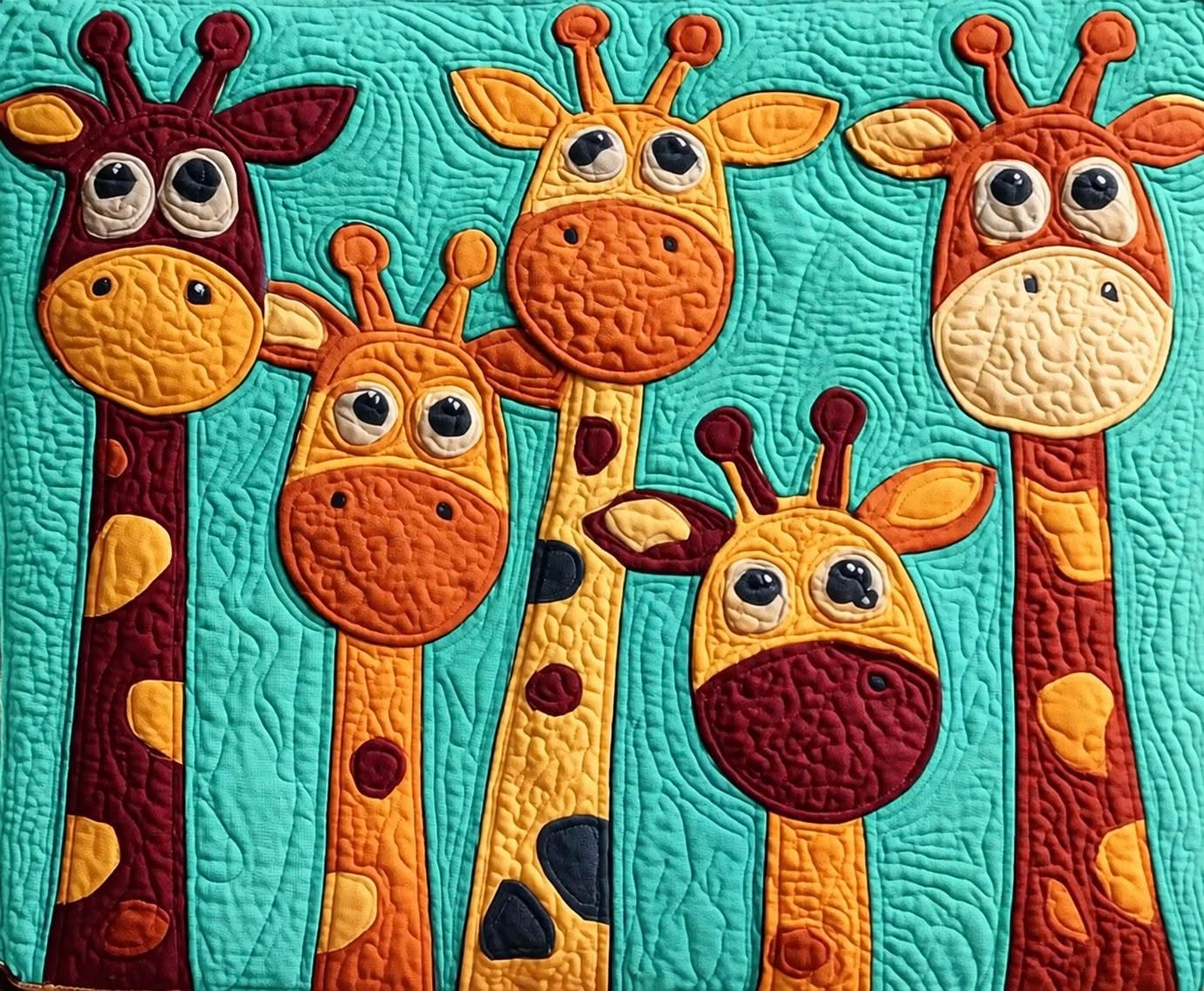
The Patchwork Giraffe Family Wall Panel Pattern is a cheerful fabric-art project that combines appliqué, patchwork, quilting, and decorative stitching in one playful composition. Inspired by the wall panel shown in the reference image, the design features a charming group of giraffes with different heights, facial expressions, colors, spots, and personality details. The elongated necks make this project especially suitable for a vertical or rectangular quilted panel, while the oversized eyes and rounded muzzles create the friendly handmade character that makes animal appliqué so appealing. Although the finished piece may appear detailed, the basic shapes are surprisingly approachable when the project is divided into individual components. Beginners can simplify the quilting and facial details, while experienced quilters can add more free-motion stitching, layered fabrics, and decorative accents. The result is a unique piece of textile wall art that can brighten a sewing room, nursery, craft space, hallway, or family room.
The name Patchwork Giraffe Family Wall Panel Pattern describes both the technique and the finished decorative piece. “Patchwork” refers to combining different fabrics, colors, and shapes to create a larger composition, while the giraffe family is formed mainly with appliqué pieces positioned over a quilted background. A “wall panel” is a decorative fabric artwork designed primarily for display rather than as a bed quilt, although the construction methods are very similar to traditional quilting. The pattern can include the giraffes’ heads, ears, ossicones, necks, spots, eyes, noses, and background sections as individual templates. Using contrasting fabrics helps every giraffe remain visible while still allowing the family to look coordinated. Choosing fabrics with different shades and subtle textures can make the giraffe appliqué quilt feel lively without making the design visually overwhelming.
One of the most enjoyable aspects of making a Patchwork Giraffe Family Wall Panel Pattern is that no two finished panels need to look exactly alike. The reference design uses warm shades such as mustard yellow, burnt orange, burgundy, cream, muted blue, and olive green, creating a cozy country-style appearance. You can recreate that palette closely or adapt the project to match fabrics already available in your sewing collection. Cotton quilting fabric is usually the easiest material to handle because it presses well, holds appliqué shapes neatly, and works beautifully with machine quilting. Small scraps are especially useful for ears, eyes, spots, and facial details, making this project an excellent fabric scrap project. Careful preparation is more important than complicated sewing skills, so organizing the shapes before stitching will make the construction process much smoother.
Materials and Fabric Preparation for the Patchwork Giraffe Family Wall Panel Pattern
Start by selecting a sturdy quilting cotton for the background of the Patchwork Giraffe Family Wall Panel Pattern. A muted green similar to the reference image creates a natural contrast with yellow, orange, cream, burgundy, and brown giraffes. For a panel approximately 60 x 75 cm, prepare a background piece slightly larger than the desired finished measurement so you can trim the edges after quilting.
DISCOVER MORE FREE PATTERNS HERE!
Collect several coordinating fabric scraps for the giraffe bodies. Suitable colors include golden yellow, burnt orange, rust, burgundy, cream, brown, mustard, and muted blue. Instead of using identical fabrics for every animal, vary the colors slightly to reinforce the idea of a giraffe family while maintaining visual harmony throughout the composition.
You will also need batting and backing fabric. Cut both pieces approximately 5 cm larger than the background fabric on every side. The extra space helps prevent problems if the quilt sandwich shifts slightly while you work on the decorative quilting around the animals.
For the appliqué, prepare paper-backed fusible web or your preferred appliqué stabilizer. Fusible web is particularly practical for this design because the giraffes contain many curved pieces that need to remain accurately positioned. Lightweight fusible products are usually easier to quilt through than very heavy stabilizers.
Additional supplies include fabric scissors, small embroidery scissors, a fabric marking pen, pins or temporary adhesive, coordinating thread, a sewing machine, and an iron. If you plan to create the textured background seen in the inspiration image, a free-motion quilting foot can be useful, although a regular walking foot can also produce attractive results.
Before cutting your final fabrics, wash and press them if you normally prewash quilting cotton. Smooth fabric makes it easier to trace and cut the giraffe appliqué pieces accurately. Organizing scraps by color before beginning can also save time once you start assembling the faces, spots, ears, and neck sections.
Creating and Arranging the Giraffe Appliqué Pieces
Begin the actual Patchwork Giraffe Family Wall Panel Pattern by drawing or printing simple giraffe templates. Break each giraffe into manageable shapes: one long neck, one rounded head, two ears, two ossicones, a large oval muzzle, eyes, nostrils, and irregular spots. Keeping these elements separate makes it much easier to reproduce the layered appearance visible in the reference project.
A practical finished head size for a medium wall panel is approximately 14 to 18 cm wide, depending on the giraffe’s position. The necks can vary from approximately 8 to 12 cm wide. Variation is important because the different heights help create the playful feeling of a family gathered together instead of a row of identical animals.
Trace the shapes onto the paper side of the fusible web, remembering that directional templates may appear reversed after transferring. Cut loosely around each traced shape, leaving a small margin outside the lines. Fuse the pieces to the wrong side of the selected fabrics according to the fusible product instructions, then cut precisely on the traced outlines.
Create the eyes using layered circles and ovals in cream, white, gray, and black. Oversized eyes are one of the strongest visual characteristics of this giraffe wall hanging. Slight differences in eye direction can give every giraffe its own expression, which adds warmth and humor to the overall design.
Next, cut the spots. These do not need to be identical or perfectly symmetrical. The handmade irregularity is part of the charm of a patchwork animal pattern, and a mixture of rounded, oval, and slightly uneven spots gives the giraffes more character. Use dark burgundy, brown, navy, orange, mustard, or other coordinating scraps.
Before permanently attaching anything, place every piece on the background fabric. Begin with the giraffes positioned farthest behind and gradually add those that overlap them. Move the shapes around until the heads, ears, and necks feel balanced, making sure important features remain comfortably inside the future binding area.
Sewing, Appliquéing, and Quilting the Giraffe Family
Once you are satisfied with the arrangement, fuse the largest body and neck pieces first. Follow the manufacturer’s heat recommendations to avoid scorching the fabric or weakening the adhesive. After the necks are secured, add the heads, muzzles, ears, ossicones, spots, and facial features in layers.
Stitch around the edges of every appliqué piece using a small blanket stitch, zigzag stitch, or narrow straight stitch. A dark thread creates the outlined look visible in the inspiration image, while matching thread produces a softer appearance. Both options work well for a Patchwork Giraffe Family Wall Panel Pattern, so the choice depends on the finish you prefer.
Pay extra attention to the eyes because they become the focal point of each face. Secure each eye layer carefully and add small highlights with tiny pieces of white fabric or simple embroidery stitches. Small black stitched nostrils can then be added to the muzzle to complete the friendly expressions.
After all appliqué stitching is complete, layer the finished top with batting and backing fabric. Smooth the three layers carefully and baste them using pins, temporary spray, or your preferred quilting method. Work from the center toward the edges to reduce wrinkles and unwanted shifting.
Quilt the background around the giraffes using free-motion curves, loops, meandering lines, or a simple all-over pattern. The dense quilting in the reference image gives the green background a rich texture while making the appliqué animals stand out slightly. Avoid quilting too heavily directly across the facial features, since these details should remain visually clear.
You can also add quilting inside the giraffes. Follow the direction of the necks with gentle vertical stitching and use curved or irregular lines inside the heads and muzzles. This additional texture helps transform ordinary fabric shapes into a more dimensional quilted giraffe wall panel and gives the project the handcrafted appearance associated with detailed textile art.
Finishing, Binding, Displaying, and Personalizing the Wall Panel
When the quilting is finished, place the panel on a flat surface and trim the layers evenly. Use a quilting ruler whenever possible to keep the edges square. Carefully check that no ears, ossicones, or appliqué pieces are too close to the trimming line before removing excess fabric.
Prepare binding strips approximately 6 to 7 cm wide and join them into one continuous strip. Fold and press the binding before attaching it around the outside of the Patchwork Giraffe Family Wall Panel Pattern. A solid fabric that echoes one of the colors used in the giraffes can create a clean and coordinated frame.
For wall display, add a fabric hanging sleeve to the back before finishing the final binding stitches. The sleeve can hold a lightweight rod or wooden dowel without showing from the front. This method helps the wall quilt hang smoothly and avoids placing unnecessary stress on the decorative fabric.
Personalization is another advantage of this project. You can change the number of giraffes to represent family members, create different sizes to suggest adults and children, or assign favorite colors to individual animals. Initials can even be embroidered discreetly on the back of the panel to document who each giraffe represents.
The Patchwork Giraffe Family Wall Panel Pattern can also be adapted to different styles. Bright primary colors create a playful children’s-room decoration, while earth tones create a rustic look. Pastel fabrics can produce a softer nursery version, and bold modern prints can transform the same basic giraffe pattern into contemporary textile art.
Before hanging the finished quilt, gently press it from the back if necessary and inspect all appliqué edges. Trim loose threads and confirm that the binding and hanging sleeve are secure. These small finishing details help give a handmade project a polished appearance while preserving the warmth and personality that make fabric art special.
FAQ – Frequently Asked Questions About the Patchwork Giraffe Family Wall Panel Pattern
What is a Patchwork Giraffe Family Wall Panel Pattern?
A Patchwork Giraffe Family Wall Panel Pattern is a sewing and quilting design used to create decorative fabric artwork featuring several giraffes. Individual fabric pieces are assembled through appliqué and patchwork techniques, then quilted onto a background and finished with binding for wall display.
Is this giraffe wall panel suitable for beginners?
Yes. A beginner can make this project by simplifying some of the details. Start with larger appliqué shapes, use fusible web to hold the pieces securely, and choose a basic zigzag or blanket stitch around the edges. More complicated free-motion quilting can always be added after gaining confidence.
What fabric is best for a giraffe appliqué quilt?
Medium-weight 100% quilting cotton is an excellent choice because it is stable, easy to cut, presses well, and comes in a huge variety of colors and prints. Small cotton scraps are ideal for spots, eyes, muzzles, ears, and other details.
How large should the finished wall panel be?
There is no fixed size. A medium piece around 60 x 75 cm provides enough room for several giraffes while still being manageable on a domestic sewing machine. You can enlarge or reduce the templates to fit the wall space where the project will be displayed.
Do I need fusible web for the appliqué?
Fusible web is not absolutely required, but it makes the process easier. It holds the curved giraffe pieces in position while they are stitched and reduces shifting. Traditional needle-turn appliqué can also be used if you prefer a hand-sewn finish.
Can I hand sew the Patchwork Giraffe Family Wall Panel Pattern?
Yes. The appliqué edges can be sewn by hand using blanket stitch, whipstitch, or invisible appliqué stitches. Hand quilting can also replace machine quilting, although completing the entire panel manually will naturally require more time.
How can I make the giraffes look more expressive?
Experiment with eye position, muzzle shape, ear angles, and spot placement. Even moving one pupil slightly to the side can completely change the expression. This is why the exaggerated eyes in a giraffe family quilt are so effective—they immediately give each animal an individual personality.
What colors work best for this pattern?
Traditional earthy shades such as mustard, orange, brown, cream, burgundy, green, and gold are especially effective. However, there are no strict rules. Pink, turquoise, blue, purple, or rainbow giraffes can work beautifully if you want a more whimsical interpretation.
Should I quilt before or after adding the appliqué?
For this style of wall panel, it is usually easier to complete the appliqué first and quilt afterward. Quilting around the giraffes helps define their shapes and produces the slightly raised appearance visible in heavily textured wall quilts.
How do I prevent appliqué edges from fraying?
Fusible web helps stabilize the fabric, while a close blanket stitch or zigzag stitch secures the raw edges. You can also use turned-edge appliqué if you want the raw fabric edges completely hidden.
Can fabric scraps be used for this project?
Absolutely. This is an excellent scrap fabric quilting project because many components are small. Scraps that might be too small for traditional quilt blocks can become giraffe spots, eyes, ears, noses, or decorative sections.
How can I make the background look textured?
Use free-motion quilting to create irregular curves, loops, waves, or meandering lines over the background. Keeping the quilting relatively close together can flatten the background slightly and allow the appliqué giraffes to stand forward visually.
Can I make fewer or more giraffes?
Yes. The pattern can easily be adapted. Three giraffes create a simpler composition, while five or six animals produce a crowded and playful family scene. Just remember to plan the placement before fusing the pieces permanently.
What can I use the design for besides a wall hanging?
The same Patchwork Giraffe Family Wall Panel Pattern concept can be adapted for cushions, nursery quilts, tote bags, fabric organizers, table runners, or decorative quilt blocks. Scale the templates appropriately for the size of the new project.
Conclusion
The Patchwork Giraffe Family Wall Panel Pattern is a creative way to combine patchwork, appliqué, quilting, scrap fabrics, and decorative stitching in one colorful project. By beginning with a carefully prepared background, creating each giraffe from simple layered shapes, arranging the family before sewing, securing the appliqué, adding expressive facial details, and finishing the surface with textured quilting, you can build a wall panel that closely captures the personality of the reference image.
EASILY FIND THE FREE PDF FOR THIS PATTERN HERE!
The project also offers plenty of freedom for customization. You can change the colors, number of giraffes, dimensions, quilting style, spots, facial expressions, and border fabric while keeping the same basic construction method. Most importantly, take your time when positioning the animals and enjoy creating differences between them. Those little variations are what give a handmade giraffe family wall quilt its charm. If you make your own version of this project, leave your sincere opinion about the Patchwork Giraffe Family Wall Panel Pattern and share any suggestions or creative ideas you would add. Your color combinations, quilting choices, and personal touches can inspire new interpretations of this fun fabric-art design.