
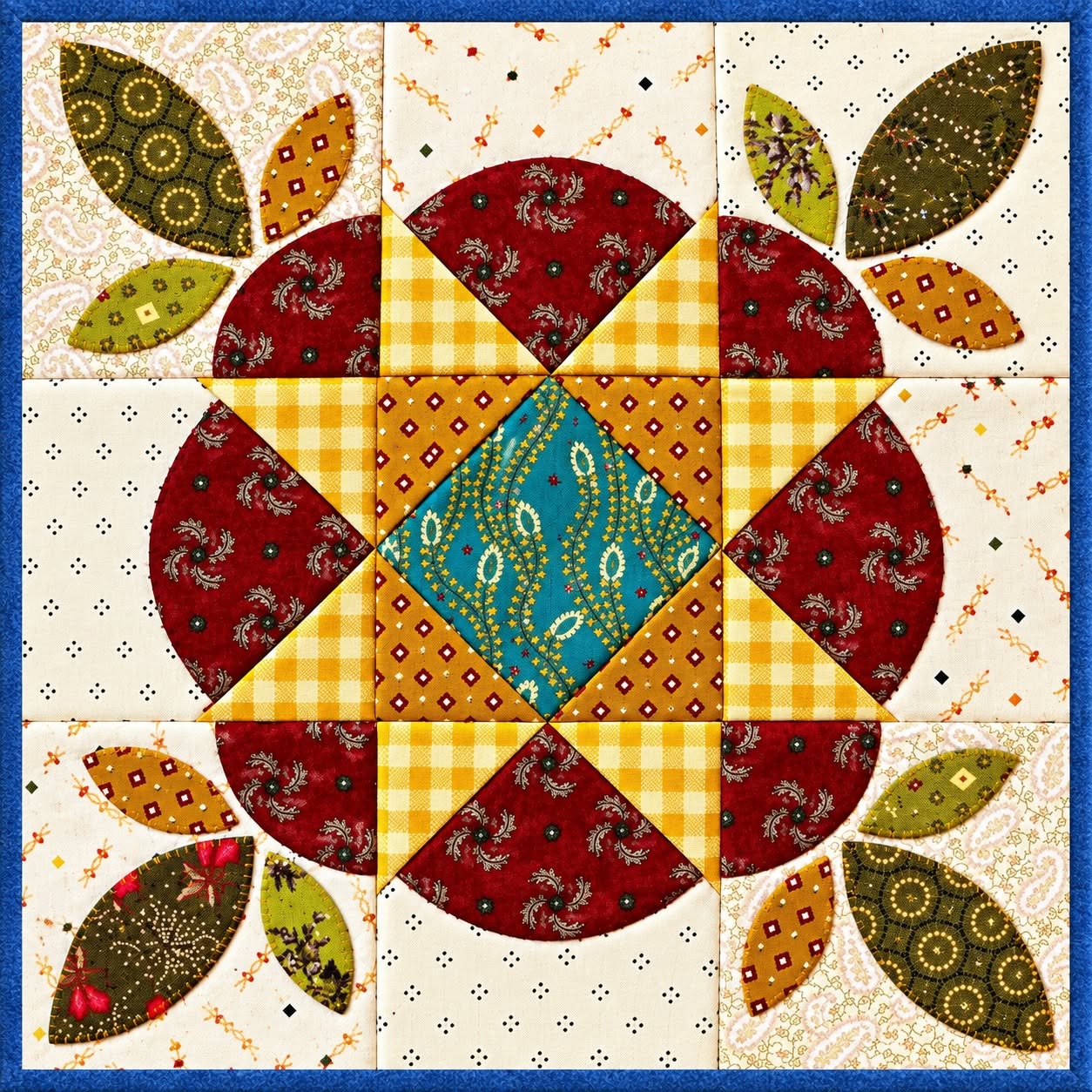
The Patchwork Block with Leaf Appliqué Pattern is a beautiful quilting project that combines traditional patchwork geometry with soft, nature-inspired appliqué details. The design shown in the reference image features a strong central star, curved circular sections, warm contrasting fabrics, and decorative leaves placed near the outer corners. This combination creates a block that feels both classic and playful, making it suitable for quilts, table toppers, cushion covers, wall hangings, and seasonal sewing projects. One of the biggest advantages of this pattern is the opportunity to use several fabric prints without making the finished block look disorganized. By repeating a few colors throughout the design, the entire composition remains balanced. The result is a handmade quilt block with plenty of visual movement and personality.
Creating a Patchwork Block with Leaf Appliqué Pattern may look complicated at first, but the project becomes much easier when it is divided into manageable sewing stages. The center can be constructed using squares and triangle units, while the rounded sections can be created with curved piecing or appliqué techniques depending on your experience level. The decorative leaves are added separately, which means you can adjust their size, direction, and color without affecting the main block construction. In the photographed example, shades of burgundy, mustard yellow, cream, olive green, brown, and teal work together beautifully. You do not need to copy those exact colors. The most important principle is to create enough contrast between the background fabric, central patchwork, curved pieces, and leaf appliqués.
The term Patchwork Block with Leaf Appliqué Pattern describes a quilting design made from smaller fabric pieces that are joined together to form one complete block, with additional leaf shapes applied to the surface. Patchwork refers to the process of sewing separate pieces of fabric together, while appliqué means attaching decorative fabric shapes onto a larger background. In this project, these two methods work together naturally. The geometric patchwork forms the structural foundation, while the leaves soften the straight lines and give the finished piece an organic character. This balance between geometry and nature is one of the reasons the design is so visually attractive. With careful cutting, accurate seam allowances, and patient pressing, even an intermediate beginner can successfully recreate a similar block.
Materials, Fabric Selection, and Preparation
Before beginning the Patchwork Block with Leaf Appliqué Pattern, organize all of your materials. You will need several cotton quilting fabrics, matching or neutral sewing thread, a rotary cutter, quilting ruler, cutting mat, fabric scissors, pins or clips, an iron, and a sewing machine. Lightweight fusible web can also be useful for the leaf appliqués. Choose good-quality quilting cotton because it is easy to cut accurately and holds its shape during piecing.
DISCOVER MORE FREE PATTERNS HERE!
For a design similar to the photograph, choose approximately five to seven coordinating fabrics. A light cream fabric works well as the background, while darker burgundy or brown fabric can create the large circular shapes. Mustard yellow fabrics can be used for triangles and star points, and a contrasting teal or blue-green fabric can create a dramatic central square. Olive green, brown, and gold scraps are ideal for the leaf appliqué pieces.
A helpful starting size for this project is a finished block of approximately 30 cm to 35 cm square. You can make the block larger or smaller according to your project. Add your preferred seam allowance to every patchwork piece before cutting. A consistent seam allowance is far more important than the exact finished measurement because inconsistent seams can distort the star points and prevent the sections from matching.
Begin by washing and pressing your fabrics if that is part of your normal quilting routine. Remove wrinkles completely before cutting. Fold the fabric carefully along the grain and use a quilting ruler to create straight edges. Accurate preparation makes every later step easier, especially when you are working with triangles, curved pieces, and symmetrical blocks.
Next, plan the color placement before sewing anything together. Look closely at the Patchwork Block with Leaf Appliqué Pattern and notice how colors repeat around the center. The dark red sections appear in several areas, while the yellow prints are distributed around the star. Repeating colors creates rhythm and prevents one side of the block from becoming visually heavier than another.
Finally, create a simple layout on a table or design board. Place the central square first, arrange the triangles around it, and position the curved sections outside the star. Then place the leaf shapes near the corners. Taking a photograph of your layout before sewing can help you remember the arrangement as individual units are moved to the sewing machine.
How to Piece the Central Patchwork Star
The central section is the visual focus of this Patchwork Block with Leaf Appliqué Pattern. Begin with a square of contrasting fabric for the center. In the reference design, the teal fabric creates a strong focal point against the warmer burgundy and mustard colors. Position the square on point so that it appears as a diamond when the block is viewed upright.
Around this center diamond, arrange four triangular fabric sections. Two or more coordinating yellow prints can create an attractive rotating effect. When sewing triangles, avoid stretching the bias edges because they can easily become distorted. Handle each piece gently and allow the sewing machine to move the fabric naturally under the presser foot.
Sew the triangles into smaller units before connecting them around the center. After every seam, press the fabric carefully. Pressing seams to one side can help reduce bulk, while pressing some intersections open may make the finished block flatter. Choose whichever method produces the cleanest result for your fabric thickness.
Add the next group of triangles to extend the central star pattern. The photographed design alternates light yellow checks with darker mustard prints, which creates the illusion of several overlapping star points. This is an excellent example of how fabric contrast can create complex-looking geometry from relatively simple pieces.
Before attaching the outer sections, place the partially completed center on a flat surface and check that it remains square. Measure diagonally and horizontally. If one area appears distorted, correct it before continuing. Small inaccuracies become more noticeable as additional pieces are added, so checking the block frequently can save time later.
Once the central patchwork unit is complete, give it a gentle final press. Do not pull the fabric while ironing. Instead, lift and lower the iron to press the seams. The goal is to produce crisp star points and a flat surface that will connect neatly to the surrounding curved and background units.
Creating the Curved Sections and Leaf Appliqué
The rounded burgundy sections surrounding the star are one of the most distinctive features of the Patchwork Block with Leaf Appliqué Pattern. They create a flower-like or circular movement around the center. You can achieve this appearance with traditional curved piecing or by using a carefully cut appliqué shape placed on the background fabric.
If you choose curved piecing, create templates for the concave and convex pieces. Cut slowly and accurately, then mark the center point of each curve. Match the centers first, followed by both ends, and then pin or clip between those points. Sew slowly so the edges remain aligned without creating folds.
For a simpler alternative, cut semicircular or quarter-circle shapes from your darker fabric and appliqué them onto larger background squares. This method can be especially helpful for quilters who are still developing confidence with curved seams. Fusible web can temporarily secure the curved pieces before stitching around their edges.
The leaf appliqué pattern should be prepared after the main block sections are assembled. Draw several simple leaf shapes in different sizes on paper. A balanced leaf can be created with a gently pointed oval measuring approximately 6 cm to 10 cm long, depending on the size of your block. Add slightly smaller leaves to create variety.
Transfer the leaf shapes to fusible web or template material, then cut them from coordinating fabric scraps. In the reference image, green, mustard, burgundy, and dark brown prints create a natural autumn-inspired palette. Arrange two or three leaves near each selected corner, rotating them slightly so they appear to grow outward rather than forming rigid rows.
Attach the leaves using your preferred appliqué technique. A small zigzag stitch, satin stitch, blanket stitch, or neat straight stitch can all work well. Choose thread that blends with the fabric for a subtle finish, or use contrasting thread if you want the appliqué stitching to become another decorative feature of the block.
Final Assembly, Quilting Ideas, and Finishing Details
After completing the star, curved sections, background units, and leaf appliqués, assemble the larger sections of the Patchwork Block with Leaf Appliqué Pattern. Work from the center outward whenever possible. Sew smaller units into rows or quadrants, then connect those larger sections. Match important seam intersections carefully before stitching.
Press the completed block and measure its height and width. If necessary, trim only a very small amount from the outer edges to square the block. Avoid aggressive trimming because removing too much fabric can reduce your seam allowance or cut into the decorative elements near the edges.
If you want to turn the block into a mini quilt or wall hanging, place it over batting and backing fabric. Smooth all three layers carefully. Secure them with quilting pins, temporary basting spray, or another method you normally use. The patchwork quilting design provides many natural areas that can guide your quilting stitches.
For quilting, consider stitching along the edges of the central star and around the burgundy curved shapes. You can also echo the outline of each leaf appliqué. Simple quilting often works best on a busy patchwork design because it reinforces the shapes without competing with the printed fabrics.
Another option is gentle free-motion quilting in the cream background areas. Small loops, leaves, vines, or curved lines can complement the appliqué theme. If you prefer a cleaner appearance, straight-line quilting around the geometric sections will emphasize the construction of the block while keeping the surface visually organized.
Finish the project according to how you plan to use it. Add binding for a mini quilt or table topper, sew several blocks together for a larger quilt, or turn one finished Patchwork Block with Leaf Appliqué Pattern into a decorative cushion. Because the design combines strong geometry with natural appliqué shapes, it adapts beautifully to many handmade home décor projects.
FAQ – Frequently Asked Questions About the Patchwork Block with Leaf Appliqué Pattern
What is a Patchwork Block with Leaf Appliqué Pattern?
A Patchwork Block with Leaf Appliqué Pattern is a quilt block created by sewing geometric fabric pieces together and then adding decorative leaf-shaped pieces to the surface. The patchwork provides the main structure, while the appliqué leaves introduce additional texture, color, and visual interest.
Is this pattern suitable for beginners?
A confident beginner can make this project, although the curved sections may require additional patience. If traditional curved piecing feels difficult, the rounded pieces can be created using appliqué instead. Starting with a larger block can also make the pieces easier to handle.
What fabric is best for this patchwork block?
100% cotton quilting fabric is usually the easiest choice. It cuts cleanly, presses well, and is stable enough for accurate piecing. Cotton scraps are also excellent for the leaf appliqués because the leaves require only small pieces of fabric.
How large should the finished block be?
There is no mandatory size. A block around 30 cm to 35 cm square is a comfortable size for recreating the proportions seen in the reference design. You can scale the templates up or down depending on whether you are making a quilt, cushion, table topper, or wall hanging.
Do I need fusible web for the leaf appliqués?
Fusible web is optional, but it can make the process easier. It holds each leaf securely in position while you stitch around the edge. Traditional needle-turn appliqué can also be used if you prefer a softer handmade appearance.
How can I make the star points look more accurate?
Accurate cutting, consistent seam allowances, and careful pressing are essential. Avoid stretching triangle edges, and check the alignment of each unit before joining larger sections. Sewing slowly near important intersections will also improve the appearance of the points.
Can I use fabric scraps for this project?
Yes. This Patchwork Block with Leaf Appliqué Pattern is an excellent scrap-friendly project. Coordinated scraps can create a charming traditional look, especially when a few colors are repeated throughout the block to maintain visual balance.
What colors work best with leaf appliqué?
Earth tones such as green, mustard, burgundy, brown, cream, and rust create a natural look. However, the design is flexible. Blue, pink, purple, pastel, or bright modern fabrics can completely change the character of the block while keeping the same construction.
Should the leaves be identical in size?
No. Using slightly different leaf sizes can make the arrangement appear more natural. Try combining one larger leaf with one or two smaller leaves in each decorative corner while keeping the overall composition balanced.
Can several blocks be joined into a full quilt?
Absolutely. Repeating the Patchwork Block with Leaf Appliqué Pattern can create an impressive quilt. You can keep the same colors in every block for a coordinated look or change the fabric combinations from block to block for a more scrappy style.
Conclusion
The Patchwork Block with Leaf Appliqué Pattern is a creative project that brings together two wonderful quilting techniques: geometric patchwork and decorative appliqué. By beginning with carefully selected fabrics, constructing the central star, adding the curved sections, preparing the leaf shapes, and finishing everything with thoughtful quilting, you can recreate the character of the design shown in the reference photograph while still giving it your own personal style.
EASILY FIND THE FREE PDF FOR THIS PATTERN HERE!
The most important lessons are to cut accurately, maintain a consistent seam allowance, press carefully after each sewing stage, and test the entire layout before final assembly. You can use traditional autumn colors like burgundy, mustard, cream, green, and brown, or transform the Patchwork Block with Leaf Appliqué Pattern with completely different fabrics. Whether you turn the finished block into a cushion, table decoration, wall hanging, or a larger quilt, the combination of a bold center and delicate leaf appliqué creates a timeless handmade result. If you make your own version of this project, leave your sincere opinion about the tutorial and share your suggestions. It is always interesting to know which colors, fabrics, appliqué techniques, or quilting details you would use to create your own Patchwork Block with Leaf Appliqué Pattern.