
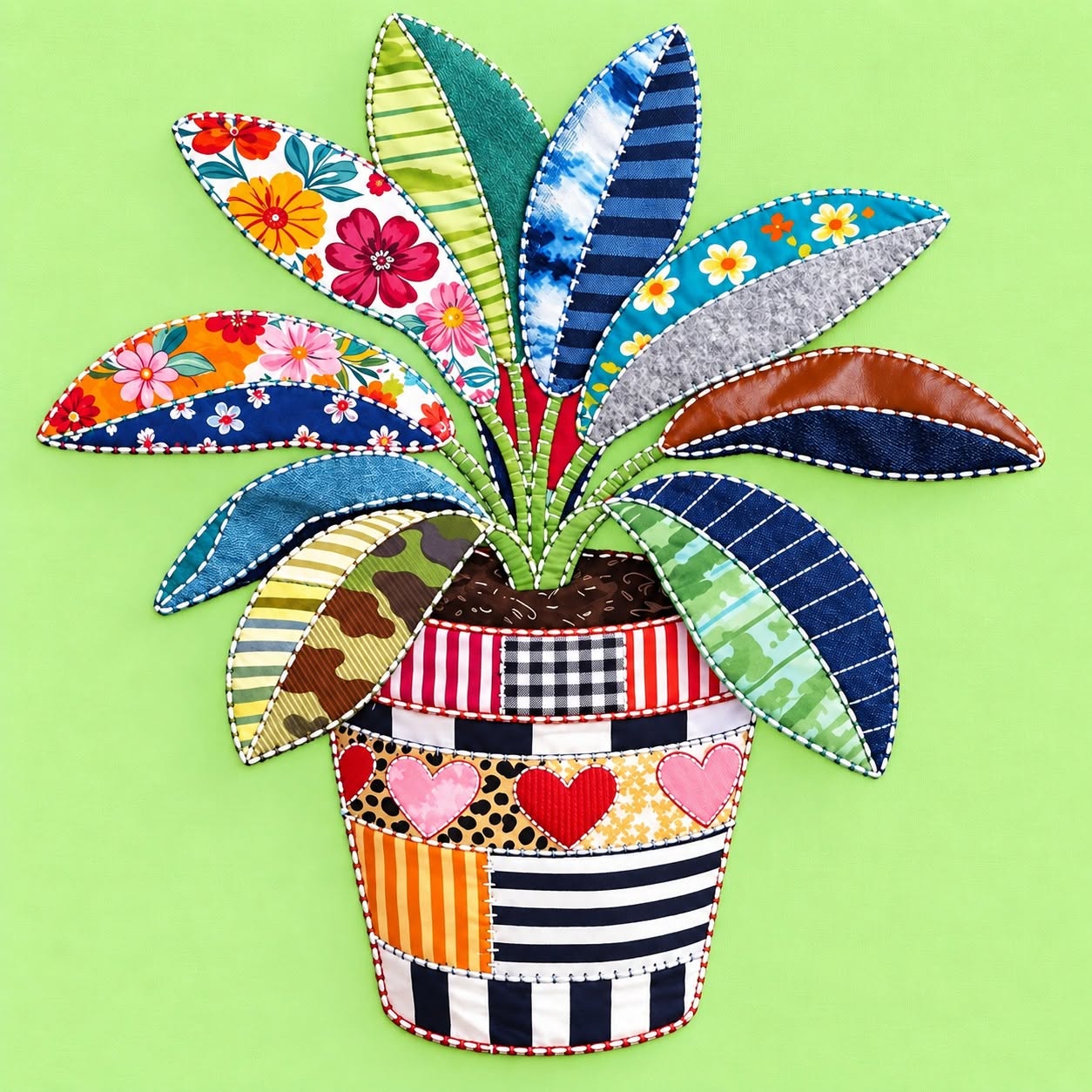
The Plant Panel in Fabric Application Pattern is a joyful textile project that combines appliqué, patchwork, decorative stitching, and playful fabric mixing to create a colorful plant displayed inside a patchwork-style flowerpot. Inspired by the project shown in the image, this design is especially attractive because every leaf can feature a different fabric, allowing floral prints, stripes, denim-style materials, checks, solids, and geometric patterns to work together in one composition. The finished piece can become a decorative fabric wall panel, a quilt block, a framed textile artwork, or part of a larger handmade project. Unlike a realistic botanical design, this pattern celebrates imagination and gives the maker freedom to experiment with shapes and colors. The visible stitching around the leaves adds handmade character while also defining every individual appliqué piece. For anyone who enjoys fabric appliqué, scrap projects, quilting, and creative sewing, this is an excellent opportunity to transform small pieces of fabric into a distinctive decorative panel.
A Plant Panel in Fabric Application Pattern can also be a practical scrap-busting project because most of the individual shapes require relatively small fabric pieces. The term fabric application pattern, often associated with fabric appliqué, describes a technique in which separate fabric shapes are placed and attached onto a base to build a larger decorative picture. In this project, elongated leaf pieces, narrow stems, curved sections, hearts, and several geometric patches come together to form the finished plant arrangement. One of the most enjoyable parts of the process is that there is no need for all the fabrics to match perfectly. Contrasting prints are actually an important part of the visual personality of the design. By repeating selected colors in different areas, however, you can create balance and make even a very eclectic collection of scraps look intentional.
Before beginning the Plant Panel in Fabric Application Pattern, it is useful to think about the project as several simple layers rather than one complicated composition. First comes the background fabric, followed by the pot shape, decorative pot sections, stems, and finally the leaves. Each element can be prepared separately before being assembled, making the project approachable even for sewists who are relatively new to appliqué. The project shown has a cheerful folk-art appearance, with blanket-style stitching surrounding many shapes and bold contrasts between prints. You can reproduce that general character without needing to copy every print exactly; choosing fabrics with similar levels of variety will create the same lively effect. Careful cutting and positioning are more important than using any specific brand or fabric collection. With patient preparation, even a beginner can build the project section by section and achieve a polished handmade result.
Materials and Preparation for the Plant Panel in Fabric Application Pattern
Start by choosing a stable background fabric large enough to hold the complete Plant Panel in Fabric Application Pattern with comfortable margins around the design. Medium-weight cotton is a practical choice because it is easy to press, cut, stitch, and stabilize. A light or softly colored background can be especially useful when the leaves contain strong prints because it prevents the composition from becoming visually overcrowded. Press the background carefully before positioning any appliqué pieces so the finished panel remains flat.
DISCOVER MORE FREE PATTERNS HERE!
Next, collect a varied selection of fabric scraps for the leaves and flowerpot. Look for stripes, florals, checks, abstract prints, denim-like fabrics, tiny geometric patterns, and coordinating solid colors. The image demonstrates how successfully different styles can be combined when the individual pieces have clear shapes. Try to include both light and dark fabrics, as this creates contrast between adjacent leaves. You do not need large pieces, making this pattern ideal for using leftovers from previous quilting and sewing projects.
You will also need basic appliqué sewing supplies, including sharp fabric scissors, pins or temporary fabric adhesive, sewing thread, an iron, a marking pencil, and a sewing machine if you do not intend to stitch everything by hand. A lightweight fusible web can help keep each appliqué piece stable before permanent stitching. Fusible web is a thin bonding material that attaches fabric shapes to the background when heat is applied. It is particularly helpful when working with the narrow stems and pointed leaves featured in this design.
Create templates for the main shapes before cutting the decorative fabrics. For the plant appliqué, prepare several long, pointed leaf templates in different widths and curves. Some leaves should bend gently toward the left, others toward the right, while a few can remain relatively upright. Preparing several variations gives the arrangement the natural spreading appearance seen in the reference design. Labeling the templates can also help you remember their planned positions during assembly.
The flowerpot should be prepared as a large tapered container shape, slightly wider across the upper edge and narrower at the bottom. Instead of creating the pot from one fabric, divide it into several horizontal and vertical sections. These sections allow you to incorporate stripes, checks, animal-inspired prints, hearts, and contrasting blocks. This patchwork flowerpot becomes almost as decorative as the plant itself and gives the finished panel its whimsical handmade personality.
Before cutting your final fabrics, place paper versions of the templates on the background. This simple preview allows you to adjust the overall dimensions and spacing without wasting fabric. Check that the upper leaves do not come too close to the panel edge and that the pot remains visually centered. Once you are satisfied with the arrangement, trace the shapes onto the appropriate fabrics and cut them carefully, preserving smooth curves and clean pointed tips.
How to Build the Patchwork Flowerpot Step by Step
Begin constructing the lower section of your Plant Panel in Fabric Application Pattern with the flowerpot because it establishes the center and scale of the entire composition. Cut the main pot silhouette from a base fabric or stabilizer, then use this shape as a foundation for the smaller decorative pieces. The pot should appear wide enough to support the large cluster of leaves without visually overwhelming the lower half of the panel. A gently curved top edge gives it a softer, more handcrafted appearance.
Divide the pot into decorative rows. In the inspiration image, the upper portion includes bright stripes, checks, and strong black-and-white contrast. You can recreate this effect by combining several narrow fabric rectangles. Arrange these pieces before sewing so that neighboring patterns remain clearly distinguishable. A busy print placed beside a calmer stripe or solid usually creates better visual definition than placing two similarly detailed prints together.
For the center section, consider adding heart appliqué shapes to introduce another decorative feature. Cut three hearts in different but coordinating colors and place them across a contrasting fabric strip. The hearts do not need to be perfectly identical because slight variations reinforce the handcrafted character of the panel. Attach them with fusible web if desired, then secure their edges using a narrow appliqué stitch or decorative blanket stitch.
Continue building the lower half of the pot with larger geometric sections. Vertical stripes, horizontal stripes, checks, and solids work especially well because their structured patterns contrast beautifully with the curved plant leaves. When combining these patches, maintain accurate seams whenever pieces are joined traditionally. If you prefer a simpler method, the sections can instead be placed directly onto a full pot foundation and secured as individual appliqué pieces.
Decorative stitching plays an important role in the appearance of this fabric appliqué pattern. A blanket stitch creates small perpendicular stitches along the edge of each fabric piece and is commonly used to secure appliqué while producing a visible decorative outline. You may use matching thread for a subtle result or contrasting thread for a playful folk-art effect. Keep your stitch length consistent, especially around the hearts and prominent geometric sections.
Once the pot is fully assembled, press it gently from the reverse side according to the needs of your fabrics and fusible materials. Position it near the lower center of the background panel and check that sufficient room remains above for all the leaves. Secure the pot temporarily, then stitch around its external edge. Avoid attaching the upper edge too early if you plan to tuck the stems behind it, because hiding the stem ends beneath the pot creates a cleaner and more convincing composition.
Creating the Fabric Leaves, Stems, and Appliqué Arrangement
The leaves are the visual highlight of the Plant Panel in Fabric Application Pattern, so spend time arranging their colors before attaching them permanently. Cut a mixture of long, slender leaves and wider curved leaves from your selected fabrics. Each leaf should taper toward a point. By varying the width, length, direction, and print of each piece, you can build a plant that feels energetic while still maintaining a recognizable overall structure.
Some leaves can also be divided into two contrasting fabric sections, as suggested by the reference image. For example, one half might use a blue stripe while the other uses a blue-and-white print. Another leaf could combine a floral pattern with a solid or textured fabric. This patchwork appliqué technique adds detail without requiring additional leaf shapes, and it is a useful way to incorporate very small scraps that might otherwise remain unused.
Create the stems from narrow strips of green, yellow-green, or coordinating fabric. They should be thin enough to appear delicate but wide enough to stitch securely. Arrange them so they emerge from the center of the flowerpot and spread upward like a fan. Some stems can lean toward the outer leaves while others remain close to the center. Slight overlap between stems will make the arrangement look fuller and more natural.
Once the stems are positioned, begin testing the leaves from the bottom upward. Larger curved leaves often work well around the lower sides, while longer vertical leaves create height in the middle. Wide horizontal leaves can extend outward and establish the overall silhouette. Try not to arrange every leaf at exactly the same angle. Variation in direction is one of the details that gives this textile plant artwork its lively, handcrafted feeling.
When you are satisfied with the placement, attach the stems first and then layer the leaves over their upper ends. Fusible web can be useful at this stage because it prevents pieces from shifting while you sew. Press each element carefully according to the fusible product instructions if you are using one. Take care around synthetic, coated, or unusual fabrics, since they may respond differently to heat than standard quilting cotton.
Finish the leaves with visible blanket stitching or another secure appliqué stitch. Work slowly around pointed tips and curved edges, adjusting the fabric direction frequently so the stitching remains even. Contrasting thread can emphasize every leaf and create an effect similar to the inspiration image. If you prefer hand sewing, this stage can become a relaxing decorative process, and slightly irregular stitches can contribute beautifully to the folk-art style of the finished panel.
Finishing, Quilting, Display Ideas, and Creative Variations
After all appliqué elements have been secured, inspect the complete Plant Panel in Fabric Application Pattern from a short distance. Looking at the entire design rather than individual stitches makes it easier to identify any areas that appear visually empty or overly crowded. You may decide to add another small leaf, strengthen a stem, or repeat a color in another section. Small adjustments at this stage can improve the overall balance considerably.
If you want the panel to have the soft dimension of a quilt, layer the finished appliqué top with batting and backing fabric. Baste the three layers together, then quilt around the main plant shapes. Echo quilting, where stitching follows the outline of the appliqué at a short distance, can make the leaves stand out while keeping the background visually calm. Straight-line or gently curved quilting can also work well depending on the style you prefer.
For a simpler decorative panel, batting is optional. You can instead stabilize the back with interfacing and finish the outer edges using binding. A coordinating fabric binding creates a tidy frame around the project while adding another opportunity to repeat a favorite color from the plant. Before attaching the binding, square the panel carefully so the corners remain accurate and the finished piece hangs evenly.
The finished fabric plant panel can be displayed in several ways. It can become wall décor in a sewing room, craft area, kitchen, nursery, or creative studio. It can also be incorporated into the front of a cushion, tote bag, fabric organizer, or larger quilt. Because the design is composed of independent shapes, it is easy to resize the pattern or simplify it for smaller projects.
Color changes can dramatically alter the personality of the Plant Panel in Fabric Application Pattern. Bright florals and bold stripes create an energetic modern folk-art look, while muted greens, creams, browns, and natural prints can produce a calmer rustic version. A pastel combination could work beautifully for soft home décor, while a palette of denim blues and neutral fabrics would create a more contemporary interpretation. The construction method remains essentially the same regardless of the palette.
Most importantly, treat the pattern as a creative framework rather than a rigid formula. You can add more leaves, reduce the number of patchwork sections, replace the hearts with flowers, or create a completely different decorative motif on the flowerpot. The goal is to preserve the recognizable relationship between the pot, stems, and spreading appliqué leaves while allowing your fabric choices to tell their own story. That flexibility is one reason this type of scrap fabric appliqué project can be enjoyable for both beginners and experienced quilters.
FAQ About the Plant Panel in Fabric Application Pattern
What is a Plant Panel in Fabric Application Pattern?
A Plant Panel in Fabric Application Pattern is a decorative textile project in which separate fabric shapes are attached to a background to create a plant-inspired image. In this version, the composition includes a patchwork flowerpot, narrow stems, multiple colorful leaves, decorative hearts, and visible stitching.
Is this fabric appliqué project suitable for beginners?
Yes. Beginners can successfully complete the project by working in stages. Starting with larger flowerpot pieces before moving to narrow stems and pointed leaves makes the construction easier. Using fusible web is also helpful because it temporarily secures the pieces before stitching.
What is the best fabric for appliqué leaves?
Quilting cotton is one of the easiest options because it cuts cleanly, presses well, and is comfortable to sew. However, the Plant Panel in Fabric Application Pattern can also include denim-style cotton, printed fabric, lightweight canvas, or other stable scraps. Extremely stretchy fabrics may require additional stabilization.
Do I need fusible web for this pattern?
No, but it can make the process easier. Fusible web helps hold the appliqué shapes in place before they are permanently stitched. If you prefer not to use it, pins, fabric glue designed for temporary basting, or careful hand basting can also be used.
Which stitch works best around the appliqué pieces?
A blanket stitch is particularly suitable because it both secures and decorates the fabric edges. A narrow zigzag stitch or satin-style appliqué stitch can also work. For a handmade appearance, the edges may be secured with hand blanket stitching.
Can I use leftover fabric scraps?
Absolutely. This is one of the best features of the design. The many individual leaves and patchwork flowerpot sections make it ideal for scrap fabric projects. Even relatively small pieces can become hearts, leaf sections, narrow pot strips, or decorative details.
How can I prevent appliqué edges from fraying?
Using fusible web and stitching close to the edges helps control fraying. A dense zigzag or satin stitch provides additional coverage, while blanket stitching leaves slightly more of the raw edge visible. Choosing tightly woven cotton also helps minimize excessive fraying.
Should the leaves all use matching fabrics?
No. In fact, mixing prints is central to the character of the Plant Panel in Fabric Application Pattern. Florals, stripes, checks, abstract prints, and solids can all be combined. For visual balance, repeat a few colors throughout the arrangement rather than introducing completely unrelated colors in every piece.
Can I make the pattern larger or smaller?
Yes. The templates can be enlarged or reduced as long as the proportions between the flowerpot, stems, and leaves remain balanced. For very small versions, simplify the patchwork sections and use fewer leaves because tiny appliqué details can become difficult to stitch accurately.
Does the finished panel need to be quilted?
No. Quilting is optional. If you want a padded wall hanging, use batting and backing fabric. For a flatter textile artwork, interfacing or another stabilizer may provide enough structure. The final finishing method depends on how you intend to display or use the project.
How can I make the design look professionally finished?
Accurate cutting, careful pressing, consistent stitching, and balanced fabric placement make the biggest difference. Take time to arrange all pieces before attaching them. Clean corners, smooth curves, securely stitched edges, and a straight outer border will give the project a much more polished appearance.
Can this design be used for something other than wall décor?
Yes. The Plant Panel in Fabric Application Pattern can become the decorative front of a cushion, tote bag, quilt block, sewing-machine cover, table mat, or fabric organizer. The appliqué composition can also be adapted into several smaller blocks and repeated across a larger quilt.
Conclusion
The Plant Panel in Fabric Application Pattern demonstrates how simple fabric shapes can be transformed into an expressive piece of textile art. Throughout this project, you learned how to choose a background, organize fabric scraps, create templates, build a decorative patchwork flowerpot, cut and position leaves, prepare narrow stems, secure appliqué pieces, and finish the edges with decorative stitching. You also learned how fabric appliqué, fusible web, blanket stitching, patchwork construction, and optional quilting can work together to produce a durable and visually interesting result.
One of the greatest strengths of this pattern is its flexibility. The fabrics do not need to match those shown in the inspiration image, and every maker can create a completely different version simply by changing colors, prints, stitching, or leaf arrangements. You can make the design bright and playful, rustic and neutral, modern and graphic, or soft and pastel while following the same basic process.
The project is also an excellent way to give leftover materials a useful purpose. Small pieces that may seem too limited for another quilt can become leaves, hearts, stripes, stems, or decorative sections of the flowerpot. Rather than hiding differences between fabrics, the Plant Panel in Fabric Application Pattern celebrates them and turns variety into one of the main design features.
EASILY FIND THE FREE PDF FOR THIS PATTERN HERE!
Whether you create the panel as wall art, a quilt block, a cushion front, or another decorative sewing project, take your time with the arrangement and enjoy experimenting with the materials available to you. Handmade appliqué is especially rewarding because small personal choices remain visible in the finished work and make every version unique. If you try this Plant Panel in Fabric Application Pattern, leave your sincere opinion about the project and share your suggestions. What colors, fabrics, or decorative details would you use in your own version? Your ideas can inspire new variations and even more creative ways to transform fabric scraps into beautiful handmade art.