
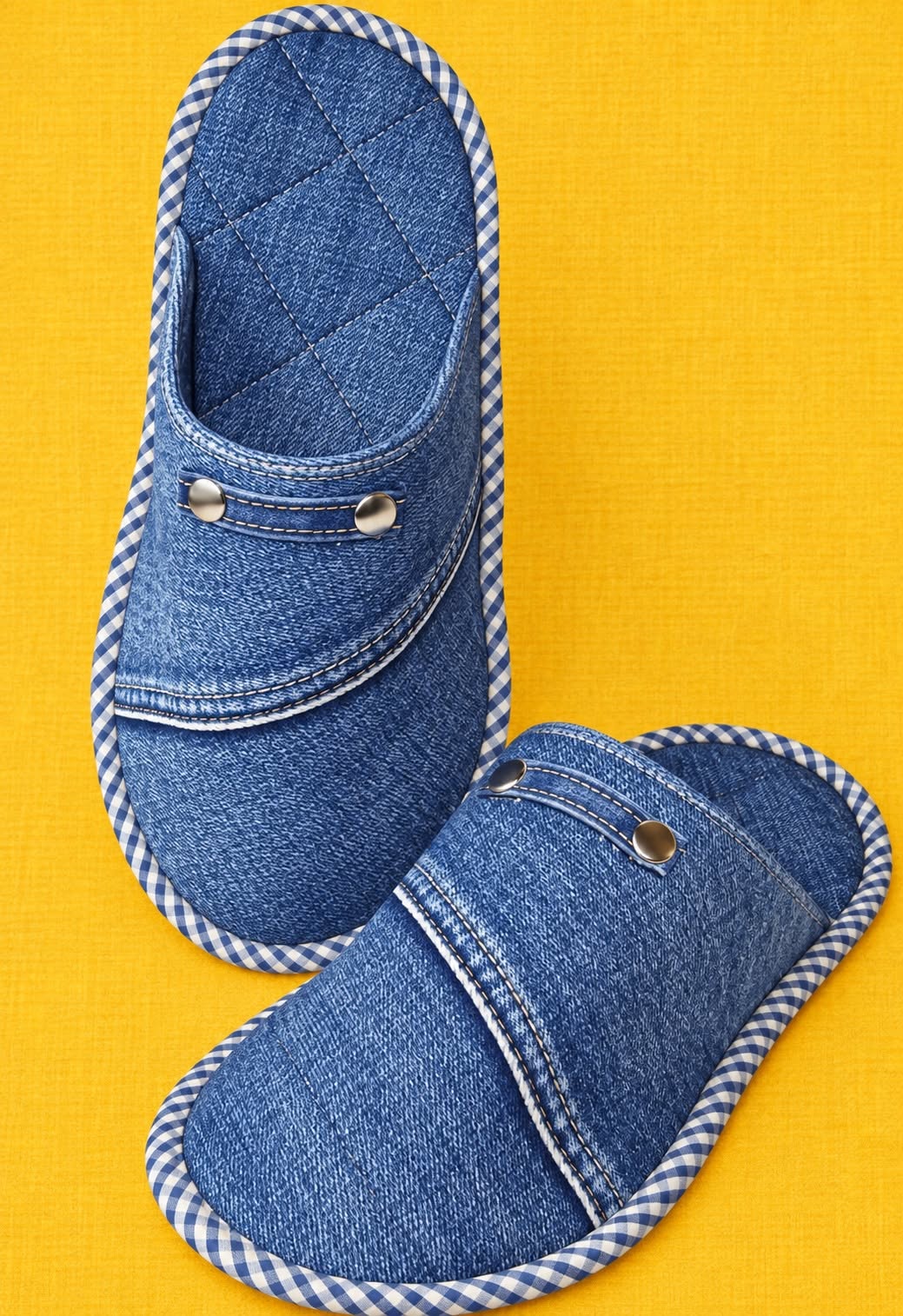
The Old denim slippers Pattern is a creative sewing project that turns worn jeans into comfortable, practical, and charming house slippers. Instead of allowing sturdy denim fabric to sit unused in a closet, this project gives it a completely different purpose while preserving the casual character that makes denim so appealing. The slippers shown in the reference photo have a relaxed handmade appearance, with blue denim uppers, softly rounded toes, contrasting checked binding, visible stitching, and small decorative metal details. These features make the design especially attractive for anyone who enjoys upcycling denim, sewing useful accessories, or creating handmade gifts. The project can also be customized easily because every pair of old jeans has its own washes, seams, faded areas, and textures.
Making an Old denim slippers Pattern is easier when you think of the project as several simple fabric components rather than one complicated shoe. You will create a sole, a padded inner layer, an upper section that covers the front of the foot, and a binding that finishes the outside edge. Depending on the jeans you have available, an original pocket can even become part of the decorative upper, giving the slippers the distinctive recycled look seen in the photo. Beginners should work slowly and create a paper template before cutting the denim. Since slippers must fit comfortably, testing the pattern against the wearer’s foot is one of the most important parts of the process.
Another advantage of this denim slippers sewing project is the opportunity to use small fabric remnants. You do not need a large continuous piece of denim, especially if you deliberately combine different sections of an old pair of jeans. Medium-weight denim is generally easier to sew than extremely heavy jeans fabric, while cotton fabric works beautifully for the lining and edge binding. For additional comfort, a layer of batting, felt, foam, or another suitable cushioning material can be placed inside the sole. With careful measurements, secure stitching, and neatly finished edges, the final slippers can look polished while still maintaining the warm personality of a handmade project.
Materials and Measurements for the Old Denim Slippers Pattern
Begin your Old denim slippers Pattern by gathering the materials before cutting anything. You will need clean old denim, paper for creating the templates, fabric scissors, sewing clips or pins, coordinating thread, a sewing machine, and cotton fabric for the binding. You can also prepare batting or thin foam for cushioning and a softer cotton fabric for the inner sole. Decorative rivets or buttons are optional and should be attached securely.
DISCOVER MORE FREE PATTERNS HERE!
The most reliable way to determine the size is to place the wearer’s foot on a sheet of paper and trace around it while standing naturally. Smooth the outline into a slipper shape and add approximately 1 cm of sewing allowance around the perimeter. Add a little extra space around the toe rather than making the pattern exactly the same size as the foot. A slipper that is slightly roomy will generally feel more comfortable than one that presses tightly against the toes.
Create separate templates for the sole and upper. The sole follows the complete foot shape, while the upper covers the toes and extends backward along both sides. Looking at the reference design, the upper is broad and rounded, creating plenty of coverage over the front portion of the foot. Place a separate sheet of paper over your sole template and sketch the upper directly in relation to it so both pieces correspond correctly.
For the sole, plan to cut two mirrored denim pieces for each slipper if you want denim on both sides, plus your cushioning layer. Alternatively, use denim for the outside and softer cotton for the surface touching the foot. Remember that you need a left and right slipper. Folding the fabric with right sides together before cutting is an easy way to obtain mirrored pieces without accidentally producing two identical soles.
The contrasting edging is an important visual feature of this recycled jeans slippers pattern. A checked blue-and-white cotton fabric resembles the finish visible in the reference photo, but gingham, stripes, tiny florals, or solid cotton can work equally well. Cut bias strips approximately 4 to 5 cm wide. Cutting the strips on the bias helps them curve smoothly around the rounded heel and toe.
Before sewing the actual slippers, stack the sole components and check their thickness under the presser foot. Old denim can become surprisingly bulky when combined with padding and several seam layers. A denim needle and a slightly longer machine stitch can make sewing easier. Test everything on scraps first, especially when working through thick areas from original jeans seams.
Cutting and Preparing the Recycled Denim Pieces
Wash and dry the jeans before beginning the Old denim slippers Pattern. This removes dirt and ensures the fabric has already completed any significant shrinking. Inspect the jeans carefully and identify areas with attractive fading or original topstitching. These characteristics do not have to be hidden; they are precisely what can make upcycled denim slippers unique.
Position the sole templates strategically. The flatter leg sections are usually convenient because they provide uninterrupted pieces of denim. Trace around your pattern with tailor’s chalk or a removable fabric marker. Mark the left and right components clearly on the wrong side so they do not become confused after cutting.
Next, position the upper template. You can use plain denim, or incorporate a jeans pocket into this section to imitate the playful appearance of the photographed slippers. If using an existing pocket, center it carefully before cutting. Make sure the strongest structural areas of the upper extend beyond the pocket because the pocket itself should remain a decorative feature rather than carrying all the tension.
Cut the lining pieces using the same sole template. Cotton is a comfortable choice because it reduces some of the stiffness associated with denim. Then cut the cushioning approximately 3 to 5 mm smaller around the perimeter than the fabric sole pieces. Keeping bulky padding away from the seam allowance makes the final edge considerably easier to sew and bind.
Prepare both uppers before attaching them to the soles. If you want a decorative strip like the one visible in the photo, cut a narrow piece of denim and topstitch along its edges. Add decorative buttons or rivet-style embellishments only where they will not touch or irritate the foot. For washable slippers, sewn buttons may be easier to maintain than some decorative hardware.
Finish the raw edge across the opening of each upper. Fold it toward the wrong side and topstitch, or enclose it with a narrow strip of cotton binding. This step matters because the opening remains visible after assembly. Pressing the fold before stitching will help create a smooth line and give your handmade denim slippers a more professional appearance.
Sewing and Assembling the Denim Slippers
Lay one completed sole flat and position the prepared upper over it. Begin by matching the center of the upper with the center of the toe. Secure that point first, then work gradually toward each side using clips. Avoid stretching the denim aggressively because uneven tension can cause one side of the slipper to become shorter than the other.
Baste around the outside edge approximately 5 to 7 mm from the raw edge. Basting is particularly useful for the Old denim slippers Pattern because several layers will eventually meet at the perimeter. After sewing, place your foot carefully inside the unfinished slipper and check the fit. The upper should hold the foot without squeezing it.
Once the fit is satisfactory, assemble the padded sole layers. Position the cushioning between the exterior sole and inner sole fabric, keeping everything smooth and flat. Baste around the perimeter. If desired, add a few lines of quilting through the sole to prevent the padding from shifting during use or washing.
Place the upper assembly over the prepared sole and sew around the complete perimeter. Reinforce the areas where the upper ends meet the sides of the sole because these points receive repeated stress as the slippers are put on and removed. Trim excessive bulk carefully, but do not cut so close that the stitching becomes weakened.
Now attach the bias binding around the entire outside edge. Open one folded edge of the binding and sew it to the perimeter, easing it around the curves. Fold the binding over the raw layers and secure it on the opposite side. The contrasting fabric binding does more than decorate the slippers; it encloses the multiple fabric layers and creates a clean, durable perimeter.
Work slowly around the toe because this is usually the tightest curve. Small clips can help distribute the binding evenly without creating large wrinkles. When you reach the starting point, overlap or neatly join the binding ends before completing the seam. Press the finished slippers gently, reshape them with your hands, and check that both sides appear balanced.
Finishing, Customizing, FAQ, and Caring for Your Slippers
Topstitching can dramatically improve the appearance of an Old denim slippers Pattern. Follow the existing construction lines with coordinating or contrasting thread to emphasize the handmade design. Traditional golden jeans thread creates a recognizable denim look, while navy thread produces a quieter finish. Keep the stitch length consistent for a polished result.
If the sole will be used on smooth flooring, consider adding a suitable non-slip fabric or grip material to the underside during construction. Indoor slippers can slide on polished surfaces, particularly when the bottom is made entirely from smooth fabric. Whatever material you select should be securely stitched and appropriate for the intended floor surface.
The pattern can also be personalized through fabric combinations. Dark denim paired with red gingham produces a classic country-inspired style, while faded denim and floral cotton create a softer appearance. Patchwork pieces can replace solid sections if your jeans remnants are small. This makes the project particularly useful for consuming leftovers from other denim sewing projects.
For a warmer pair, use a soft fleece or flannel lining. Keep in mind that thicker lining changes the internal dimensions of the slipper, so increase the pattern slightly if necessary. For lightweight warm-weather slippers, choose cotton lining and thinner cushioning. The basic construction method remains almost identical.
Care depends on the materials you use. Fabric-only slippers can often be gently washed according to the requirements of the individual textiles, but decorative hardware, foam, adhesives, or special sole materials may require different treatment. When uncertain, gentle hand cleaning and air drying are conservative choices that help maintain the slipper’s shape.
Most importantly, keep your first paper pattern after completing the project. Write the size, seam allowance, materials, and any alterations directly on the template. If the first pair needs an extra centimeter at the heel or more room across the upper, record that information. Your next Old denim slippers Pattern will then be faster and more accurately fitted.
FAQ: Frequently Asked Questions About the Old Denim Slippers Pattern
What is an Old denim slippers Pattern?
An Old denim slippers Pattern is a sewing template and construction method designed to transform used denim, particularly old jeans, into fabric house slippers. The pattern normally includes a full sole shape and a separate upper section that covers the toes and front of the foot. Padding, lining, and binding are added to improve comfort and finish.
Can beginners make denim slippers?
Yes. The project uses familiar sewing techniques such as tracing templates, cutting fabric, basting, topstitching, attaching layers, and sewing binding. The most challenging part is managing several thick layers around the sole. Beginners can make the process easier by choosing medium-weight denim and testing their machine settings on scraps.
What type of denim works best for handmade slippers?
Medium-weight denim is an excellent starting choice because it offers structure without becoming excessively bulky. Very thick denim can be more difficult to sew where several layers overlap. Slightly worn denim is especially attractive because its faded texture contributes to the authentic recycled denim craft appearance.
How do I make a slipper pattern in my own size?
Trace your foot on paper and smooth the outline into a comfortable sole shape. Add approximately 1 cm for seam allowance and a little additional ease around the toes when needed. Create the upper pattern by laying another sheet over the sole and drawing a curved section that comfortably covers the front of the foot.
Do denim slippers need padding?
Padding is not mandatory, but it makes the finished slippers much more comfortable. Thin foam, batting, felt, or another appropriate cushioning material can be placed between the sole layers. Avoid extremely thick padding unless you have already adjusted the pattern to accommodate the additional volume.
Can I use the original jeans pockets?
Absolutely. A pocket is one of the most interesting features you can reuse when making upcycled jeans slippers. Position it on the upper before cutting and check that it fits within the template. Existing seams, labels, and faded areas can also become intentional design elements.
Why should I use bias binding around the sole?
Bias-cut fabric stretches gently around curved edges, making it suitable for rounded slipper shapes. It also encloses the raw denim, lining, and padding simultaneously. A contrasting binding provides the attractive framed effect visible around the slippers in the reference design.
Can I sew denim slippers on a regular sewing machine?
Many household sewing machines can handle this project when fitted with an appropriate denim needle, provided the layers are not excessively thick. Sew slowly across bulky intersections and avoid forcing fabric under the presser foot. Testing the complete layer combination on scrap fabric before assembly is helpful.
How can I make the slippers less slippery?
For slippers intended for smooth indoor floors, add a purpose-made non-slip textile or grip material to the bottom. Secure it according to the material’s intended sewing method and make sure it lies flat. Always test the completed slippers cautiously on the actual flooring where they will be worn.
Can different fabrics be combined with old denim?
Yes. Cotton, gingham, flannel, fleece, and patchwork remnants can complement denim beautifully. Cotton works especially well for binding because it is easier to manipulate around curves. Combining fabrics also gives you more freedom to create a pair that matches your personal sewing style.
Can this pattern be resized for different family members?
Yes. Rather than enlarging one template blindly, trace each person’s foot whenever possible. Foot proportions vary as well as overall length, so an individually traced pattern usually provides better results. Label every reusable template with its finished size and any fitting adjustments.
Is the Old denim slippers Pattern a good upcycling project?
It can be an excellent way to reuse serviceable sections of worn jeans. Legs, pockets, hems, and decorative stitching can all contribute useful material. Even relatively small denim remnants may be incorporated into patchwork uppers, helping make better use of fabric already available in your sewing collection.
Conclusion
The Old denim slippers Pattern combines practical sewing with the creativity of denim upcycling. Starting with a simple traced foot template, you learned how to create the sole and upper pieces, select suitable denim, prepare a comfortable lining, add cushioning, assemble the slipper, and finish the perimeter with attractive bias binding. Details such as recycled jeans pockets, decorative topstitching, gingham edging, and carefully positioned embellishments can transform a straightforward pattern into something with genuine handmade character.
EASILY FIND THE FREE PDF FOR THIS PATTERN HERE!
The most important lessons are accurate sizing, careful layer preparation, secure stitching, and patient work around the curved edges. Once you have successfully completed one pair of handmade denim slippers, keep your paper templates and record any adjustments so future pairs become even easier to produce. Old jeans can offer far more creative possibilities than their original purpose, and this project is a wonderful example of how durable fabric can become something useful again. If you try this Old denim slippers Pattern, leave your sincere opinion about the project and share any suggestions or creative changes you would make. Your ideas—whether they involve different bindings, pocket arrangements, lining fabrics, colors, or decorative stitching—can inspire even more ways to transform old denim into beautiful handmade pieces.