
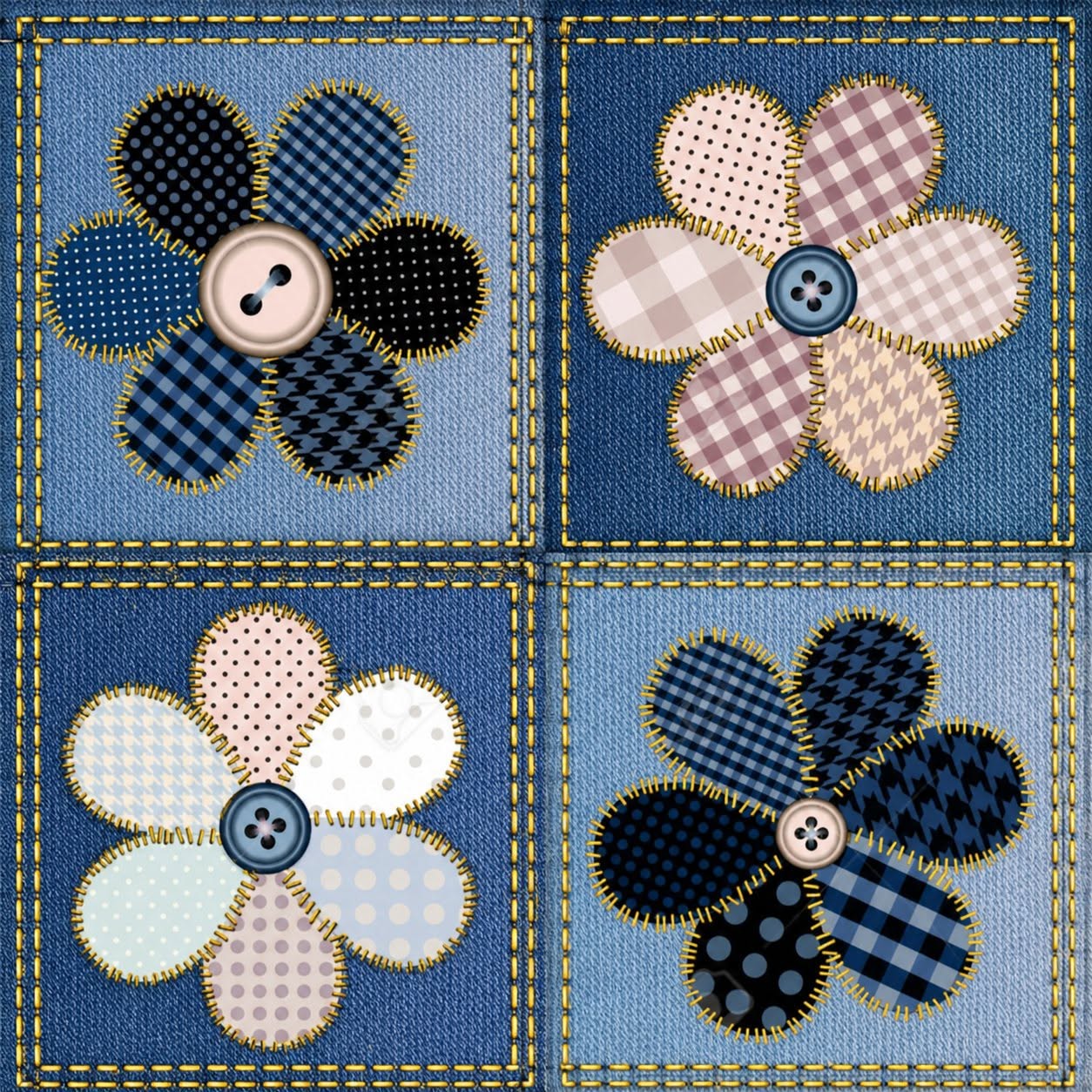
Denim Flower Patchwork Quilt Block Pattern is a charming sewing project that combines the casual texture of denim with colorful fabric appliqué, decorative stitching, and button centers. Inspired by the design shown in the reference image, this block features cheerful six-petal flowers arranged on individual denim squares, creating a handmade look that feels both rustic and modern. Each petal can be cut from a different print, allowing checks, polka dots, gingham, houndstooth, and soft pastel fabrics to work together beautifully. The denim background provides enough contrast to make every flower stand out clearly. Because the construction is based on simple shapes, this project is approachable for beginners while still offering plenty of creative possibilities for experienced quilters. Finished blocks can be combined into wall hangings, cushions, table toppers, tote bags, or a larger patchwork quilt.
One of the most appealing aspects of the Denim Flower Patchwork Quilt Block Pattern is its ability to make excellent use of fabric scraps. Small pieces left from previous sewing projects are often large enough to become flower petals, while recycled denim from clean jeans can provide sturdy background squares. Instead of requiring perfectly matching fabrics, this design actually becomes more interesting when several prints are mixed together. Dark blue prints create strong graphic flowers, while pale pink, cream, gray, or pastel fabrics produce softer blossoms. Decorative blanket stitching around the petals adds another layer of texture and helps define the flower shape against the denim. A button placed at the center completes the appliqué and gives the block a playful dimensional finish.
Although the finished project looks detailed, the construction process can be divided into manageable stages. You will first prepare the denim squares, create one reusable petal template, select coordinating scraps, arrange six petals around a central point, and secure everything with appliqué stitching. After the flowers are finished, the individual blocks can be joined using traditional patchwork seams. Careful pressing and consistent seam allowances are more important than complicated sewing techniques, making this a relaxing project to complete over several sessions. The instructions below explain the Denim Flower Patchwork Quilt Block Pattern from beginning to end, including material selection, appliqué preparation, decorative stitching, block assembly, finishing, and practical ways to customize the design.
Materials and Preparation for the Denim Flower Patchwork Quilt Block Pattern
For this project, choose a medium-weight denim that is stable but still easy to sew. Extremely thick jeans fabric can become bulky when several seams meet, so lightweight or medium-weight denim is usually easier to manage. You may use new denim yardage or clean recycled denim with flat areas free from thick seams and worn patches. For a design similar to the reference image, prepare four denim squares of equal size. A practical starting size is approximately 18 x 18 cm (about 7 x 7 inches) per unfinished block, although the dimensions can easily be adjusted.
DISCOVER MORE FREE PATTERNS HERE!
The flower petals are ideal for using patchwork fabric scraps. Select quilting cotton in coordinating blues, blacks, whites, creams, blush pinks, grays, or any palette that suits your décor. Mixing gingham, dots, checks, geometric prints, and small-scale patterns creates the lively patchwork effect seen in the design. Six different fabrics can be used for every flower, or some prints can be repeated. Try to maintain enough contrast between the petals and denim so the flower silhouette remains easy to see.
You will also need basic quilting and sewing supplies, including fabric scissors or a rotary cutter, cutting mat, ruler, sewing machine, thread, pins or fabric clips, an iron, and a marking pencil. For appliqué, lightweight fusible web is especially useful because it keeps the petals from shifting while you sew. If you prefer traditional appliqué methods, the petals may instead be held with fabric glue, temporary spray adhesive, or careful pinning before stitching.
The petal template is the key shape in the Denim Flower Patchwork Quilt Block Pattern. Draw a simple rounded oval or teardrop approximately 6 to 7 cm long and 4 to 5 cm wide. The petal should be wider toward the outer end and slightly narrower where it meets the flower center. Cut the template from sturdy paper or thin cardboard so you can trace it repeatedly. Using one consistent template ensures all six petals fit together neatly.
Before cutting your main pieces, wash and dry recycled denim and cotton scraps when possible. Prewashing helps remove dirt and reduces the possibility of noticeable shrinkage later. Press all fabrics flat before cutting. Denim can stretch slightly depending on its weave, so avoid pulling the fabric while measuring and trimming the squares. Accurate preparation makes assembling the blocks much easier later.
Finally, decide how you want the four flowers to relate to each other. You might create two dark blue flowers and two pale flowers, as suggested by the reference design, or make every blossom completely different. Lay your scraps beside the denim before cutting to evaluate the overall balance. Planning the colors first prevents one block from becoming visually heavier than the others and gives the finished denim patchwork quilt a more intentional appearance.
Cutting and Arranging the Fabric Flower Appliqué
Begin by cutting the denim background squares. If you are using the suggested 18 x 18 cm measurement, cut four identical squares and check each one against your ruler before continuing. If the denim frays heavily, handle the edges gently because they will eventually be enclosed inside the joining seams. You can also stay-stitch very close to the raw edge if necessary, although this is usually optional for small blocks.
Trace six petals for each flower, giving you a total of twenty-four petals for four blocks. When using fusible web, trace the petal shape onto the paper side of the web first. Cut roughly around each traced shape, leaving a small margin, and fuse it to the wrong side of your chosen cotton fabric according to the fusible manufacturer’s general temperature recommendations. Once cooled, cut directly on the traced outline for clean, consistent petals.
Arrange six petals in a circle on the first denim square before removing any backing paper. The narrow ends should meet or nearly meet in the center, while the rounded ends point outward. The exact spacing can vary slightly because the handmade character is part of the appeal. However, keep the flower centered so there is enough denim around the outer petals for later seam allowances and decorative stitching.
When you are satisfied with the arrangement, lightly mark the center and outer placement of the petals. Remove the fusible backing and position each piece again. Fuse the petals gradually rather than pressing all six at once. Starting with opposite petals can help maintain symmetry. After those are secured, add the remaining pieces around the circle. Protect printed fabrics with a pressing cloth if necessary and avoid excessive heat on stretch denim.
Repeat the process for the remaining three blocks. Consider changing the direction of prints such as gingham or checks from petal to petal. This subtle variation adds movement to the fabric flower appliqué without changing the basic construction. If two fabrics have similar values, place them on opposite sides rather than next to each other so each petal remains visually distinct.
Once all flowers are fused, place the blocks together temporarily and inspect the overall composition. Rotate individual blocks until the arrangement feels balanced. This is a useful moment to make small changes before decorative stitching begins. A successful Denim Flower Patchwork Quilt Block Pattern depends not only on accurate sewing but also on distributing dark, medium, and light fabrics thoughtfully across the entire project.
Appliqué Stitching, Buttons, and Joining the Quilt Blocks
The bold stitching surrounding each petal is one of the most recognizable features of this project. A blanket stitch appliqué works particularly well because it frames the raw fabric edge while adding a decorative handmade appearance. Many sewing machines have a built-in blanket stitch, but a narrow zigzag stitch can also be used. Hand stitching is another beautiful option if you enjoy slower, more traditional needlework.
Choose thread that contrasts gently with the petals and denim. White, cream, light gray, or pale blue thread can create a visible border around darker petals, while dark navy or charcoal works beautifully around pale prints. Test the stitch on a denim scrap with a piece of appliqué fabric before working on your finished block. Adjust the stitch length and width until it looks balanced rather than overly dense.
Sew slowly around every petal, keeping the stitch positioned consistently along the raw edge. Curves become easier when you stop frequently with the needle down, raise the presser foot, and pivot the fabric slightly. Avoid pulling the denim while turning because this can distort the block. Continue until all six petals are completely outlined, then repeat the same technique for the remaining flowers.
Next, choose a decorative button for each flower center. Buttons can coordinate with the surrounding prints or provide an intentional contrast. Two-hole and four-hole buttons both work well. Position the button over the point where the six petals meet, making sure it covers any small inconsistencies in the center. Sew each button securely by hand after the majority of machine work is complete.
To assemble the patchwork quilt blocks, arrange the four denim squares in a two-by-two layout. Place the two upper blocks right sides together and stitch one vertical seam using a consistent seam allowance, such as 1 cm. Repeat with the bottom pair. Press the seam allowances carefully. Because denim can become bulky, pressing seams open is often helpful, although you may press them to one side if your fabric is relatively lightweight.
Join the two rows together, carefully matching the center intersection. Use pins or clips on both sides of the middle seam to prevent shifting. Sew across the row, then press the final seam. At this stage, the project should resemble the four-panel composition shown in the inspiration image: four individual denim quilt blocks, each featuring a six-petal appliqué flower and button center.
Finishing, Quilting, and Creative Variations
If you want to turn the completed blocks into a small quilted panel, cut batting and backing fabric slightly larger than the patchwork top. Place the backing wrong side up, add the batting, and position the denim flower panel right side up. Smooth all three layers carefully and secure them with pins, basting spray, or temporary quilting stitches. The heavier denim already provides structure, so a relatively thin batting is often sufficient.
Quilting can be simple because the appliqué flowers already create strong visual detail. Straight stitching close to the seams between the four blocks is an effective option. You could also quilt around each flower or add parallel lines near the outer edges. Keep the quilting design restrained if you want the printed petals and decorative stitches to remain the focal point.
After quilting, square the panel by trimming the outer edges evenly. Binding may be made from quilting cotton or lightweight denim. Cotton binding is generally easier to fold around corners and reduces bulk. Attach it using your preferred machine or hand-binding method, taking extra care where the binding crosses denim seams. A neat binding gives the Denim Flower Patchwork Quilt Block Pattern a professional finished appearance.
There are many ways to customize this design. For a farmhouse-inspired version, combine faded denim with cream, red, and gingham petals. For a contemporary look, use black denim with bright geometric fabrics. A nursery version could feature pastel blue, pink, yellow, mint, and lavender prints. Seasonal versions can also be created using autumn tones, spring florals, or festive holiday colors without changing the basic petal template.
Individual blocks can become useful projects even if you do not want to make a full quilt. One flower block can form the front of a cushion cover or tote bag, while four blocks make an attractive table topper or wall hanging. A longer row of blocks could become a table runner. By repeating the same Denim Flower Patchwork Quilt Block Pattern, you can even create a full bed quilt while using a large collection of treasured fabric scraps.
The most important creative principle is to enjoy the natural variation of patchwork. Every petal does not need to be identical, and every stitch does not need to look mechanically perfect. Small differences give appliqué its handmade personality. Focus instead on secure construction, balanced placement, good pressing, and fabrics that work pleasantly together. Those details will make the finished project durable, attractive, and uniquely yours.
FAQ – Frequently Asked Questions
What is a Denim Flower Patchwork Quilt Block Pattern?
A Denim Flower Patchwork Quilt Block Pattern combines denim background squares with flower-shaped fabric appliqué. In this version, each flower contains six individual petals made from contrasting cotton prints and a decorative button at the center. Several finished blocks can be sewn together to create larger quilted projects.
Can beginners make this denim flower quilt block?
Yes. The design is beginner-friendly because it uses simple cutting, appliqué, straight patchwork seams, and basic decorative stitching. Beginners may find fusible web particularly helpful because it keeps the petals firmly positioned while the edges are sewn.
Can old jeans be used for the denim background?
Yes, clean recycled jeans can be an excellent source of denim. Choose sections that are relatively flat and avoid areas with thick pockets, belt loops, heavy seams, or excessive stretch. Recycled denim can also introduce slightly different shades of blue, which adds character to a scrap quilt.
What fabric works best for the flower petals?
Quilting cotton is usually one of the easiest choices because it cuts cleanly, comes in many prints, and is easy to appliqué. Gingham, polka dots, checks, houndstooth, geometric patterns, and small floral prints can all work well. Using several prints is an effective way to emphasize the patchwork flower design.
Do I need fusible web for appliqué?
No, but it can make the project easier. Fusible web temporarily bonds the petals to the denim and reduces movement during stitching. If you prefer not to use it, the pieces can be secured using pins, temporary fabric adhesive, or traditional appliqué techniques.
What stitch should I use around the petals?
A blanket stitch closely matches the decorative appearance of the reference project. You can use a machine blanket stitch or sew it by hand. A narrow zigzag stitch is another practical alternative. Whichever stitch you choose, test it first on scraps to determine the best width and length.
How many petals are needed for each flower?
This design uses six petals per flower. Therefore, four flower blocks require twenty-four individual fabric petals. Using one reusable template helps keep all of them similar in size and shape.
Should the buttons be attached before or after quilting?
For a small wall panel or decorative project, buttons may be added before final assembly, but attaching them after quilting is often more convenient because they will not interfere with the presser foot. If the finished item will be used by a small child, consider replacing dimensional buttons with a securely stitched fabric circle.
How can I prevent denim seams from becoming too bulky?
Use lightweight or medium-weight denim whenever possible, trim unnecessary seam bulk, and press carefully after every construction stage. Cotton binding can also be easier than denim binding because fewer heavy fabric layers accumulate around the edge.
Can I make a larger quilt using this pattern?
Absolutely. Simply create additional blocks and arrange them into rows. You could repeat the same four color combinations or make every flower unique. Maintaining consistent block dimensions and seam allowances will make assembling a larger denim patchwork quilt much easier.
How can I wash the finished quilt?
If all fabrics were prewashed and the buttons are securely attached, gentle washing is generally suitable for a practical quilt. Always consider the care requirements of the specific denim, cotton, batting, threads, buttons, and appliqué products used in your project.
Conclusion
The Denim Flower Patchwork Quilt Block Pattern is a wonderful way to transform denim and small cotton scraps into a colorful textile project filled with texture and personality. From preparing equal denim squares and cutting the six-petal flowers to applying decorative blanket stitches, attaching button centers, joining the blocks, quilting, and binding, every stage uses approachable sewing techniques that can be adapted to different skill levels.
The project also encourages creativity because there is no single correct color combination. Dark blue gingham can sit beside polka dots, soft pastel petals can be mixed with cream prints, and recycled denim can bring its own variations in shade and texture. Whether you turn the finished blocks into a small wall panel, cushion, table runner, tote bag, or full quilt, the same Denim Flower Patchwork Quilt Block Pattern can become a completely different piece simply by changing the fabrics.
EASILY FIND THE FREE PDF FOR THIS PATTERN HERE!
Most importantly, this project shows how basic appliqué shapes and familiar patchwork methods can create an eye-catching result without complicated construction. Take your time with the petal arrangement, test your decorative stitches, press the seams carefully, and enjoy choosing fabrics that reflect your personal style. If you make your own version, leave your sincere opinion about this project and share your suggestions, color ideas, or changes you would make to the pattern. Your creative ideas can inspire even more beautiful variations of this denim flower quilt design.