
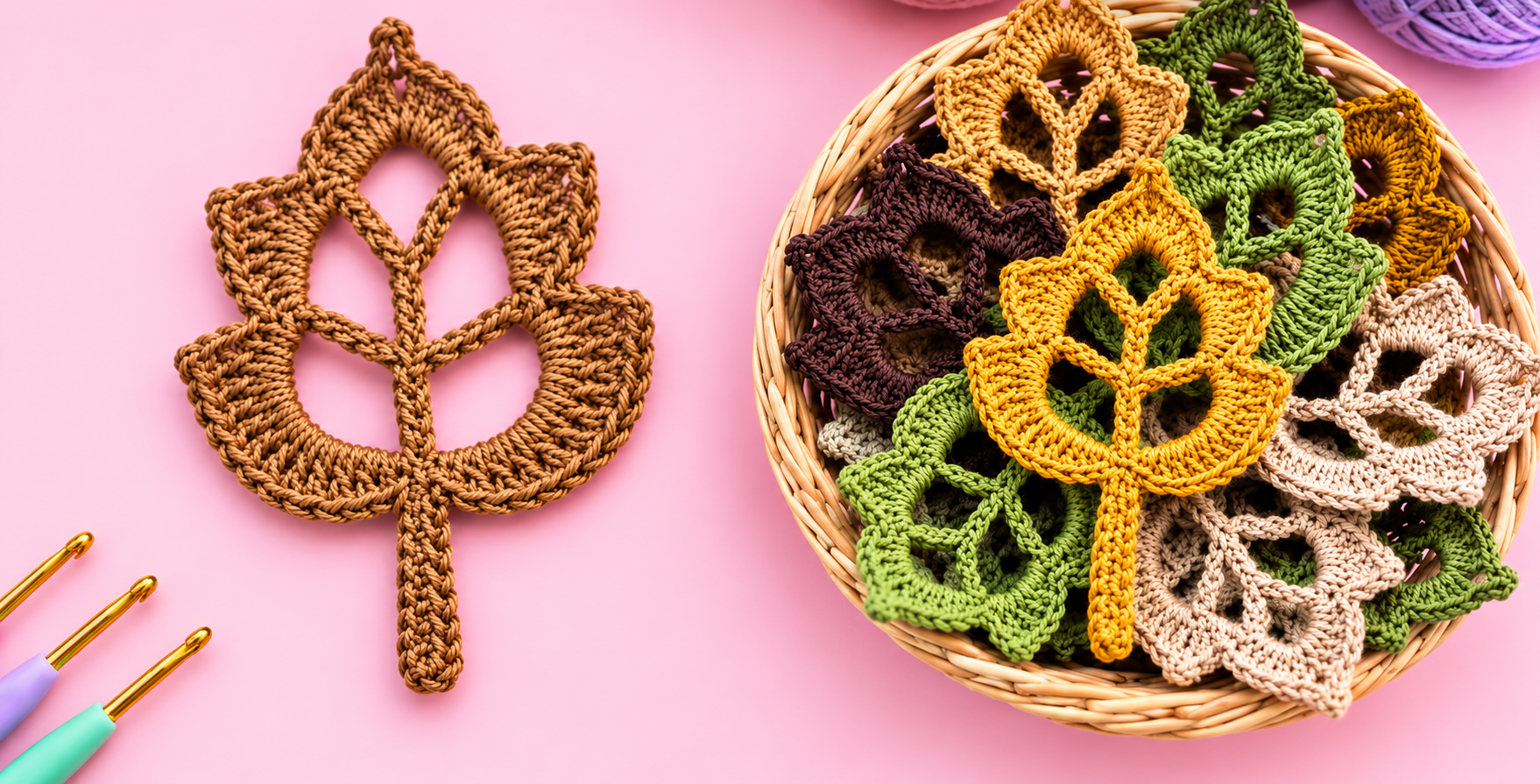
Beautiful crochet flower with a unique design Pattern is a creative crochet project that combines open spaces, sculpted petals, and a decorative stem into a motif that looks elegant without requiring complicated equipment. Inspired by the flower shown in the image, this design uses basic crochet stitches, carefully placed chains, and groups of taller stitches to create the characteristic petal shape. The finished flower can be worked in earthy brown, golden yellow, green, cream, or almost any yarn color you enjoy. Because the construction is based on repeated sections, the project becomes easier once the first petal has been completed. It is also a useful pattern for crocheters who want to practice shaping without making a large project. Throughout this guide, you will learn how to create the center, form the petals, finish the edges, and add the optional decorative stem.
One of the most attractive characteristics of this Beautiful crochet flower with a unique design Pattern is its open, almost lace-like construction. Instead of producing completely solid petals, the pattern creates elongated openings between the sections, giving the flower a light and artistic appearance. These spaces also help emphasize the outline of every petal and make the motif especially attractive when placed on a contrasting background. You can use cotton yarn for crisp stitch definition, a cotton blend for softness, or another smooth yarn that keeps the shape of the petals visible. The size will depend on the yarn weight and hook used, so the same pattern can produce a small embellishment or a larger decorative flower. Beginners with knowledge of basic stitches can follow the instructions slowly, while experienced crocheters may enjoy experimenting with additional colors and edging details.
Before beginning this crochet flower pattern, it helps to understand the main abbreviations used in the instructions. In U.S. crochet terminology, ch means chain, sl st means slip stitch, sc means single crochet, hdc means half double crochet, dc means double crochet, and tr means treble crochet. The notation st means stitch, while sp refers to a space created by chains or previous stitches. A magic ring can be used to begin the center, although a small chain joined into a ring works equally well. Keep your tension comfortable rather than extremely tight because the petal openings need enough flexibility to form smooth curves. A stitch marker, scissors, yarn needle, crochet hook, and approximately 30–60 grams of yarn are generally enough for one motif, depending on its final size.
Materials, Crochet Abbreviations, and Preparing the Flower Center
For this Beautiful crochet flower with a unique design Pattern, a smooth medium or light cotton yarn is an excellent choice because it clearly shows the structure of the stitches. A crochet hook between approximately 3.0 mm and 4.5 mm works well for many cotton yarns, although you should always select a hook that gives you comfortable tension. You will also need scissors and a yarn needle for finishing the ends. Blocking pins are optional but useful if you want very symmetrical petals. Choose one main color or prepare several colors if you plan to create a basket of flowers like the arrangement shown in the inspiration image.
DISCOVER MORE FREE PATTERNS HERE!
Begin the center with a magic ring. If you prefer not to use a magic ring, ch 4 and join with a sl st in the first ch to form a small circle. Ch 1, then work 6 sc into the center of the ring. Join with a sl st to the first sc. Do not pull the ring so tightly that the stitches become difficult to work into. This small foundation serves as the anchor for the open petal framework.
For the next round, ch 5, skip one stitch, and sl st into the following stitch. Repeat this sequence around the center until you have created three large chain loops. These chain spaces establish the inner openings visible between the flower sections. If you prefer a flower with five petals rather than three large structural sections, you can create five evenly spaced chain loops instead. However, the three-loop foundation helps reproduce the distinctive interlocking appearance seen in the pictured motif.
Now begin building additional structure around those loops. Work 1 sc into the first chain space, ch 3, work 1 sc into the same space, and then ch 4 before moving to the next chain loop. Repeat around. These small chains create connection points that will later support the wider petals. Keep the chains loose enough that they can curve naturally. Tight chains can make the center pucker and prevent the petals from lying flat.
When you reach the beginning of the round, join with a sl st. Spread the work gently with your fingers and check whether the loops are reasonably even. Do not worry if the motif looks small or unusual at this stage. Most decorative crochet flowers only begin to show their finished shape after the taller stitches are added. The important goal is to keep the center balanced and the chain spaces similar in size.
Before continuing, familiarize yourself with crochet tension. Consistent tension means your stitches are approximately the same height and firmness throughout the motif. If one petal is worked much more tightly than another, the flower can look uneven. When working chains, relax your yarn hand slightly because chains often need more flexibility than regular stitches. This simple adjustment can significantly improve the final appearance of the unique crochet flower design.
Step-by-Step Instructions for Creating the Sculpted Crochet Petals
To begin the first outer petal, insert your hook into the first available chain space and work 1 sc. Ch 2, then work 2 hdc, 5 dc, 2 hdc, and 1 sc into the same or adjoining large chain space, depending on how wide you want the petal. This gradual progression from short stitches to taller stitches creates the rounded curve. The group should naturally fan outward. If the petal feels crowded, reduce one dc; if it looks too narrow, add one or two dc stitches.
Next, ch 4 to create the elongated opening that separates one petal section from the next. Anchor the chain with 1 sc into the nearest central connection point. This chain is important because the open spaces are a defining feature of the Beautiful crochet flower with a unique design Pattern. Try not to twist the chain before anchoring it. The opening should resemble a narrow leaf or teardrop once the surrounding stitches are completed.
For the second petal, ch 2 and work another graduated group: 2 hdc, 5 dc, 2 hdc, and 1 sc into the next large chain space. As you crochet, gently spread the stitches along the chain space instead of allowing them to bunch in one place. This distributes the fabric more evenly and produces a broader petal. The double crochet stitches create height, while the half double crochet stitches soften the transition between the base and the highest point.
Continue repeating the petal structure around the flower. Depending on how you arranged the original chain loops, you can create five or six decorative points. A six-petal variation creates a full floral appearance, while five petals can look slightly more organic. The pictured design has an artistic interlocking quality, so exact geometric perfection is not required. What matters most is repeating the same stitch sequence consistently enough that the flower looks intentional.
To make the points more pronounced, you can place 1 tr, ch 2, 1 tr at the highest section of each petal instead of using only dc stitches. This creates a sharper tip similar to a stylized leaf. If you prefer softer rounded petals, continue with double crochet stitches. This is one of the easiest ways to personalize the pattern without changing the overall construction. The taller stitch option works especially well when making larger decorative flowers.
After completing all petals, join the final stitch with a sl st at the base of the first petal. At this point, gently pull each petal outward and shape the open sections with your fingertips. The crochet flower motif should now have recognizable curves and decorative negative spaces. Do not fasten off yet if you plan to add a finishing border. Keeping the same working yarn creates a cleaner transition into the edging round.
Creating the Decorative Border and Optional Crochet Stem
A simple border can make the Beautiful crochet flower with a unique design Pattern look much more polished. Starting at the base of the first petal, work 1 sl st or 1 sc into each available edge stitch. When you reach the upper curve of a petal, work 2 sc into the same stitch if necessary to prevent the edge from pulling inward. Continue around the entire flower. This border strengthens the shape and produces a clearly defined outline.
If you want a more decorative edge, alternate sl st and ch 1 along the outer curve. Another option is to use a contrasting yarn color for the border. For example, a golden flower with a slightly darker brown edge can create a warm autumn look. Green with cream edging can produce a fresh botanical style. Color changes should be joined securely so the yarn ends remain hidden after weaving them into the back.
The stem can be crocheted directly from the lower center of the flower. Join the yarn at the bottom connection point and ch approximately 18–25 stitches, depending on the desired stem length. Beginning in the second chain from the hook, work 1 sc in each chain across. This creates a narrow flexible stem similar to the one seen in the inspiration image. For a wider stem, return along the opposite side of the foundation chain with another row of sc.
At the end of the stem, sl st into the flower base to secure it. Fasten off and use a yarn needle to weave the yarn tail through several stitches on the back. Avoid cutting the tail extremely close to the knot because crochet projects can loosen during handling or washing. Weaving through multiple directions helps secure the end. This is especially useful when the finished flower will be attached to a frequently used item.
For a firmer decorative stem, use single crochet stitches worked tightly and evenly. For a softer stem, use slip stitches or a thinner hook. The stem can also be omitted entirely when the flower will be used as a coaster, applique, bag decoration, or wall motif. Removing the stem transforms the design into a versatile standalone flower. Adding it gives the project a more botanical appearance.
Once the border and stem are finished, place the motif on a flat surface. Arrange each petal so that the openings are symmetrical and the outer curves are visible. Light blocking can greatly improve the appearance of cotton crochet. Slightly dampen the motif, shape it carefully, pin it in place if appropriate for your yarn, and allow it to dry completely. Always follow the care instructions recommended for the yarn fiber you are using.
Finishing Ideas, Color Choices, and Creative Uses for the Pattern
The Beautiful crochet flower with a unique design Pattern can be adapted to many different color palettes. Natural brown creates a rustic handmade appearance, while golden yellow gives the flower a sunflower-inspired warmth. Olive green produces a botanical decorative motif, and cream or beige can create a neutral farmhouse-style piece. Bright colors can also work beautifully for spring or summer projects. Using several colors together makes a collection of flowers visually interesting.
Yarn thickness also changes the personality of the flower. Fine cotton produces a delicate motif that can be used for appliques or decorations. Medium-weight cotton creates a more substantial flower suitable for table decor and handmade accessories. Chunkier yarn can turn the same basic design into a larger statement piece. If you change yarn thickness, remember to adjust the crochet hook accordingly so the stitches remain flexible but defined.
You can sew the finished crochet flower onto tote bags, cushions, fabric organizers, table runners, or handmade gift packaging. To attach the flower, thread matching yarn through a yarn needle and sew around the center and selected outer points. Avoid sewing every edge completely flat if you want to preserve the dimensional effect. Leaving some sections slightly raised can make the petals appear more sculptural.
Several flowers can also be connected to create a decorative garland. Instead of fastening off after completing one motif, use a chain to connect the first flower to the next. Another method is to make each flower separately and join them afterward. A combination of green, mustard, brown, cream, and burgundy can create a warm seasonal arrangement. Pastel pink, lavender, mint, and cream offer a softer alternative.
If your flower curls excessively, the most common cause is too many stitches being placed into a small space. Remove one or two taller stitches from each petal and try again. If the edges pull inward or the flower forms a bowl shape, there may be too few stitches. Adding a double crochet to each petal can provide more room. These small adjustments are completely normal because yarn thickness and individual tension affect the finished measurements.
Making several versions of the Beautiful crochet flower with a unique design Pattern is one of the best ways to improve the design. The first flower helps you understand the construction, while the second usually develops more even tension. By the third or fourth motif, the stitch sequence becomes familiar and much faster. You can then experiment with different borders, petal heights, stem lengths, and color combinations while keeping the same basic structure.
FAQ About the Beautiful Crochet Flower with a Unique Design Pattern
Is this crochet flower suitable for beginners?
Yes. A beginner who already understands chains, slip stitches, single crochet, half double crochet, and double crochet can work through this pattern. The unusual appearance comes mainly from the arrangement of basic stitches rather than extremely advanced techniques.
What is the best yarn for this crochet flower?
Smooth cotton yarn is an excellent choice because it offers good stitch definition and helps the petals maintain their shape. Cotton blends can also work well. Avoid very fuzzy yarn when making your first flower because it may hide the stitch placement.
What crochet hook should I use?
A hook between approximately 3.0 mm and 4.5 mm works for many light and medium cotton yarns. The best hook depends on your yarn thickness and personal tension. Choose a hook that allows the petal stitches to remain flexible.
How can I make the crochet flower larger?
You can use thicker yarn and a larger hook or increase the number of stitches in each petal. For example, adding extra double crochet stitches increases the width. Adding treble crochet stitches can increase both height and visual drama.
How can I make a smaller flower?
Use thinner yarn, a smaller hook, shorter chain spaces, and fewer double crochet stitches in each petal. Keep the general progression from short stitches to taller stitches so the petal maintains its curved shape.
Why are my crochet petals curling?
Curling usually happens because the stitch count does not match the available space or because your tension is very tight. Try reducing the number of stitches if the petal ruffles excessively. If the whole motif curls inward, you may need slightly more stitches or looser tension.
Can I use several colors in one flower?
Absolutely. You can crochet the center in one color, the petals in another, and the border in a third. Always complete color changes securely and weave the yarn tails into the back of the flower.
Do I have to add the stem?
No. The stem is optional. Without it, the motif becomes a traditional decorative crochet flower applique. With the stem, it has a more distinctive botanical appearance and can be used as a decorative hanging motif or part of a floral arrangement.
Can these flowers be joined together?
Yes. You can join them with chains, sew them together at selected points, or arrange them individually on another crochet or fabric project. Multiple motifs can be used for garlands, wall decorations, bags, cushions, and other handmade pieces.
Should I block the finished flower?
Blocking is recommended when you want especially even petals and clearly defined openings. Cotton responds particularly well to careful blocking. Always use a method appropriate for your yarn fiber and avoid excessive heat unless the yarn manufacturer specifically allows it.
How long does one crochet flower take to make?
The time varies with experience, yarn size, and the number of petals. Once the stitch sequence becomes familiar, the motif can be completed relatively quickly. Your first flower will naturally take longer because you will be checking the pattern and adjusting the shape.
Can I modify the number of petals?
Yes. The foundation can be adjusted to create different numbers of chain spaces. Five or six petals work especially well, but experimenting with the number of petals can produce completely different decorative results while preserving the same basic technique.
Conclusion
The Beautiful crochet flower with a unique design Pattern combines basic crochet techniques with creative shaping to produce a distinctive floral motif filled with texture and open spaces. Throughout this tutorial, you learned how to prepare the center, understand essential abbreviations such as ch, sc, hdc, dc, tr, and sl st, build the petal framework, create sculpted outer petals, add a polished border, and crochet an optional decorative stem.
You also learned how yarn thickness, hook size, tension, stitch count, and color can transform the final appearance. Once you understand the basic construction, the pattern is easy to customize. You can create smaller flowers for appliques, larger flowers for decoration, neutral versions for rustic projects, or colorful collections for seasonal handmade arrangements.
The most important part of this project is enjoying the process and allowing yourself to experiment. Handmade crochet does not need to look mechanically identical from one motif to another. Small variations can give each flower its own character, especially when different yarns and colors are used. If you make this Beautiful crochet flower with a unique design Pattern, leave your sincere opinion about the design and the tutorial. I would also love to hear your suggestions, favorite color combinations, and ideas for using these crochet flowers in future handmade projects.