
The Quilt with Sleepy Cub Pattern is a charming fabric art project that combines landscape quilting, appliqué, free-motion quilting, and soft textural details in one warm composition.
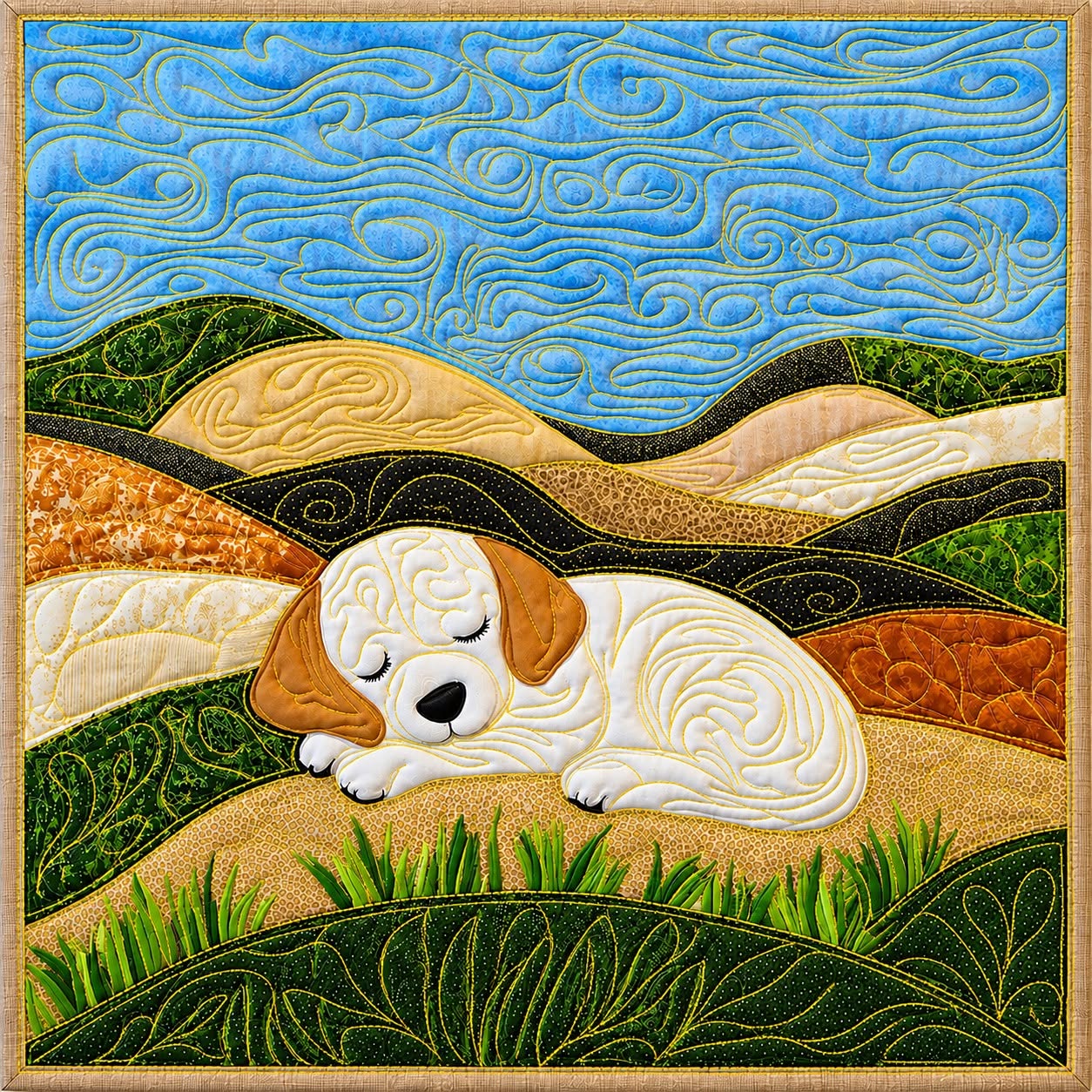
Inspired by the image, the design features a peaceful sleeping puppy resting among gently curved hills made from coordinated fabrics.
The layered landscape creates depth without requiring complicated geometric blocks, making this project approachable for confident beginners and especially enjoyable for intermediate quilters.
One of the strongest visual elements is the contrast between the light quilted sky, darker rolling hills, and the soft white body of the sleepy cub.
Because every fabric section can be customized, the sleepy cub quilt pattern can look rustic, modern, country-inspired, or playful depending on the prints you select.
In this tutorial, you will learn how to plan, cut, appliqué, assemble, quilt, and finish a project inspired by the photograph while creating your own unique handmade version.
The main idea behind a Quilt with Sleepy Cub Pattern is to build the artwork from the background toward the foreground.
Instead of piecing traditional square blocks, you will create flowing landscape sections that overlap one another like distant hills.
The sleeping puppy appliqué is then positioned near the lower center so it naturally becomes the focal point of the composition.
Decorative stitching and free-motion quilting add texture to the sky, the hills, the puppy’s fur, and the grassy foreground without making the design look overly busy.
This technique is especially useful for quilters who want to explore art quilting, fabric appliqué, and landscape quilting techniques in a single manageable project.
The finished wall quilt can become nursery décor, a cozy handmade gift, or a decorative textile for anyone who loves dogs and quilting.
For this version of the Quilt with Sleepy Cub Pattern, you can work with a rectangular or nearly square quilt top depending on the final space where you plan to display it.
A practical finished size is approximately 50 × 50 cm, although you can enlarge the pattern to make a larger wall hanging or small lap quilt.
Choose cotton quilting fabrics because they are easy to cut, press, appliqué, and quilt, and select several shades of beige, brown, cream, black, olive, and white for the landscape.
You will also need batting, backing fabric, binding fabric, sewing thread, quilting thread, fusible web if using raw-edge appliqué, sharp fabric scissors, pins or clips, an iron, and a sewing machine.
For the puppy, prepare white or cream fabric for the body, caramel or light brown fabric for the ears and face markings, black fabric for the nose, and a very small amount of dark thread for the closed eyes.
Once your materials are prepared, the construction becomes much easier because each stage of the sleeping puppy appliqué quilt can be completed in a logical order.
Planning the Landscape and Preparing the Quilt Background
Begin the Quilt with Sleepy Cub Pattern by sketching the overall composition on paper. Draw a rectangular quilt outline and add several horizontal curved lines that represent rolling hills. Keep the curves smooth and irregular rather than perfectly symmetrical because this gives the finished landscape a more natural appearance.
DISCOVER MORE FREE PATTERNS HERE!
Divide the landscape into approximately eight to twelve fabric sections. Use lighter fabrics toward the upper areas and mix darker shades through the middle and foreground. Alternating prints, dots, marbled fabrics, tone-on-tone cotton, and subtle florals will help each hill remain visually separate.
Prepare a large piece of white or cream cotton fabric for the upper background. This section represents the open sky and should occupy approximately the upper third of the quilt. Leave extra fabric around every edge so you can trim the quilt accurately after quilting.
Create paper templates for each curved hill by tracing the lines from your sketch. Number each template from the background toward the foreground so you remember the sewing order. Add approximately 0.7 to 1 cm of extra fabric along edges that will be turned under if you are using traditional appliqué.
For a faster landscape quilt pattern, you can use raw-edge appliqué. Trace each hill shape onto fusible web, cut loosely around the shape, fuse it to the wrong side of the selected fabric, and then cut directly on the drawn line. Follow the instructions supplied with your fusible product regarding heat and pressing time.
Arrange all of the hills on the background before permanently attaching anything. Step several feet away and examine the balance of light and dark fabrics. The landscape should guide the viewer’s eye toward the central area where the sleeping puppy will eventually be positioned, so avoid placing every dark fabric in one single area.
Creating the Sleepy Cub Appliqué Step by Step
The puppy is the central feature of the Quilt with Sleepy Cub Pattern, so begin by drawing or printing a simple sleeping dog template. Separate the illustration into individual appliqué pieces: body, head, muzzle, two ears, front paws, facial patches if desired, nose, and small eyelid details.
Trace each puppy component onto paper or fusible web. Remember that fusible appliqué templates generally need to be reversed if the direction of the finished piece matters. Labeling every component prevents confusion when several similarly shaped pieces are lying on your cutting table.
Cut the main body from white or cream fabric. The body should have a soft rounded back, a gently curved belly, and an extended front paw shape. A slightly textured tone-on-tone fabric works beautifully because quilting stitches will remain visible without overwhelming the design.
Cut the head and muzzle next, then prepare caramel-colored ears that overlap the sides of the head. In the reference-inspired design, the ears create warm contrast against the light face. Slight variations in brown fabric can make the puppy feel more dimensional while still maintaining a simple fabric appliqué dog pattern.
Add a rounded black nose at the center of the muzzle. The closed eyes can be created with narrow black fabric pieces, machine stitching, or careful hand embroidery. Small curved eyelashes immediately establish the peaceful sleeping expression that gives the sleepy cub quilt its gentle personality.
Before fusing the puppy permanently, assemble every appliqué piece directly on the landscape. Position the body slightly below the horizontal center of the quilt and angle the head naturally toward the foreground hill. Once you are satisfied with the placement, fuse or baste each component and stitch around the edges using a small zigzag, blanket stitch, satin stitch, or straight raw-edge appliqué stitch.
Assembling, Layering, and Quilting the Design
After all landscape and puppy appliqué pieces are secured, press the quilt top carefully from the back whenever possible. Avoid dragging the iron across appliqué edges because this may distort small pieces. The surface should be smooth before you prepare the quilt sandwich.
Cut your backing and batting approximately 5 cm larger than the quilt top on every side. Place the backing wrong side up on a clean surface, center the batting over it, and position the completed Quilt with Sleepy Cub Pattern top right side up. Smooth all layers from the center outward.
Baste the quilt using safety pins, temporary spray adhesive, or long hand-basting stitches. Proper basting is essential when working with free-motion quilting because the many curved stitching movements can shift unsecured layers and create unwanted puckers.
Start quilting the white sky using loose swirling lines, loops, curves, and pebble-like shapes. These stitches do not need to match perfectly. The goal is to create soft movement and texture similar to wind patterns while keeping the background visually lighter than the central puppy.
Quilt each landscape section using a different texture whenever possible. You might use gentle waves in one hill, loops in another, small leaves in a third, flowing lines in a dark area, and simple echoes around curved edges. Changing quilting motifs makes the art quilt landscape more interesting without adding additional fabric pieces.
On the puppy, use curved quilting lines that follow the natural direction of the body. Echo the outline of the back, paws, face, and ears, then add loose swirls inside larger white areas to suggest soft fur. Keep dense quilting away from extremely small facial details so the peaceful expression remains clear and recognizable.
Finishing Details and Giving the Quilt a Professional Look
Once quilting is complete, place the quilt on a flat surface and inspect every area. Trim loose threads and check that all appliqué edges are firmly secured. If any section has lifted during quilting, restitch it carefully before trimming the outside edges.
Square the quilt using a quilting ruler and rotary cutter. Measure from several points instead of relying only on the original fabric edges, because quilting can slightly change the shape of the project. Accurate trimming will make the final Quilt with Sleepy Cub Pattern appear much more polished.
Prepare binding strips approximately 6 to 6.5 cm wide and join them diagonally until you have enough length to surround the quilt. Press the strip in half lengthwise with wrong sides together. Attach the binding around the quilt while carefully forming neat mitered corners.
For a look similar to the photographed inspiration, choose very dark brown or black binding. The dark outline acts like a picture frame and emphasizes both the pale quilted sky and the multiple colored landscape layers. A narrow border is particularly effective because it does not compete with the appliqué.
If the quilt will be displayed on a wall, add a hanging sleeve to the back before completing the final hand stitching of the binding. You can also add a fabric label with the project name, completion date, and maker’s name, transforming your sleepy puppy quilt project into a memorable keepsake.
Give the finished quilt a final gentle press if necessary, protecting dimensional quilting with a towel underneath. Hang it vertically and observe how the free-motion stitching reacts to natural light. The combination of curved landscape pieces, appliqué, and textured quilting should create shadows and movement that make the sleeping cub stand out beautifully.
FAQ – Frequently Asked Questions About the Quilt with Sleepy Cub Pattern
What is a Quilt with Sleepy Cub Pattern?
A Quilt with Sleepy Cub Pattern is an appliqué-style quilt design featuring a sleeping puppy or young dog as the main focal point. The animal is usually combined with layered fabrics that form a decorative landscape, making the project a blend of appliqué, art quilting, and free-motion quilting.
Is this sleepy cub quilt suitable for beginners?
A beginner who already understands basic sewing machine operation can make a simplified version. Start with fewer landscape layers, use fusible raw-edge appliqué, and choose simple quilting lines. More experienced quilters can add detailed free-motion quilting and intricate fabric textures.
What fabric is best for a sleeping puppy appliqué quilt?
High-quality quilting cotton is one of the easiest choices because it presses well and remains stable while sewing. Tone-on-tone cotton fabrics are particularly useful because they provide visual texture while allowing appliqué shapes and quilting stitches to remain visible.
Do I need a special sewing machine for this project?
No. A standard domestic sewing machine can complete the project. A machine that allows you to lower or cover the feed dogs is helpful for free-motion quilting, but you can also finish the quilt using walking-foot quilting or simple straight and curved lines.
Can the puppy pattern be enlarged?
Yes. The appliqué template can be enlarged proportionally. When making a larger quilt, enlarge both the puppy and the landscape sections so the composition remains balanced. Avoid enlarging only the dog unless you intentionally want it to dominate the entire design.
Should I use fusible appliqué or turned-edge appliqué?
Both methods work. Fusible appliqué is faster and usually easier for beginners, especially around the ears, paws, and muzzle. Turned-edge appliqué provides a softer traditional appearance but requires more preparation and precise handling.
How can I prevent the appliqué from becoming stiff?
Use lightweight fusible web instead of heavy adhesive products and avoid covering the entire project with unnecessary fusible material. Another option is to use fusible web only around the outer edge of larger pieces, leaving their centers free.
What quilting design works best for the white sky?
Free-flowing swirls, loops, gentle curves, and organic lines work especially well. These motifs complement the rounded landscape and peaceful sleeping puppy. You do not need to make every swirl identical; variation adds handmade character.
How large should the finished quilt be?
There is no required size. Approximately 50 × 50 cm works well for a decorative wall quilt, but the same Quilt with Sleepy Cub Pattern concept can be adapted into a smaller mini quilt or enlarged for a more substantial wall hanging.
Can I change the colors of the landscape?
Absolutely. Brown, cream, black, beige, and olive create an earthy appearance similar to the inspiration, but blue, green, gold, burgundy, pastel, or scrap fabrics can produce completely different styles. The most important principle is maintaining enough contrast between neighboring landscape layers.
How do I make the sleeping puppy stand out from the background?
Use a light body fabric against medium or dark landscape sections. Dark outline stitching around selected parts of the puppy can also increase definition. Keeping the area immediately around the face relatively simple helps the facial details remain visible.
Can scraps be used for this pattern?
Yes. This is an excellent scrap quilt project because many of the curved hills require relatively small pieces of fabric. Coordinating leftover cottons by color value rather than exact print can create a rich landscape while reducing fabric waste.
Conclusion
The Quilt with Sleepy Cub Pattern combines several enjoyable quilting techniques in one expressive project. By building curved landscape layers first, preparing the sleeping puppy as a separate appliqué, securing each element carefully, and finally adding textured quilting, you can recreate the overall feeling of the photographed design while still producing a quilt that is uniquely yours.
Throughout the project, fabric contrast plays an important role. Light and dark landscape sections create depth, while the pale puppy becomes the natural focal point. Details such as the brown ears, rounded black nose, closed embroidered eyes, flowing quilting lines, and dark outer binding help turn relatively simple fabric shapes into a recognizable and peaceful scene.
The most important lesson is that the Quilt with Sleepy Cub Pattern does not need to be copied stitch for stitch. Landscape quilting is especially rewarding because slight differences in curves, fabric prints, quilting motifs, and appliqué placement contribute to the handmade personality of the finished piece.
Whether you create this design as a wall hanging, a decorative quilt, a nursery project, or a handmade gift, take your time during the arrangement stage and enjoy experimenting with your fabrics before sewing. A thoughtful layout often has a greater impact on the final result than complicated construction techniques.
EASILY FIND THE PDF FOR THIS PATTERN HERE!
After completing your sleeping puppy appliqué quilt, take a moment to look at the project from a distance and notice how the layered hills, quilted textures, and gentle sleeping expression work together. These small artistic decisions are what transform fabric and thread into a warm textile illustration. If you make your own version of the Quilt with Sleepy Cub Pattern, leave your sincere opinion about the tutorial and share your suggestions. It would also be wonderful to know which colors, fabrics, quilting motifs, or puppy details you would change when creating your own interpretation of this cozy pattern.