
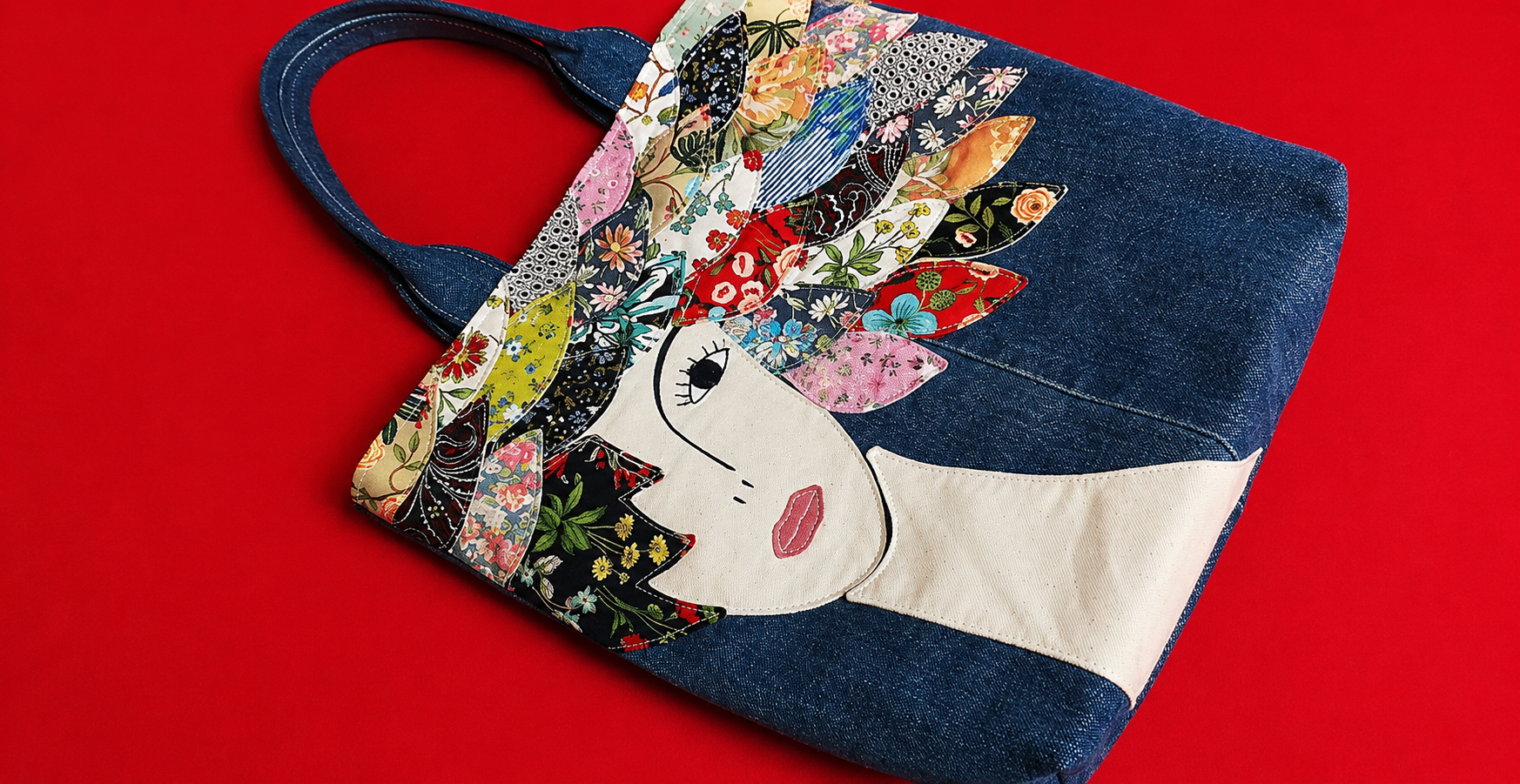
The Tote bag with a face appliqué made from old denim scraps Pattern is a creative sewing project that combines practical bag construction, denim upcycling, colorful fabric scraps, and expressive appliqué in one eye-catching handmade piece. Inspired by the tote shown in the reference image, this project transforms sturdy old denim scraps into a reusable bag decorated with a stylized woman’s face and a dramatic arrangement of patterned fabric pieces that resemble flowing hair or decorative feathers. The result feels artistic without losing the usefulness of an everyday tote, making it an excellent project for sewists who enjoy combining patchwork techniques with functional accessories. Because much of the design can be created from leftover materials, it is also a wonderful way to give forgotten fabric pieces a new purpose instead of letting them accumulate in a sewing drawer.
One of the most interesting features of this denim tote bag pattern is the contrast between the dark blue background and the light-colored face appliqué. The bold profile immediately becomes the focal point, while the colorful fabric shapes surrounding the head add movement, personality, and texture. You do not need to reproduce every print exactly as shown in the inspiration image. In fact, the project becomes more personal when you select fabrics from your own collection. Floral cottons, stripes, tiny geometric prints, vintage-looking scraps, and contrasting solids can all work beautifully. The most important part is creating enough contrast between the face appliqué, the denim base, and the decorative scraps so that each element remains visually clear after stitching.
Another reason the Tote bag with a face appliqué made from old denim scraps Pattern is so appealing is that it can be adapted for different sewing skill levels. Beginners can simplify the decorative shapes and use basic straight stitching around the appliqué pieces, while experienced sewists can add free-motion stitching, decorative thread, detailed facial features, quilted sections, pockets, and a full lining. The measurements can also be adjusted depending on whether you want a compact everyday tote or a larger shopping bag. In this tutorial, the suggested finished size is approximately 38 cm wide by 40 cm high, with two comfortable handles. These dimensions provide enough space for the appliqué design while keeping the construction straightforward and practical.
Materials, Measurements, and Fabric Preparation
To begin your Tote bag with a face appliqué made from old denim scraps Pattern, prepare two rectangular denim pieces measuring approximately 42 cm wide by 44 cm high. These measurements include seam allowances and allow the finished bag to reach roughly 38–40 cm in width and height depending on your chosen seam allowance. Medium-weight denim is ideal because it provides structure without becoming excessively difficult to sew. Old jeans are perfect for this project, especially large leg sections that can be opened along the seams and pressed flat before cutting.
DISCOVER MORE FREE PATTERNS HERE!
For the lining, cut two rectangles measuring the same size as the denim exterior pieces. Quilting cotton is an excellent choice because it is lightweight, easy to sew, and available in countless prints. If your denim is soft or worn, you may also add lightweight fusible interfacing to the wrong side of the exterior panels. This additional layer helps the denim tote bag maintain its shape and provides a more stable surface for the appliqué work.
The decorative hair or feather shapes are made from small pieces of cotton fabric. Collect approximately 15 to 25 scraps in different colors and prints. Each shape can measure approximately 4 to 6 cm wide and 8 to 14 cm long depending on its position in the design. You can create a simple paper template shaped like a long pointed leaf. Prepare several variations instead of making every piece identical. This creates the layered, handmade appearance visible in the inspiration project.
For the face and neck, choose a light cream, beige, ivory, or natural cotton fabric that contrasts strongly with the denim. A piece measuring approximately 30 cm by 40 cm should be enough. You will also need small amounts of black fabric or black thread for the eye and facial outline, plus dusty pink or muted red fabric for the lips. Fusible web is especially helpful when making a fabric face appliqué, because it temporarily holds each piece in place before sewing.
To create the handles, cut two denim strips approximately 10 cm wide by 60 cm long. Fold each strip lengthwise with the right sides together, stitch along the long edge, turn it right side out, press it flat, and topstitch close to both edges. Another option is to fold the raw long edges inward by approximately 1.5 cm, fold the entire strip in half, and topstitch. Finished handles between 3 and 4 cm wide are comfortable for an everyday tote.
Before cutting anything, wash, dry, and press all fabrics whenever possible. Prewashing is especially important when combining recycled denim with quilting cotton because the materials may shrink differently. Flatten old jeans carefully with steam, avoiding heavily stretched areas if you want the tote to remain symmetrical. Once everything is prepared, arrange your scraps beside the denim and experiment with colors before committing to the final composition.
Creating the Face Appliqué and Colorful Patchwork Design
The face is the defining element of the Tote bag with a face appliqué made from old denim scraps Pattern, so begin by drawing the profile on paper. A simple silhouette works best: include the forehead, nose, lips, chin, jawline, and long neck. The face does not need realistic anatomical detail. The artistic character comes from the simplified shapes, which are easier to cut and stitch while still producing a recognizable portrait.
Make the face template approximately 22 to 26 cm tall so it occupies a generous portion of the front bag panel. Trace the template onto the paper side of fusible web, following the manufacturer’s instructions. Rough-cut the fusible web, iron it onto the wrong side of your cream fabric, and then cut precisely around the traced shape. Remove the paper backing and place the face onto one denim rectangle, keeping at least 3 cm away from the side and bottom seam allowances.
Before permanently attaching the face, arrange the colorful pointed shapes behind the head. These pieces form the dramatic decorative “hair” visible in the design. Start with the largest shapes at the back and gradually overlap shorter pieces toward the front. Aim the points in several directions instead of arranging them in perfectly straight rows. This technique adds rhythm and gives the scrap fabric appliqué a lively patchwork appearance.
Once you are satisfied with the arrangement, take a quick photo for reference before removing the pieces. Fuse the lowest layer first, then continue adding the remaining pieces in overlapping rows. If you prefer not to use fusible web, apply a small amount of washable fabric glue near the center of each shape or secure them with pins. However, fusible web generally makes the appliqué process much easier because the pointed tips remain stable while stitching.
Stitch around each decorative piece approximately 2 to 3 mm from the raw edge. A straight stitch creates a casual handmade look, while a narrow zigzag provides extra security. You can also use a blanket stitch if your machine offers this option. Contrasting thread highlights the shapes, while matching thread creates a softer finish. When working with a highly colorful patchwork tote bag, neutral thread can prevent the design from looking too busy.
After the colorful shapes are secured, fuse the face over their lower edges so that the head appears naturally layered in front of the decorative hair. Stitch around the entire face and neck using a narrow straight stitch or appliqué stitch. Sew slowly around the nose, lips, and chin because these curves define the profile. Shortening the stitch length slightly can help you navigate detailed areas more accurately.
Complete the portrait by adding the eye, eyebrow, nose line, and lips. The eye can be made from a small black fabric oval or stitched directly using dense black thread. Add several eyelashes with straight stitches. A curved line from the forehead toward the nose can be stitched with black thread for definition. Cut the lips from muted pink fabric and appliqué them in place. These simple details bring the face appliqué tote bag to life without requiring advanced embroidery skills.
Sewing and Assembling the Denim Tote Bag
After completing the front appliqué panel, place the front and back denim rectangles right sides together. Pin or clip along both side edges and the bottom edge. Leave the upper edge open. Stitch using approximately a 1 cm seam allowance. Denim can be bulky, so use a denim or jeans needle, preferably size 90/14 or 100/16 depending on the weight of the fabric. A slightly longer stitch length of approximately 2.8 to 3 mm often produces smoother seams.
To create a flat-bottomed handmade denim tote, box the lower corners. With the bag still inside out, flatten one corner so that the side seam aligns directly with the bottom seam. Measure approximately 4 cm from the point and draw a line across the corner. Stitch along this line and trim away the excess fabric, leaving approximately 1 cm beyond the stitching. Repeat on the opposite corner. This produces a base approximately 8 cm deep.
Next, prepare the lining in the same way. Place the two lining rectangles right sides together and sew the side seams and bottom seam, but leave an opening approximately 10 to 12 cm long along the center of the bottom seam. This opening will later allow you to turn the entire bag right side out. Box the lining corners using the same 4 cm measurement so that the lining fits neatly inside the exterior.
Attach the handles to the denim exterior before joining it to the lining. Measure approximately 9 to 10 cm inward from each side edge and position the handle ends against the upper raw edge of the bag. Make sure the handles are not twisted. Each end should extend approximately 2 cm beyond the raw upper edge for security. Baste them in place using an 8 mm seam allowance. Reinforce the attachment area with an extra line of stitching if the bag will regularly carry heavier items.
Turn the denim exterior right side out and leave the lining inside out. Insert the exterior into the lining so the right sides are facing each other. Match the side seams carefully and pin around the entire upper opening. The handles should remain sandwiched between the two fabric layers. Stitch around the top using a 1 cm seam allowance, sewing slowly across the thick areas where the handles are positioned.
Pull the denim bag through the opening left in the lining. Take your time because denim and interfacing can make this step bulky. Once everything is right side out, push the lining into the bag and shape the corners neatly. Close the opening in the lining with a narrow machine stitch or invisible hand stitching. Press the upper edge carefully and topstitch approximately 3 to 5 mm from the edge. This final topstitching gives the upcycled denim bag a professional finish and helps the lining stay inside.
Finishing Details, Personalization, and Long-Term Use
At this stage, your Tote bag with a face appliqué made from old denim scraps Pattern is fully functional, but several finishing details can make it even more distinctive. Examine all appliqué edges and trim loose threads carefully. If any pointed fabric shapes lift away from the denim, reinforce them with a few additional stitches. Pay special attention to the narrow tips because these areas receive more friction during normal use.
Decorative quilting can also enhance the front panel. You might stitch flowing lines between the appliqué pieces, add echo quilting around the face, or sew a few curved lines through the denim background. These stitches are not necessary for structural support, but they add texture and make the project look more intentionally finished. If your tote contains batting or interfacing, quilting becomes especially attractive because it gives the surface a lightly padded appearance.
A pocket can easily be added to the lining. Before assembling the lining panels, cut a rectangle approximately 22 cm wide by 18 cm high. Fold the upper edge twice by 1 cm, topstitch it, then fold the remaining raw edges under. Position the pocket approximately 10 cm below the upper edge of the lining and stitch along the sides and bottom. This small addition makes the denim tote bag pattern more practical for keys, a phone, or small sewing supplies.
You can also customize the appliqué portrait to create entirely different personalities. Change the skin-tone fabric, hair colors, prints, lip shape, eyelashes, or orientation of the face. The surrounding patchwork shapes could be made from coordinated florals for a romantic appearance, bright solids for a modern style, or vintage scraps for a nostalgic look. This flexibility is one of the strongest advantages of working with an appliqué bag pattern rather than a rigid printed design.
For cleaning, gentle washing is recommended because the bag combines different materials and numerous stitched appliqué pieces. Hand washing in cool water is the safest option, although a gentle machine cycle may be suitable if every fabric was prewashed and all appliqués are securely stitched. Avoid very high dryer temperatures. Reshape the tote while damp and allow it to air dry whenever possible. A warm iron can be used on the denim and cotton areas, but avoid ironing directly over delicate decorative threads.
Most importantly, remember that scrap-based sewing does not require perfection. Slight variations in the leaf shapes, facial outline, placement, and stitching contribute to the handmade character of the finished bag. The Tote bag with a face appliqué made from old denim scraps Pattern is meant to celebrate creative reuse. Every leftover fabric print can represent another past sewing project, turning a practical tote into a piece filled with color, texture, and personal history.
Frequently Asked Questions About the Tote Bag with a Face Appliqué Made from Old Denim Scraps Pattern
Can I make this tote bag entirely from old jeans?
Yes. Old jeans are an excellent source of fabric for this project. Large leg sections can become the main exterior panels, while narrower sections can be transformed into handles, pockets, or decorative accents. Avoid extremely worn areas around knees or inner seams unless you reinforce them with interfacing.
What is the best needle for sewing denim?
A denim or jeans sewing-machine needle is recommended. Size 90/14 works well for medium-weight denim, while heavier fabric may require a 100/16 needle. Always test your machine on layered scraps before assembling the final bag.
Do I need fusible web for the face appliqué?
It is not absolutely necessary, but fusible web makes the project significantly easier. It keeps the face and colorful fabric shapes from shifting while they are stitched. Beginners will usually achieve cleaner results when using it.
Can raw-edge appliqué survive washing?
Yes, provided the pieces are securely stitched around the edges. Some gentle fraying may occur after repeated washing, which can actually complement the handmade patchwork appearance. If you want cleaner edges, use a narrow zigzag or satin stitch.
What fabrics work best for the colorful decorative pieces?
Quilting cotton is ideal because it is stable, easy to cut, and available in many prints. Floral fabrics, geometric patterns, stripes, small botanical designs, and contrasting solids all work well for this scrap fabric tote bag.
Can beginners make this pattern?
Yes. A beginner with basic knowledge of straight stitching can complete the project. The most challenging part is usually sewing the curved face outline, but this becomes easier when you slow down and use a shorter stitch length.
How large should the finished tote be?
A practical finished size is approximately 38 cm wide by 40 cm high with an 8 cm boxed base. However, the dimensions can easily be increased or reduced. Just remember to resize the face appliqué proportionally.
Should the tote bag have interfacing?
Interfacing is optional but recommended when using soft or lightweight recycled denim. It provides stability, prevents excessive stretching, and helps the appliqué lie flat. Medium-weight fusible interfacing is generally suitable.
Can I add batting and turn it into a quilted tote?
Absolutely. Thin cotton batting or fusible fleece can be added behind the exterior panels. Quilt the denim before constructing the bag. This creates a softer, more structured quilted denim tote bag and gives decorative stitching greater dimension.
How can I prevent bulky seams when sewing several denim layers?
Trim unnecessary seam allowance, grade thick layers, use a jeans needle, and sew slowly. When crossing especially thick intersections, a hump jumper or folded scrap of fabric placed behind the presser foot can help keep the foot level.
Can I make the face in a different style?
Yes. The facial design is completely customizable. You can create a minimalist face, a more realistic portrait, a different hairstyle, closed eyes, embroidered features, or even a completely different appliqué subject while keeping the same tote construction method.
Why is this pattern suitable for fabric scraps?
The decorative elements require only small pieces of fabric, which makes the project especially useful for leftover quilting cotton. Even scraps that are too small for traditional quilt blocks can become part of the layered hair design.
Can I sell bags made using this type of technique?
You can create and sell your own original handmade bags based on general sewing and appliqué techniques, provided you are using your own artwork, templates, and original interpretation. Developing a unique facial design and fabric arrangement also helps make each finished tote distinctive.
How long does this project take to complete?
The amount of time depends on how detailed you make the appliqué. A simplified version may be completed in a few hours, while a heavily stitched or quilted version may take an entire day or several sewing sessions.
What makes this project a good upcycling idea?
It turns discarded denim and small leftover fabrics into something functional. Instead of buying a large amount of new material, you can combine pieces already available in your sewing collection. This makes the old denim scraps pattern both creative and resourceful.
Conclusion
The Tote bag with a face appliqué made from old denim scraps Pattern brings together several enjoyable sewing techniques in one memorable project. You begin by preparing recycled denim, lining fabric, handles, and colorful cotton scraps. Next, you design the face silhouette, layer the decorative patchwork pieces, secure everything with appliqué stitching, and add expressive details such as the eye, eyelashes, facial outline, and lips. Finally, the exterior and lining are assembled into a sturdy tote with boxed corners and reinforced handles.
This project also demonstrates how ordinary leftover materials can become the central feature of an original handmade accessory. Old denim, fabric scraps, raw-edge appliqué, patchwork, and practical tote construction work naturally together, giving you plenty of opportunities to experiment with color and texture. No two bags need to look identical, which makes this technique especially satisfying for anyone who enjoys creative sewing.
Once you understand the basic construction, you can adapt the same method to larger shopping bags, smaller handbags, quilted totes, gift bags, sewing organizers, or artistic wall pieces. Changing the face, fabrics, appliqué arrangement, handles, and quilting can completely transform the final appearance while preserving the core technique taught in this tutorial. If you make your own version of the Tote bag with a face appliqué made from old denim scraps Pattern, leave your sincere opinion about the project and share your suggestions. What colors would you choose for the fabric scraps, and what detail would you add to make the face appliqué uniquely yours?