
The Beautiful Crochet Leaf Stitch Pattern is a charming technique for anyone who enjoys creating textured crochet pieces inspired by nature. Its sculpted leaf shape, raised lines, and elegant pointed finish make this pattern suitable for decorative bags, cushions, blankets, table accessories, appliqués, and handmade home décor. Although the finished motif can look complicated at first, it is created through a logical combination of basic crochet stitches, strategic increases, decreases, and textured stitches. Once you understand how each section is constructed, the design becomes much easier to reproduce. This tutorial explains the process using familiar US crochet terminology, while also providing a simple crochet stitch key so you can understand every abbreviation. Whether you are practicing a new technique or planning a larger handmade project, the Beautiful Crochet Leaf Stitch Pattern can become a versatile addition to your crochet collection.
One of the most attractive features of this crochet leaf pattern is the texture. The center of the leaf can be emphasized with raised stitches, while the edges gradually expand and then narrow to create a natural botanical shape. Using front loop, back loop, or post stitch techniques can make the central vein stand out even more. The pattern is also easy to customize because you can change the yarn thickness, hook size, number of rows, and final dimensions without losing the basic leaf appearance. Cotton yarn creates firm leaves that work beautifully for bags and decorative pieces, while softer acrylic or blended yarn produces flexible motifs suitable for blankets or cushions. Beginners should practice slowly and count stitches carefully because symmetry is one of the most important elements when making this type of crochet motif.
Before starting the Beautiful Crochet Leaf Stitch Pattern, it is useful to become familiar with the essential crochet abbreviations used throughout the instructions. CH means chain, SC means single crochet, HDC means half double crochet, DC means double crochet, SL ST means slip stitch, ST means stitch, INC means increase, and DEC means decrease. An increase normally means working two stitches into the same stitch, while a decrease combines two stitches so the row becomes narrower. You may also see BLO, meaning back loop only, and FLO, meaning front loop only. These simple crochet keys are important because they allow the instructions to remain clear and compact while still providing enough information to reproduce the shape accurately.
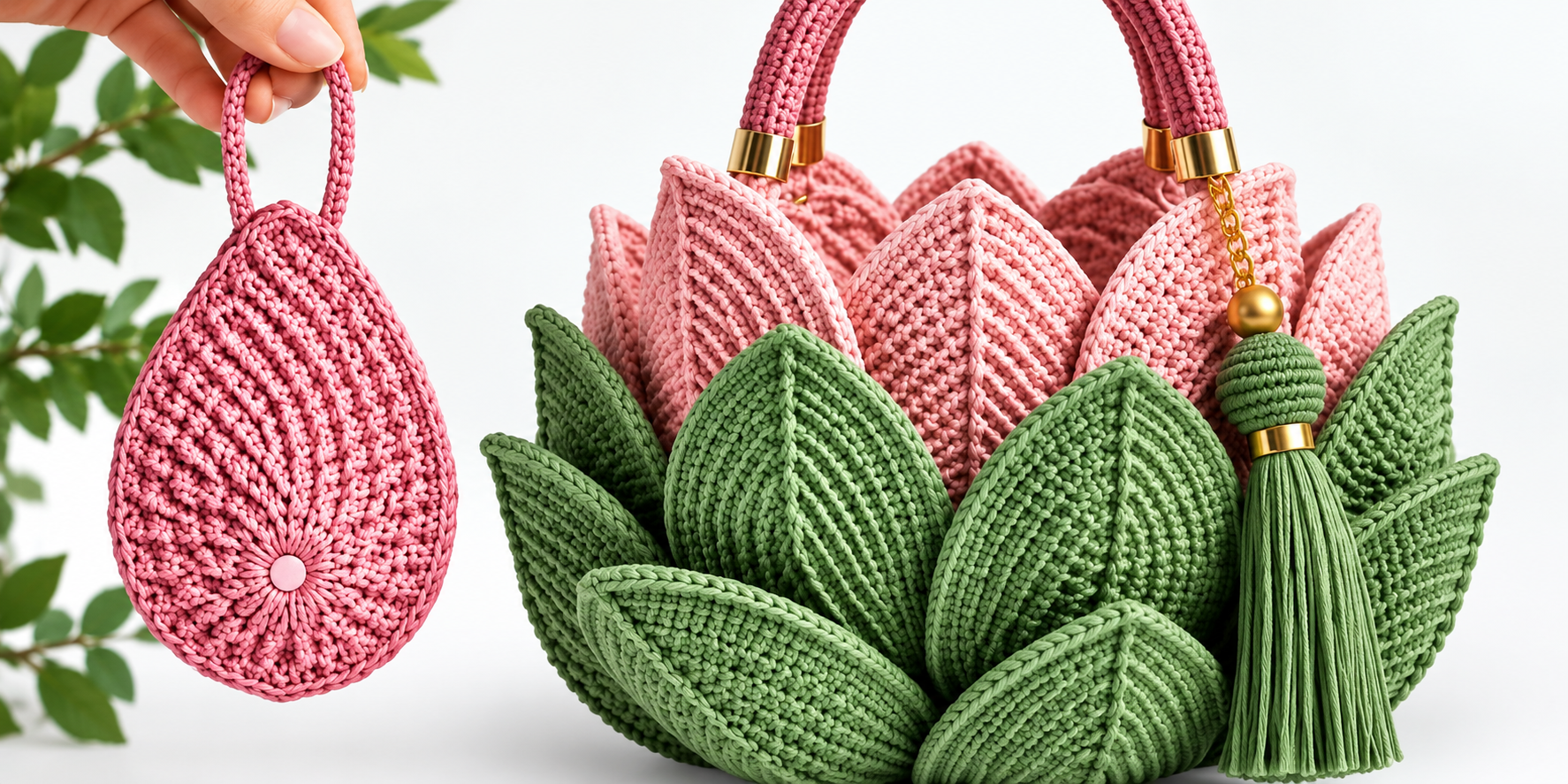
Materials, Crochet Stitch Key, and Preparation
For the Beautiful Crochet Leaf Stitch Pattern, choose a smooth yarn that allows you to see each stitch clearly. Medium-weight cotton yarn is an excellent option for practice because it creates defined texture and maintains the shape of the leaf. A yarn that is too fluffy can hide the central details, while extremely thin thread may require more rows to create a noticeable motif. Green is a classic choice, but there is no need to limit yourself to natural colors. Dusty pink, mustard, cream, burgundy, blue, and neutral tones can all create beautiful contemporary crochet leaves.
DISCOVER MORE FREE PATTERNS HERE!
Select a crochet hook that works comfortably with your chosen yarn. For medium-weight cotton, a hook around 3.5 mm to 4.5 mm is often suitable, although you should always consider your individual tension. A smaller hook generally produces a firmer fabric, which can be useful when making structured accessories such as crochet bags. A slightly larger hook creates a softer and more flexible leaf. You will also need scissors, a yarn needle, and optionally a stitch marker to help identify important stitches.
The first crochet key to remember is CH – Chain Stitch. A chain creates the foundation of many crochet projects and is often used to establish the central length of a leaf. To make a chain, yarn over and pull the yarn through the loop already on your hook. Continue until you have the required number of chains. Try to keep the chains even because an overly tight starting chain can cause the finished motif to curl.
The next essential abbreviation is SC – Single Crochet. Insert the hook into the indicated stitch, yarn over, and pull up a loop. You should now have two loops on your hook. Yarn over again and pull through both loops. Single crochet stitches create compact fabric and are ideal for defining the pointed tip and outer edge of the Beautiful Crochet Leaf Stitch Pattern.
Another useful stitch is HDC – Half Double Crochet. Yarn over, insert the hook into the stitch, yarn over again, and pull up a loop. You will have three loops on the hook. Yarn over once more and pull through all three loops. The half double crochet is slightly taller than a single crochet and helps create a smooth transition as the leaf becomes wider.
The DC – Double Crochet is frequently used in the widest section of crochet leaf motifs. Yarn over, insert the hook into the stitch, yarn over and pull up a loop. Yarn over and pull through two loops, then yarn over once again and pull through the remaining two loops. Combining SC, HDC, and DC stitches allows the designer to gradually change the height of the fabric, creating a natural curved leaf instead of a simple flat oval.
Starting the Beautiful Crochet Leaf Stitch Pattern
Begin the Beautiful Crochet Leaf Stitch Pattern by making a foundation chain of approximately 15 CH. This creates a medium-sized decorative leaf, although you can use fewer chains for a smaller motif or add more chains for a longer leaf. Leave a yarn tail of approximately 15 cm so you can weave it in securely later. Do not make the foundation chain too tight because you will need enough space to insert the hook comfortably.
Starting in the second chain from the hook, work 1 SC, followed by 1 HDC in the next stitch. Continue with several DC stitches along the foundation chain. A simple sequence could be 1 SC, 1 HDC, 8 DC, 1 HDC, and 1 SC as you approach the final chain. This gradual change in stitch height begins creating the elongated shape associated with a crochet leaf.
In the last chain, work approximately 3 SC into the same space. These stitches allow you to rotate around the end of the foundation chain without creating a sharp or uneven corner. Instead of turning the work as you would when making traditional rows, continue crocheting along the opposite side of the foundation chain. This technique creates both sides of the leaf around one central foundation.
Work back along the opposite side using the reverse sequence. Begin with an SC if necessary, then work HDC stitches before returning to DC stitches through the wider center. As you approach the starting point, gradually reduce the stitch height again using HDC and SC. Maintaining similar stitch counts on both sides is essential because it helps keep the Beautiful Crochet Leaf Stitch Pattern balanced.
Join the first round with a SL ST – Slip Stitch, unless you prefer working continuously in a spiral. To make a slip stitch, insert the hook into the indicated stitch, yarn over, and pull the yarn through both the stitch and the loop already on your hook. Avoid pulling the slip stitch too tightly because this can distort the base of the leaf.
At this stage, place the piece on a flat surface and examine its shape. You should already see an elongated oval with slightly pointed ends. Do not worry if the motif does not yet look like a finished leaf. Additional rows, increases, decreases, and textured stitches will create the characteristic pointed outline and prominent central vein of the Beautiful Crochet Leaf Stitch Pattern.
Building the Leaf Shape and Creating the Raised Texture
Begin the next round by working evenly around the leaf while placing increases near the widest areas. An INC is created by making two stitches into the same stitch. Strategic increases allow the leaf to expand without becoming ruffled. You generally need more increases near the center than near the pointed ends because a natural leaf is wider through its middle section.
As you reach the upper point of the leaf, reduce the number of increases. You can create a sharper tip by working a short combination such as SC, CH 1, SC into the top stitch. The chain creates a tiny pointed extension, while the surrounding single crochet stitches provide structure. Keep your tension even so the point remains crisp rather than curling inward.
To create the characteristic central vein, use BLO – Back Loop Only or raised post stitches. When working BLO, insert the hook only through the back loop of the stitch instead of under both loops. This leaves the unused front loop visible on the fabric, creating a subtle ridge. Repeating this technique along selected rows can give the crochet leaf stitch pattern beautiful dimensional texture.
For an even more pronounced vein, you can add a surface crochet line after completing the main leaf. Insert the hook near the base of the motif, pull up a loop of yarn, and create slip stitches along the center. Follow the original foundation chain toward the tip. Keep these surface slip stitches loose enough that they do not pull or bend the leaf. A contrasting yarn can create a decorative effect, while matching yarn produces a more realistic result.
If you want deep ridges similar to sculpted leaves, alternate regular stitches with front post crochet stitches. A front post stitch is worked around the body of a stitch from the previous row rather than through the top loops. This causes the stitch to stand forward from the fabric. Raised texture works especially well for crochet handbags, decorative flowers, and dimensional appliqué because it remains visible even from a distance.
Continue adding rounds until the leaf reaches the desired size. Make adjustments gradually instead of placing too many increases in a single round. If the edges begin to wave excessively, you probably have too many stitches. If the leaf starts forming a bowl shape, additional increases may be necessary. Learning to recognize these signs is an important skill when adapting the Beautiful Crochet Leaf Stitch Pattern to different yarn weights.
Finishing, Shaping, and Using Your Crochet Leaves
Once the leaf reaches your preferred size, work one final round of SC stitches around the outer edge. Single crochet creates a clean border and reinforces the pointed silhouette. When you reach the leaf tip, work an SC, CH 1, and another SC into the same point if additional definition is needed. Finish the round with a slip stitch and cut the yarn, leaving enough tail for weaving.
Thread the yarn tail onto a yarn needle and weave it through several stitches on the wrong side of the work. Change direction once or twice before cutting the excess yarn. This technique helps prevent the tail from working loose over time. Secure finishing is especially important when your Beautiful Crochet Leaf Stitch Pattern will be used on bags, cushions, or items that receive regular handling.
Blocking can dramatically improve the appearance of a crochet leaf. Lightly dampen the motif, gently shape it with your fingers, and place it flat to dry. Straighten the center vein, smooth the sides, and carefully define the tip. Always use a blocking method suitable for your yarn fiber. Cotton is usually easy to shape when damp, while synthetic yarn should be handled according to its particular characteristics.
You can enlarge the pattern by increasing the starting chain and adding additional rounds. For example, a foundation of 20 to 25 chains can create a longer decorative leaf. You will need to distribute additional DC stitches through the center and maintain balanced increases on both sides. The exact stitch count is less important than keeping the shape symmetrical and gradually increasing through the widest area.
The completed crochet leaf motifs can be used individually or combined into larger arrangements. Sew several leaves around a crocheted flower to make a botanical appliqué, layer large leaves around the base of a handmade bag, or arrange them into decorative panels. Smaller leaves can decorate hats, scarves, table runners, baskets, keychains, wall art, or gift accessories. Using different shades of the same color adds depth while keeping the design visually coordinated.
For a professional finish, make a small sample before beginning a large project. Record your starting chain, number of rounds, yarn type, and hook size. Keeping these details makes it much easier to reproduce multiple leaves with similar dimensions. Consistency is especially useful when using the Beautiful Crochet Leaf Stitch Pattern in repeated arrangements such as flower bags, wreaths, blankets, and decorative borders.
FAQ – Beautiful Crochet Leaf Stitch Pattern
Is the Beautiful Crochet Leaf Stitch Pattern suitable for beginners?
Yes. A beginner who already understands chain, single crochet, half double crochet, double crochet, and slip stitch can practice this motif successfully. The most important challenge is keeping both sides symmetrical. Beginners may find it helpful to count stitches after every round and use stitch markers near the tip and base.
What is the best yarn for crochet leaf patterns?
Cotton yarn is one of the most practical options because it provides excellent stitch definition and helps maintain a structured leaf shape. Acrylic can also be used when you want a softer motif. For bags and decorative accessories, a firm cotton or cotton-blend yarn generally produces a very attractive result.
What crochet hook size should I use?
The ideal hook depends on the yarn. Medium cotton yarn often works well with hooks between 3.5 mm and 4.5 mm. For a rigid leaf, choose a slightly smaller hook. For a flexible motif, choose a slightly larger hook while maintaining consistent tension.
How can I make the center vein more visible?
You can work stitches through BLO, use front post stitches, or add a line of surface slip stitches down the center. Each method produces a slightly different effect. Surface crochet is particularly convenient because it can be added after the leaf itself is complete.
Why is my crochet leaf curling?
Curling is usually related to stitch tension or an incorrect number of increases. If the motif curves upward like a bowl, the round may need additional increases. If the edges become heavily ruffled, there may be too many increases. A tight foundation chain can also make the center curl.
How can I make the leaf larger?
Increase the number of chains in the foundation and add more stitches to the center section. You can also continue adding rounds around the completed leaf. Remember to distribute increases gradually so the motif remains flat and symmetrical.
Can I use different colors for this pattern?
Absolutely. Although green produces a traditional botanical appearance, the Beautiful Crochet Leaf Stitch Pattern works beautifully in pink, burgundy, cream, gold, blue, terracotta, or multicolored yarn. Coordinating several shades can create modern decorative arrangements.
Can crochet leaves be used for bags?
Yes. Structured crochet leaves are especially attractive when layered around handbags, baskets, and decorative pouches. For this purpose, use a firm yarn and relatively tight tension so the leaves hold their shape. You can sew the finished motifs securely to the main structure using matching yarn.
What does INC mean in a crochet pattern?
INC means increase. In most simple crochet patterns, an increase means working two stitches into one stitch from the previous row or round. Increases create additional width and help shape the rounded section of the leaf.
What does DEC mean in crochet?
DEC means decrease. A decrease combines stitches so the total stitch count becomes smaller. Decreases are useful when shaping narrow areas, pointed tips, and curved edges. They should be placed evenly when symmetry is important.
What does BLO mean?
BLO means Back Loop Only. Instead of inserting the hook beneath both loops at the top of a crochet stitch, you work only into the back loop. This leaves the front loop visible and creates a decorative ridge that can enhance the texture of a leaf.
How do I keep multiple crochet leaves the same size?
Use the same yarn, hook, starting chain, stitch count, and tension for every motif. It can also help to write down the number of stitches used in each round. Blocking all leaves to the same measurements after crocheting will improve consistency even further.
Can this leaf pattern be adapted for flowers?
Yes. The Beautiful Crochet Leaf Stitch Pattern pairs naturally with crocheted flowers. You can arrange several leaves beneath rose, lotus, sunflower, or other floral motifs. By changing the color, size, and texture, the same basic pattern can work with many different decorative themes.
How long does one crochet leaf take to make?
The time depends on size and experience. A small simple leaf may take only a short crochet session, while a large textured motif with post stitches and multiple rounds will require more time. Once you memorize the construction, repeating the pattern generally becomes much faster.
Should I block crochet leaves after finishing them?
Blocking is not always mandatory, but it can greatly improve the final appearance. It helps straighten the center, smooth the edges, define the pointed tip, and make several motifs look more consistent. For decorative work, blocking is often worth the extra step.
Conclusion
The Beautiful Crochet Leaf Stitch Pattern combines simple crochet techniques with thoughtful shaping to create an elegant motif that can be adapted for many handmade projects. By learning the basic crochet keys such as CH, SC, HDC, DC, SL ST, INC, DEC, BLO, and FLO, you can understand how each section contributes to the finished leaf. Starting with a central chain, gradually changing stitch heights, working increases through the widest areas, and carefully forming the pointed tip are the main steps that give this design its recognizable botanical shape.
Texture adds another level of beauty to the pattern. Back loop stitches, front post stitches, and surface crochet can create realistic veins and sculpted ridges, while careful blocking gives the finished piece a clean and professional appearance. Once you understand the basic construction, you can change the yarn, colors, dimensions, and stitch combinations to create an almost unlimited variety of crochet leaves.
The versatility of the Beautiful Crochet Leaf Stitch Pattern makes it especially useful for crocheters who enjoy creating original projects. Use it to decorate handbags, cushions, blankets, baskets, wall pieces, floral arrangements, table accessories, and many other handmade creations. Start with a simple version, practice your stitch placement, and gradually experiment with more texture as your confidence grows. If you try this Beautiful Crochet Leaf Stitch Pattern, leave your sincere opinion about the tutorial and share your suggestions. Your ideas about colors, yarn combinations, sizes, and creative uses for the finished leaves can inspire even more beautiful crochet projects.