
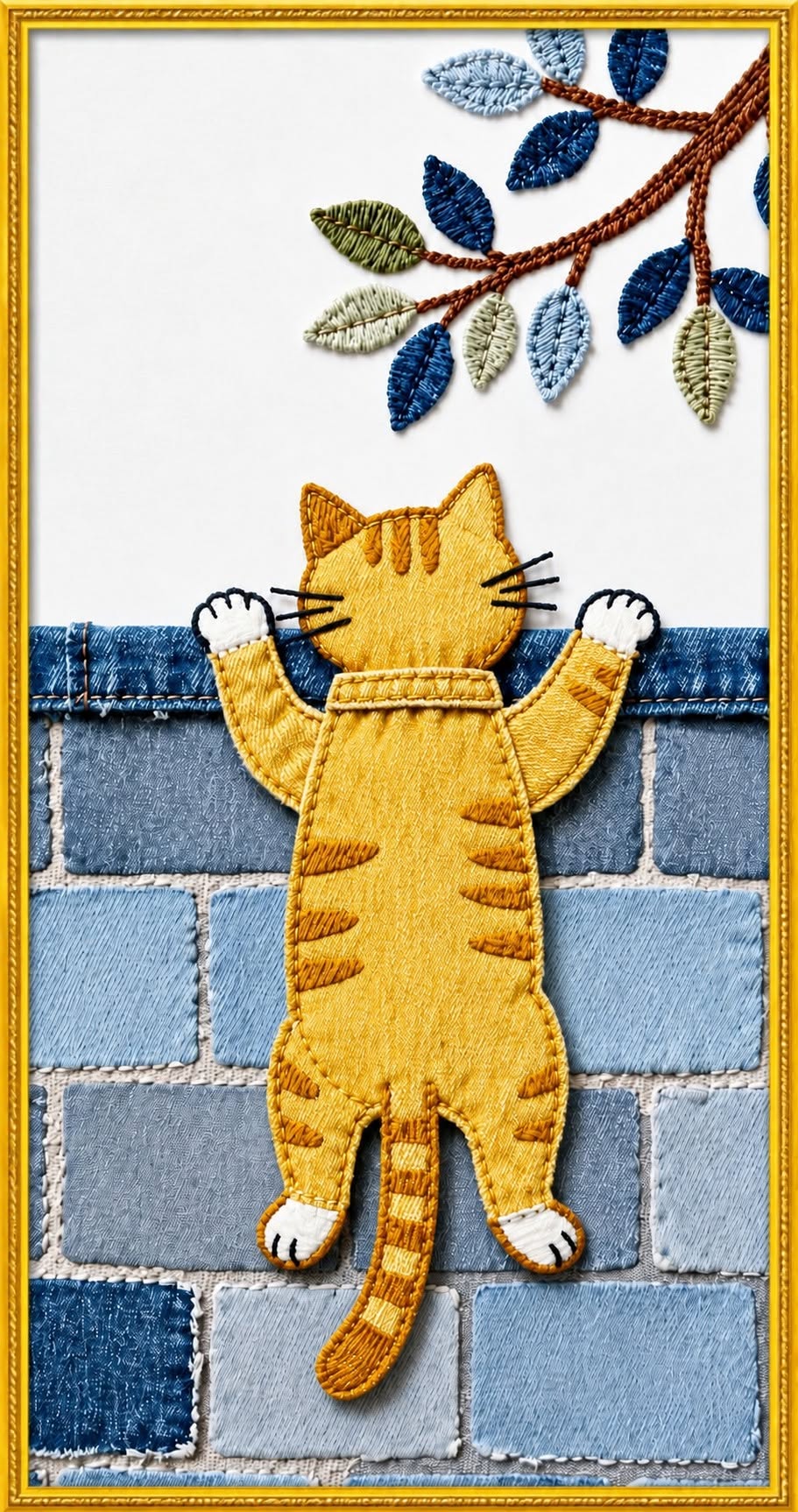
Cat appliqué in patchwork with jeans Pattern is a creative sewing project that transforms denim scraps into a charming decorative cat climbing over a patchwork wall. The design combines the rustic appearance of recycled jeans with the softness and personality of handmade appliqué. Different shades of denim create depth, while visible stitching highlights the cat’s body, paws, face, tail, and the rectangular blocks in the background. This project is ideal for people who enjoy sustainable crafts, fabric art, patchwork, and decorative sewing. It can be used to make a wall hanging, cushion cover, tote bag panel, quilt block, or framed textile artwork. By following a well-organized process, even someone with basic sewing experience can create a beautiful version of this denim cat appliqué.
The main term Cat appliqué in patchwork with jeans Pattern describes a fabric design in which a cat shape is cut from denim and sewn onto a patchwork background. An appliqué is a decorative sewing technique where one fabric shape is attached over another fabric surface. Patchwork is the method of joining several fabric pieces to form a larger composition, usually with contrasting colors, textures, or prints. In this project, old jeans provide the material for both the cat and the background blocks. The word pattern refers to the templates and placement guide used to reproduce the design accurately. Together, these techniques create a detailed project that is practical, affordable, and visually expressive.
One of the greatest advantages of working with jeans is the variety of tones and textures available in a single garment. The legs may provide large flat pieces, the pockets can become decorative details, and the seams may be reused as raised borders. Light-wash denim works beautifully for the wall blocks, while dark denim helps the cat stand out as the central figure. Small pieces of white or cream fabric can be added to the paws, and embroidery thread can define the whiskers and facial markings. Because denim is durable, the finished patchwork cat pattern can be displayed or used regularly without losing its shape easily. Careful cutting, stabilizing, and stitching will help the final artwork remain neat and attractive.
Materials and Preparation for the Denim Cat Appliqué
Begin by collecting several pieces of clean denim in light, medium, and dark blue shades. Old jeans are excellent for this project because natural fading gives every piece a unique appearance. Select denim that is still strong and avoid areas that are extremely stretched, torn, or thin. You will also need a firm base fabric, such as cotton canvas, twill, or heavyweight cotton. The base must be larger than the planned finished design so that there is enough room for trimming and finishing.
DISCOVER MORE FREE PATTERNS HERE!
Prepare basic sewing supplies, including sharp fabric scissors, small embroidery scissors, pins or fabric clips, a fabric marker, a ruler, and matching sewing thread. A sewing machine makes the assembly faster, but the project can also be completed by hand. For decorative details, choose embroidery floss in navy blue, brown, cream, and black. Fusible web is useful for keeping the appliqué pieces in place before stitching. A lightweight fabric stabilizer may also be added behind the foundation fabric to prevent puckering.
Create or print a simple cat appliqué pattern containing separate templates for the head, ears, body, front legs, back legs, paws, and tail. The body should have a slightly elongated shape to reproduce the climbing position shown in the design. Draw each pattern piece on paper before transferring it to the denim. Clearly mark the direction in which every piece should face. This is especially important when using fusible web because some templates must be traced in reverse.
Wash and dry the denim before cutting it, particularly when using pieces from different garments. Prewashing removes dirt, softens the material, and reduces the risk of future shrinking. Press every denim piece with an iron so the fabric lies completely flat. Avoid using bulky areas around pockets, zippers, and thick factory seams unless those elements are part of your decorative plan. Smooth fabric is easier to trace, cut, and sew accurately.
Plan the background before attaching any pieces permanently. Arrange rectangular denim scraps in rows to imitate a brick or tiled wall. Alternate light, medium, and dark blocks so neighboring pieces do not blend into one another. Leave small spaces between the rectangles if you want a visible cream-colored “mortar” effect. Take a photograph of the arrangement before moving the pieces, as this provides a useful reference during sewing.
Choose the final measurements according to the intended use. A small jeans appliqué pattern may fit a bag pocket or decorative panel, while a larger composition can become a wall hanging. Add at least one inch of extra fabric around all sides for trimming and finishing. Remember that denim can become heavy when many layers overlap. Keeping the scale practical will make the project easier to sew and display.
Creating the Patchwork Jeans Background
Cut the denim rectangles for the lower background in different sizes, while keeping their edges mostly straight. A combination of wider and narrower blocks creates a more natural patchwork wall. Lay the pieces over the base fabric, beginning at the bottom edge and working upward. Keep the spaces between the blocks approximately equal. The exposed foundation fabric will visually separate the denim pieces and emphasize the brick effect.
Use fusible web or a temporary fabric adhesive to hold each rectangle in position. Follow the manufacturer’s instructions when applying heat, and protect the denim with a pressing cloth. Do not move the iron back and forth because this may distort the pieces. Instead, lift and press the iron over each area. Allow the fabric to cool before checking whether every block is securely attached.
Sew around each denim rectangle using a straight stitch, blanket stitch, or narrow zigzag stitch. A contrasting cream thread creates a handmade patchwork appearance, while blue thread gives a more subtle result. Sew slowly near the corners and lower the machine needle before turning the fabric. Consistent stitching will make the denim patchwork background look organized even when the blocks have different sizes.
For a textured finish, you may leave a narrow raw edge around each rectangle. Denim frays slightly after handling or washing, which can add character to the design. To control excessive fraying, sew approximately one eighth of an inch inside the raw edge. Another option is to turn the edges under before stitching, although this requires more preparation. Choose one finishing method and use it consistently across the background.
Create the upper horizontal section of the wall with a long strip of dark denim. This strip represents the top edge that the cat is climbing over. You can reuse a jeans waistband or a section containing an original seam for extra texture. Position it horizontally across the panel and stitch it firmly along both long edges. Make sure the strip remains straight because the cat’s paws will be placed over it.
After the background is assembled, press it carefully from the reverse side. Use moderate heat and avoid flattening thick decorative seams too aggressively. Check whether any corners or edges have lifted, and reinforce them with additional stitches when necessary. Trim loose threads before adding the cat. A neat foundation makes it much easier to position the main Cat appliqué in patchwork with jeans Pattern accurately.
Cutting and Sewing the Cat Appliqué
Trace the cat templates onto the paper side of the fusible web. Leave a small gap between the pieces so they can be cut apart easily. Fuse each section onto the reverse side of the selected denim according to the product instructions. Use dark denim for the body and a slightly different shade for the head, limbs, or tail. This tonal variation prevents the parts from visually disappearing into one solid shape.
Cut every piece carefully along the traced outlines. Small, sharp scissors are helpful around the ears, paws, and curved sections. Before removing the backing paper, place all pieces on the prepared background to test the proportions. The head should sit above the upper edge of the wall, while the body hangs vertically below it. The raised front legs and visible paws create the impression that the cat is holding onto the wall.
Position the body first because it serves as the central guide for the remaining pieces. Remove the backing paper and lightly fuse it to the foundation. Add the head, arms, legs, and tail, checking that the overlaps look natural. The tail may extend downward with a gentle curve. Keep the cat centered and leave enough space around it so the shape is easy to recognize.
Stitch around the edges using a narrow zigzag, satin stitch, blanket stitch, or hand embroidery. Dark blue thread creates a clear outline without looking too harsh. Brown decorative stitches can also complement the warm branch details in the upper part of the artwork. At curved areas, sew slowly and turn the panel in small increments. Reinforce the paws and tail because these narrow pieces may receive more handling.
Add white or cream fabric sections to the paws before completing the outlines. These contrasting details make the cat more expressive and help define the climbing pose. Secure the light fabric with fusible web and sew around it using navy thread. Add several short embroidered lines to suggest toes. Keep the stitches evenly spaced so both front paws and both back paws look balanced.
Finish the cat with facial and body details. Embroider simple whiskers, forehead stripes, side markings, and a striped tail using dark thread. The face may remain turned away, as in the reference image, which creates a playful sense of movement. Add a small collar or narrow denim strip around the neck if desired. These final elements transform a basic denim cat template into a distinctive handmade character.
Adding Decorative Details and Finishing the Project
To reproduce the branch above the cat, draw a gently curved line near the top of the foundation fabric. Embroider or couch thick brown thread along the line to create the branch. Smaller lines can extend from the main branch to support the leaves. Keep the branch in the upper area so it frames the scene without competing with the cat. The warm brown tone provides a pleasant contrast against the blue denim.
Create leaf templates in two or three sizes and cut them from denim or tightly woven cotton. Choose light blue, dark blue, olive green, and pale green fabrics to add color variation. Fuse the leaves along the embroidered branches, pointing them in different directions. Stitch around each leaf with a blanket stitch or satin stitch. Embroider a central vein to give the leaves a more finished appearance.
Inspect the entire composition and add extra stitching where the layers feel loose. Denim appliqué often includes several overlapping sections, so a strong needle is essential. A size 90/14 or 100/16 jeans needle is generally suitable for medium or heavy denim. Replace the needle when it becomes dull because a worn needle may skip stitches or damage the fabric. Sew at a moderate speed when crossing thick seams.
Trim the foundation fabric to the final dimensions only after all appliqué work is complete. Use a quilting ruler to square the edges and confirm that the horizontal wall line is level. For a wall hanging, add a backing fabric and a thin layer of batting. Quilt around the main elements or stitch in the spaces between the denim blocks. Finish the edges with binding made from cotton or lightweight denim.
The completed panel can also become the front of a cushion cover. In that case, add an envelope-style or zippered backing after the appliqué is finished. For a tote bag, reinforce the panel with interfacing and use strong fabric for the lining and handles. When adapting the Cat appliqué in patchwork with jeans Pattern, always consider how much stress the finished item will receive. Decorative wall art requires less reinforcement than a frequently used bag.
Care for the finished project according to the materials used. Hand washing or a gentle machine cycle is safest for pieces with raw-edge appliqué and embroidery. Use cold water and mild detergent, then reshape the item while it is damp. Avoid high dryer temperatures because heat may weaken adhesive products or shrink mixed fabrics differently. For framed artwork or wall hangings, occasional light dusting may be all that is needed.
FAQ About Cat Appliqué in Patchwork with Jeans Pattern
What does cat appliqué mean?
A cat appliqué is a cat-shaped fabric decoration sewn onto a larger fabric background. The cat may be created as one simple silhouette or assembled from several separate pieces, including the head, body, legs, paws, ears, and tail. Decorative stitching is commonly used to define the shape and add facial or body details.
Can beginners make this denim patchwork project?
Yes. Beginners can complete this project by simplifying the cat template and using fusible web to hold the pieces in place. It is helpful to practice sewing around curves on scrap fabric first. Working slowly and assembling the project in stages will make the process easier.
What type of jeans is best for appliqué?
Medium-weight jeans are usually the easiest to cut and stitch. Very thick denim may create bulky layers, while extremely stretchy denim can distort during sewing. Combining light, medium, and dark washes gives the design better contrast and depth.
Do I need a sewing machine?
A sewing machine is useful but not essential. The entire patchwork cat pattern can be assembled with hand stitching, such as blanket stitch, running stitch, and backstitch. Hand sewing takes more time, but it can produce a beautiful rustic finish.
How can I prevent denim from fraying?
Apply fusible web behind the pieces, stitch close to the edges, or use a narrow zigzag stitch. A small amount of fabric fraying can be decorative, especially in recycled denim projects. For a cleaner result, turn the edges under or finish them with a dense satin stitch.
Can I use fabrics other than denim?
Yes. Cotton, linen, felt, corduroy, and upholstery scraps can be used. However, denim gives the project its characteristic blue patchwork appearance. When mixing materials, choose fabrics with similar weights or add interfacing to lighter pieces.
How do I enlarge or reduce the cat pattern?
Resize all template pieces by the same percentage. This keeps the proportions consistent. After resizing, place the paper pieces on the background before cutting the denim to ensure that the complete cat fits comfortably inside the planned project area.
What can I make with the finished appliqué panel?
The panel can become a cushion cover, quilt block, wall hanging, tote bag, organizer pocket, apron decoration, table mat, or framed textile artwork. Its final use will determine whether batting, interfacing, lining, or additional reinforcement is necessary.
How should I stitch the whiskers?
Use embroidery floss, strong sewing thread, or narrow cord. Backstitch works well for straight whiskers, while couching is useful for thicker cord. Secure the ends carefully on the reverse side so the whiskers do not loosen over time.
How can I make the project look more professional?
Press the fabric at every stage, cut the pieces accurately, use consistent stitching, and control the spacing between the background blocks. Selecting denim shades with clear contrast will also improve the design. Finally, trim loose threads and square the finished panel before adding binding or backing.
Conclusion
The Cat appliqué in patchwork with jeans Pattern is an inspiring way to combine recycled denim, patchwork, embroidery, and decorative appliqué in a single project. The process begins with selecting different shades of jeans, preparing a firm foundation, and creating a wall from rectangular denim blocks. The cat is then assembled from individual pattern pieces, fused into position, and secured with careful stitching. Embroidered stripes, paws, whiskers, a curved tail, branches, and colorful leaves add personality and visual balance.
EASILY FIND THE PDF FOR THIS PATTERN HERE!
This project can be adapted to many sizes and uses, from a small bag decoration to a large textile wall hanging. The most important steps are planning the layout, maintaining contrast between the fabrics, securing every layer properly, and enjoying the handmade character of recycled denim. Leave your sincere opinion about this denim cat appliqué project and share your suggestions for colors, finishes, or creative variations that could make the pattern even more charming.