
Crochet Hexagon Pattern is one of the most versatile and rewarding projects for crochet enthusiasts. Whether you are a beginner learning the basics or an experienced crocheter looking for a timeless geometric design, this beautiful hexagon motif offers endless creative possibilities. With its balanced six-sided shape and elegant stitch texture, it can be transformed into blankets, cushions, bags, table runners, garments, and countless decorative home accessories. Learning this Crochet Hexagon Pattern is an excellent way to improve your crochet skills while creating something both practical and visually appealing.
One of the greatest advantages of this Crochet Hexagon Pattern is its adaptability. You can use different yarn weights, crochet hook sizes, and color combinations to produce completely different results without changing the overall construction. From rustic farmhouse décor to modern minimalist designs, this pattern easily adapts to every style. Because the motif grows evenly from the center outward, it also helps crocheters better understand stitch placement, increases, corner construction, and maintaining consistent tension throughout each round.
In this complete guide, you will learn every essential step needed to create a beautiful Crochet Hexagon Pattern, including understanding the stitch chart, reading crochet symbols, following each round correctly, shaping perfect corners, selecting the right materials, and finishing your project professionally. By mastering this versatile motif, you will gain confidence to create larger crochet projects by joining multiple hexagons together, allowing your creativity to expand far beyond a single motif.
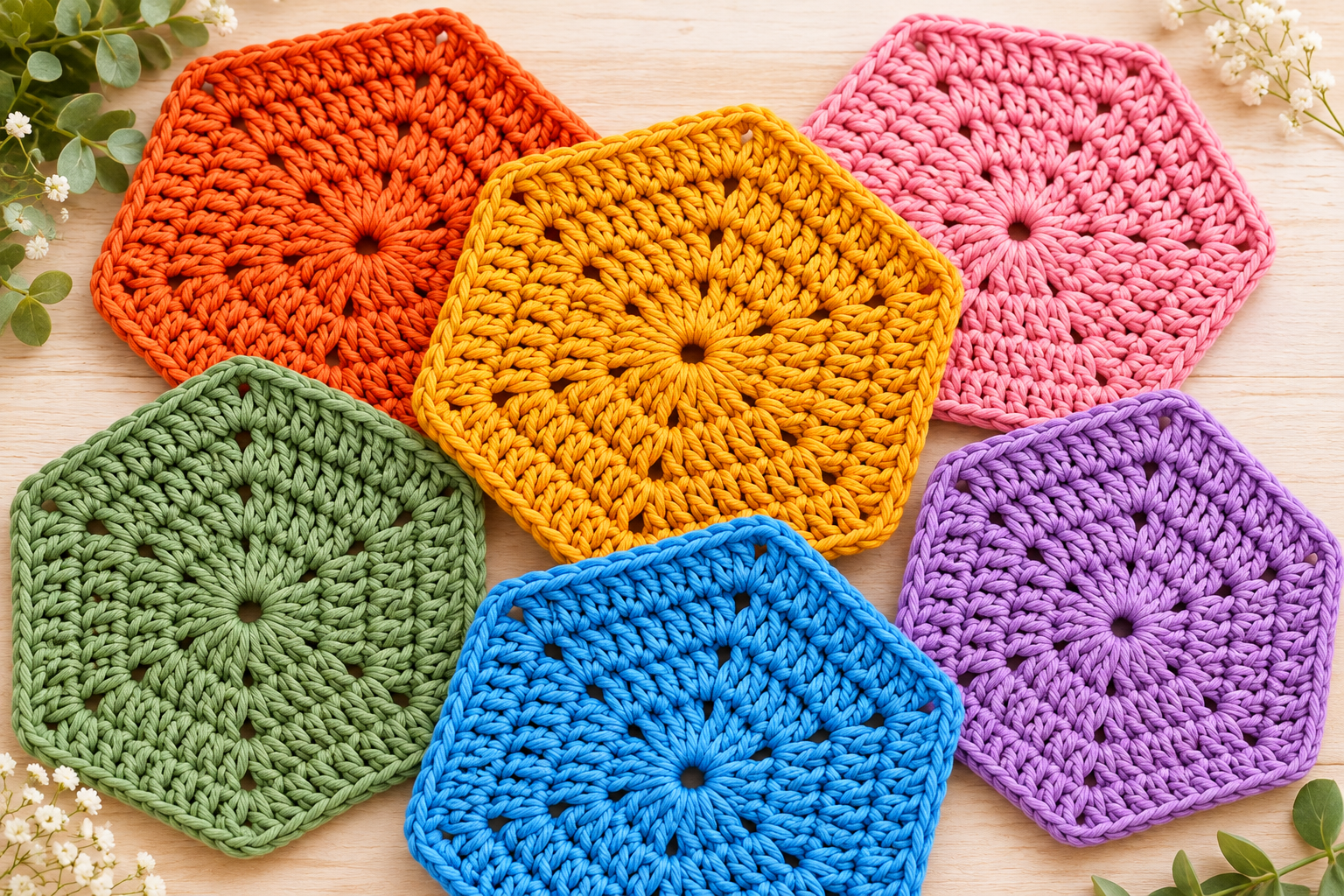
Understanding the Crochet Hexagon Pattern Structure
Every successful Crochet Hexagon Pattern begins with a simple center ring. Most crocheters start by creating a small chain ring or a magic ring that becomes the foundation for all future rounds. This central point determines how evenly the motif will grow, making accuracy important from the very beginning.
DISCOVER MORE FREE PATTERNS HERE!
The pattern expands in six equal sections. Each section represents one side of the hexagon, and increases are distributed evenly to preserve the geometric shape. This balanced construction is what gives the finished motif its clean and symmetrical appearance.
Reading the crochet chart becomes much easier once you recognize the repeated sections. Instead of memorizing every stitch individually, you only need to understand one segment because the remaining five sections follow the exact same sequence.
The stitch chart commonly uses standard international crochet symbols. Chains are represented by small ovals, slip stitches by small filled dots, single crochet by short vertical marks, half double crochet by symbols with one horizontal bar, and double crochet by symbols with longer vertical lines and one crossbar.
Corner construction is another essential feature of the Crochet Hexagon Pattern. Most corners are created by working multiple stitches, chain stitches, and additional stitches into the same corner space. These corner increases allow the hexagon to grow while maintaining flat edges.
Maintaining consistent stitch tension throughout every round helps prevent curling or ruffling. Even tension creates smooth sides and well-defined corners, resulting in a professional-looking finished project.
Step-by-Step Crochet Instructions for the Pattern
Begin by making four chain stitches and joining them with a slip stitch to form a ring. Alternatively, you may use a magic ring if you prefer an adjustable center. Chain three, which counts as the first double crochet, then work additional double crochet stitches into the ring until the first round is complete.
For the second round, begin with chain three. Increase by placing two double crochet stitches into selected stitches according to the chart. Continue repeating this sequence evenly around the circle before closing the round with a slip stitch into the top of the beginning chain.
During the third round, continue increasing while carefully following the stitch chart. Place one double crochet in designated stitches and two double crochet stitches where increases are required. This gradual expansion keeps the motif flat and balanced.
The fourth round follows a similar rhythm but introduces longer stitch groups between increases. As the motif becomes larger, carefully count your stitches to ensure every side remains identical. Small counting mistakes become much more noticeable in larger rounds.
The fifth round transforms the circle into a recognizable hexagon by emphasizing each corner. In every corner space, work three double crochet stitches, chain two, and then three additional double crochet stitches. These corner groups define the six-sided shape while allowing continued expansion.
Finish the final round by working slip stitches, single crochet stitches, and corner increases exactly as indicated in the stitch chart. Fasten off securely, leaving a yarn tail long enough for weaving in the ends neatly with a yarn needle.
Choosing Materials and Improving Your Crochet Results
Selecting high-quality yarn makes a significant difference when creating a Crochet Hexagon Pattern. Cotton yarn provides excellent stitch definition and is ideal for home décor projects, while acrylic yarn offers softness, affordability, and easy maintenance.
The recommended crochet hook should match the yarn weight. A medium-weight cotton yarn often works beautifully with a 5.0 mm crochet hook for the main rounds, while a slightly smaller hook may produce firmer decorative borders if desired.
Maintaining consistent gauge throughout the project ensures that multiple hexagons will match perfectly when joined together. If one motif becomes noticeably larger or smaller than another, joining them later becomes much more difficult.
Blocking is a valuable finishing technique. Lightly dampen the completed hexagon, pin each corner evenly, and allow it to dry completely. Blocking enhances stitch definition, sharpens corners, and creates perfectly straight edges.
Color selection dramatically changes the appearance of the finished project. Solid colors highlight stitch texture beautifully, while gradient yarns create elegant color transitions. Multi-colored motifs can also be combined to create vibrant patchwork designs.
Finally, always weave yarn ends securely through the back of the stitches before trimming them. This finishing step improves durability and ensures your Crochet Hexagon Pattern remains beautiful after repeated use and washing.
Creative Project Ideas Using the Crochet Hexagon Pattern
One of the most popular uses for the Crochet Hexagon Pattern is creating blankets. Individual motifs can be joined using slip stitch, whip stitch, or join-as-you-go techniques, producing stunning geometric afghans suitable for every season.
Decorative cushions are another excellent project. A pair of matching hexagons can form the front and back panels of a pillow cover, creating an elegant handmade accent for sofas, chairs, or bedrooms.
Crochet bags also benefit from the sturdy structure of hexagon motifs. Several joined hexagons can create attractive handbags, market bags, and tote bags with endless opportunities for color customization.
Garments such as cardigans, ponchos, shawls, and lightweight jackets often incorporate multiple Crochet Hexagon Pattern motifs. Their geometric shape naturally creates interesting drape while adding visual texture to wearable crochet pieces.
Table runners, placemats, and centerpieces become especially eye-catching when several hexagons are arranged in creative layouts. Seasonal colors can easily transform the same pattern into holiday decorations or year-round home accessories.
Even smaller projects such as coasters, mug rugs, wall decorations, bookmarks, and ornaments can be created from individual hexagons. This makes the pattern an excellent choice for using leftover yarn while practicing advanced crochet techniques.
FAQ
Is the Crochet Hexagon Pattern suitable for beginners?
Yes. Beginners who already understand basic stitches like chain, slip stitch, single crochet, and double crochet can successfully complete this pattern by carefully following each round.
What yarn works best for a Crochet Hexagon?
Cotton yarn provides excellent stitch definition and durability, while acrylic yarn offers softness and affordability. Both produce beautiful results depending on your project.
Why is my hexagon curling?
Curling usually occurs because the stitches are too tight or there are not enough increases. Double-check the stitch count and try using a slightly larger crochet hook if necessary.
Why is my hexagon becoming wavy?
Excessive increases or loose tension often cause waviness. Carefully count stitches in every round and ensure increases are only made where indicated.
Can I make the hexagon larger?
Absolutely. Continue adding rounds while maintaining the increase pattern and preserving the six corners. This allows the motif to grow without losing its shape.
How do I join multiple hexagons together?
Common joining methods include whip stitch, mattress stitch, slip stitch joining, and join-as-you-go techniques. The best method depends on the desired appearance of the finished project.
Can I use different yarn weights?
Yes. The Crochet Hexagon Pattern works with nearly every yarn weight. Simply adjust the crochet hook size according to the yarn manufacturer’s recommendation.
Should I block my finished hexagon?
Blocking is highly recommended because it sharpens the corners, straightens the edges, enhances stitch definition, and creates consistent sizing across multiple motifs.
Conclusion
The Crochet Hexagon Pattern is a timeless crochet design that combines beauty, versatility, and practicality. Throughout this guide, you learned how the motif is constructed from the center outward, how to interpret the crochet chart, how to work each round correctly, how to create clean corners, choose appropriate yarn and hooks, improve stitch consistency, finish your work professionally, and transform individual hexagons into beautiful blankets, cushions, bags, garments, and decorative accessories.
By practicing these techniques, you will gain greater confidence in reading crochet charts and creating increasingly complex crochet projects. If you enjoyed this tutorial, please leave your honest opinion, share your experience with this pattern, and feel free to suggest ideas for future crochet tutorials you would like to see.