
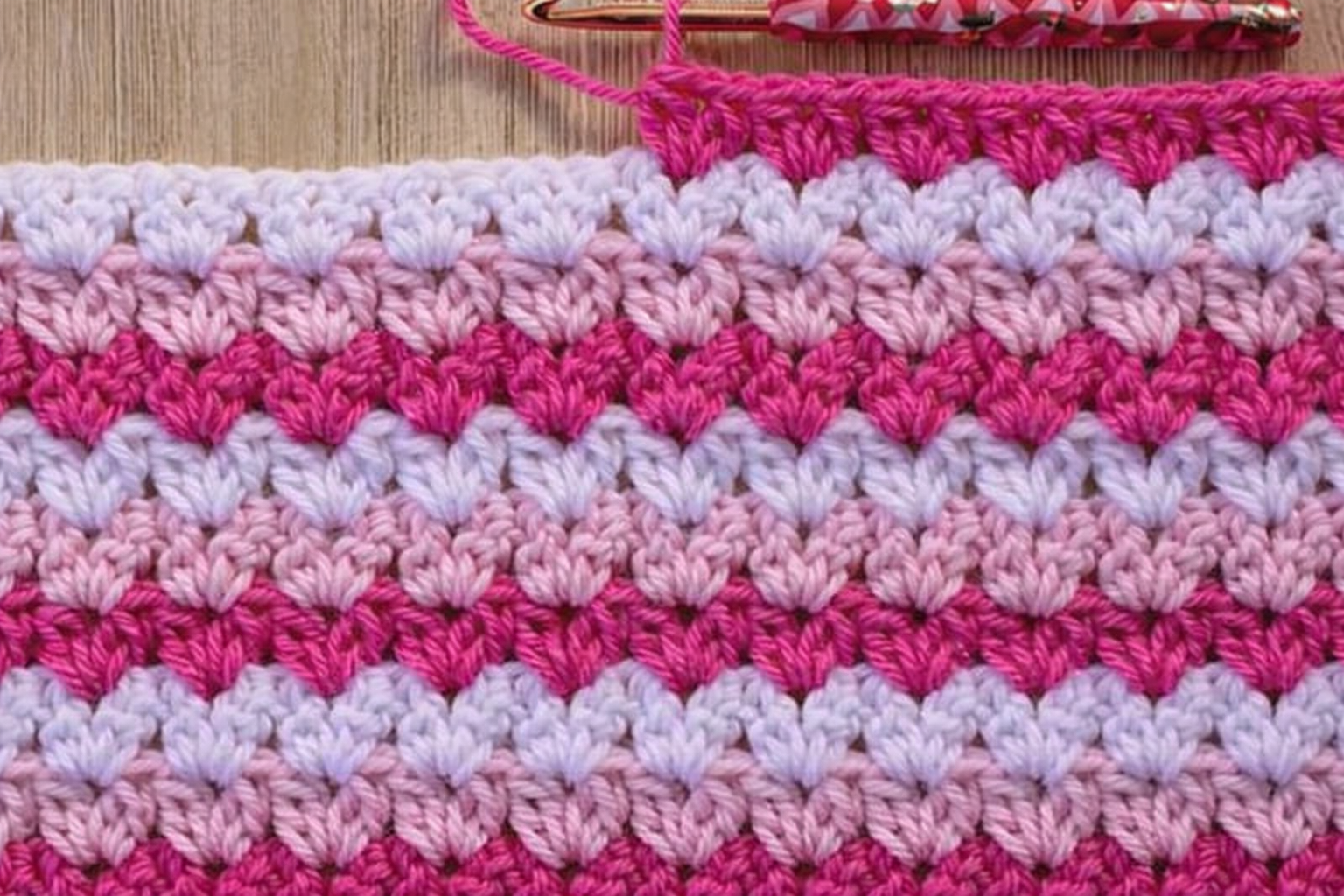
Crochet with grouped V stitch – Pattern is a versatile and elegant technique that combines texture, structure, and visual rhythm in a single design. Whether you are a beginner looking to expand your skills or an experienced artisan searching for a fresh stitch variation, this pattern offers endless creative possibilities. The beauty of the grouped V stitch lies in its layered appearance, formed by clusters of stitches that create a distinctive “V” shape with added depth and volume. This makes it ideal for projects that require both softness and definition.
When exploring Crochet with grouped V stitch – Pattern, it’s essential to understand how stitch grouping enhances the classic V stitch. Instead of a simple double crochet, this variation incorporates clusters that add texture and strength to the fabric. The result is a crochet pattern that looks intricate yet remains surprisingly accessible. With the right rhythm and tension control, crocheters can achieve a professional finish suitable for garments, blankets, scarves, and decorative home pieces.
Another important aspect of the Crochet with grouped V stitch – Pattern is its adaptability. It works beautifully with different yarn weights, hook sizes, and color combinations. From lightweight cotton yarn for summer tops to bulky wool for cozy winter throws, this pattern adjusts seamlessly. In this article, you will learn how the stitch works, how to structure the pattern, common mistakes to avoid, and practical applications that highlight the elegance of this technique.
Understanding the Basics of Crochet with Grouped V Stitch – Pattern
The Crochet with grouped V stitch – Pattern builds upon the traditional V stitch, which typically consists of two double crochets separated by a chain space. In the grouped version, each side of the V is formed by a small cluster, such as two or three double crochets worked together in the same space. This grouping creates a fuller, more textured appearance.
To begin, you usually start with a foundation chain in multiples that match the stitch repeat. The grouped V stitch often requires an even number of stitches plus additional turning chains. Paying attention to stitch counts is essential to maintain symmetry throughout your project.
The grouped V stitch pattern alternates between cluster formations and chain spaces. These chain spaces create the openwork effect that makes the pattern breathable and visually appealing. The clusters provide structure, while the chain spaces add flexibility.
Tension control is crucial when working this crochet pattern. If your tension is too tight, the clusters may look compressed and lose their definition. If it’s too loose, the fabric may appear uneven. Practice with a small swatch before starting a larger project.
Yarn selection significantly impacts the final look of the grouped V stitch. Smooth yarns showcase stitch definition more clearly, while textured yarns can create a softer, more blended effect. Both options are beautiful, depending on your project goals.
Understanding stitch placement is the key to mastering the Crochet with grouped V stitch – Pattern. Most grouped V stitches are worked into the chain spaces of the previous row rather than into the top of individual stitches. This placement keeps the pattern aligned and maintains its distinctive structure.
Step-by-Step Structure of the Pattern
Creating a successful Crochet with grouped V stitch – Pattern begins with preparing your materials. Choose a yarn weight suitable for your project and pair it with the recommended hook size. Always check your gauge to ensure consistent results.
Start with a foundation chain in multiples that suit the grouped V stitch repeat. For example, you might chain a multiple of four plus three extra chains for turning. This foundation ensures the pattern flows evenly from row to row.
In the first row, you may work a set of grouped V stitches separated by chain spaces. Each grouped V is typically formed by working a cluster, chaining one or two stitches, and then working another cluster in the same space. This creates the characteristic “V” shape.
When turning your work, remember to chain the correct number of stitches to maintain height consistency. The turning chain often counts as part of the first cluster, so accuracy is important for clean edges.
As you progress to subsequent rows, place each new grouped V stitch into the chain space created in the previous row. This repetition builds vertical alignment and forms the recognizable pattern texture.
Continue repeating the row instructions until your project reaches the desired length. The simplicity of repetition makes the Crochet with grouped V stitch – Pattern relaxing and enjoyable, while the final texture appears sophisticated and intricate.
Creative Applications and Project Ideas
One of the most exciting aspects of the Crochet with grouped V stitch – Pattern is its versatility. This stitch works beautifully for blankets because it creates a fabric that is both warm and breathable. The openwork spaces allow airflow, while the grouped clusters provide coziness.
Scarves and shawls also benefit from this crochet pattern. The textured V shapes create visual interest without making the accessory too heavy. Using gradient yarn can enhance the depth of the grouped stitches.
For garments such as cardigans or lightweight sweaters, the grouped V stitch adds a delicate yet structured appearance. The pattern drapes well, especially when worked with soft, flowing yarn fibers.
Home décor items like cushion covers and table runners can also showcase this stitch. The repetitive design brings a handcrafted charm to interior spaces, making each piece feel unique and artistic.
Baby blankets are another excellent option. When using soft, hypoallergenic yarn, the grouped V stitch produces a gentle texture that feels comfortable against sensitive skin.
Even small accessories such as headbands or market bags can be elevated with this pattern. The grouped V stitch adds strength to the fabric, making it suitable for practical and decorative items alike.
Tips, Troubleshooting, and Skill Improvement
When working on a Crochet with grouped V stitch – Pattern, counting stitches regularly prevents mistakes from spreading across rows. A small miscount can shift the alignment of the V shapes and disrupt the overall design.
If your edges look uneven, review your turning chains. Consistency in turning chains ensures that both sides of your project remain straight and polished.
Blocking your finished crochet piece can significantly enhance the stitch definition. Blocking helps the grouped V stitches open up evenly and settle into their intended shape.
If you notice gaps that seem too large, consider adjusting the number of chains between clusters. Slight modifications can tighten the structure without altering the overall aesthetic.
Practice is key to mastering cluster stitches. If you are new to crochet clusters, create small swatches dedicated solely to refining your technique before starting a full project.
Finally, be patient with yourself. The Crochet with grouped V stitch – Pattern may look complex at first, but with repetition, it becomes intuitive. The reward is a beautifully textured piece that reflects your dedication and skill.
FAQ About Crochet with Grouped V Stitch – Pattern
What is the difference between a regular V stitch and a grouped V stitch?
A regular V stitch typically consists of two double crochets separated by a chain space. A grouped V stitch uses clusters on each side of the V, creating a fuller and more textured appearance.
Is the Crochet with grouped V stitch – Pattern suitable for beginners?
Yes, beginners who are comfortable with basic stitches like chains and double crochets can learn this pattern. Practicing cluster stitches beforehand can make the process smoother.
What type of yarn works best for this pattern?
Smooth yarns highlight stitch definition, while softer yarns create a blended texture. The best yarn depends on your project, but medium-weight yarn is often a great starting point.
How do I keep my edges straight?
Maintain consistent turning chains and always place the first and last grouped V stitches correctly in each row. Counting stitches at the end of each row also helps.
Can I use this pattern for large projects like blankets?
Absolutely. The grouped V stitch is excellent for blankets because it balances warmth and breathability.
Why does my fabric look uneven?
Uneven tension or inconsistent cluster sizes may cause irregular texture. Practicing on small swatches and adjusting hook size can improve uniformity.
Conclusion
Throughout this guide, we explored the Crochet with grouped V stitch – Pattern in depth, from understanding its structure to applying it in creative projects. You learned how grouped clusters transform the traditional V stitch into a textured and elegant design. We discussed yarn selection, stitch placement, troubleshooting tips, and practical applications ranging from garments to home décor.
By mastering the grouped V stitch, you add a valuable technique to your crochet repertoire. With consistent practice, attention to detail, and creative experimentation, this pattern can become one of your favorite go-to designs. If you found this guide helpful, please leave your honest opinion and share your suggestions. Your feedback is always welcome and helps inspire even more creative crochet journeys.