
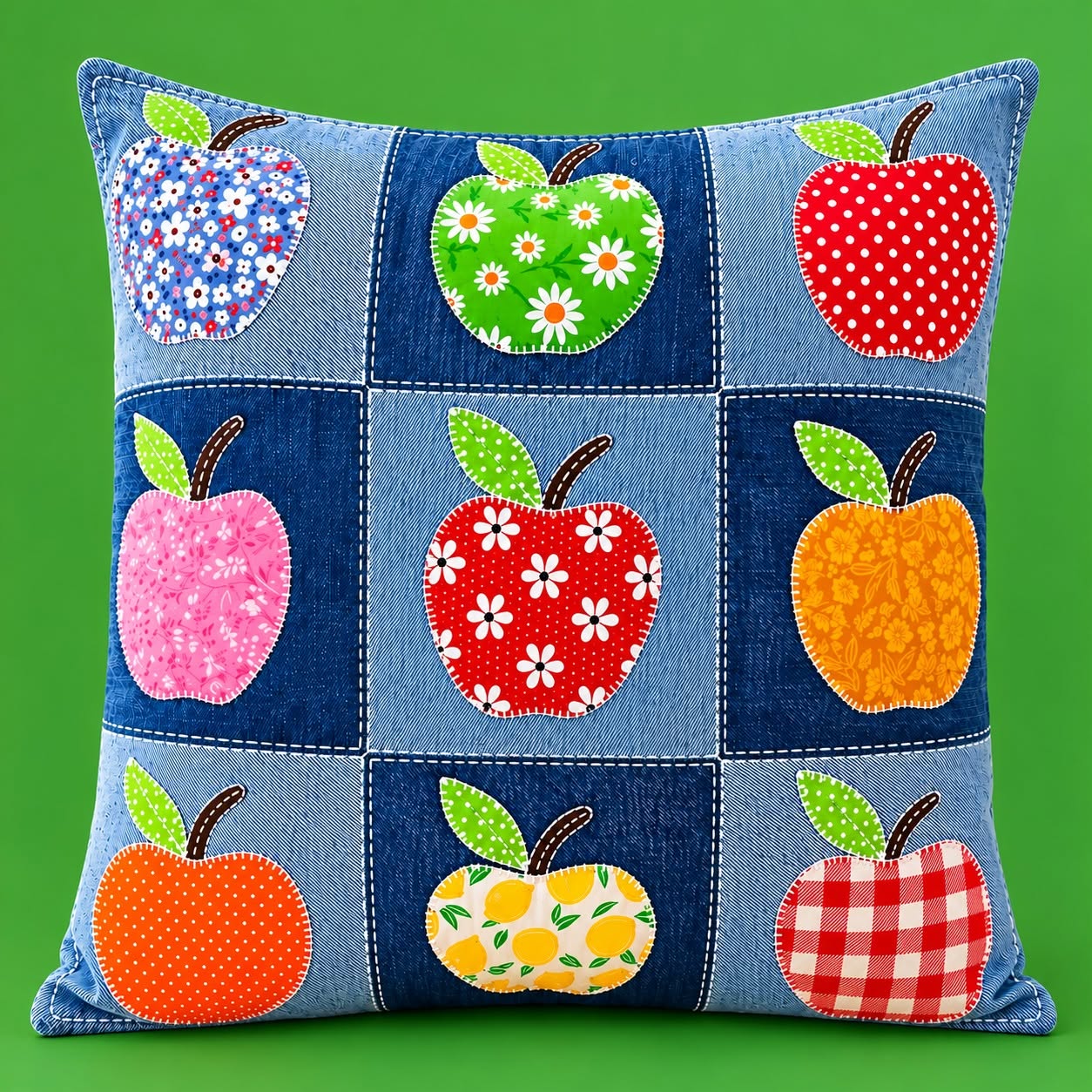
The Patchwork Apple Cushion Fabric Pattern is a cheerful sewing project that combines the relaxed charm of denim patchwork with colorful apple appliqués. Inspired by the cushion shown in the photo, this design uses nine square fabric sections arranged in a three-by-three grid, with a different fabric apple decorating each block. The contrast between light and dark denim creates a balanced background, while floral prints, polka dots, gingham, and bright cotton scraps give every apple its own personality. This project is an excellent way to transform leftover fabrics into useful home décor while practicing essential patchwork, quilting, and fabric appliqué techniques. Because the shapes are uncomplicated and the construction is based on straight seams, the project is also approachable for sewists who are still building confidence. Once completed, the cushion can add a handmade farmhouse, country, or contemporary patchwork accent to a living room, sewing room, bedroom, or reading corner.
One of the most appealing features of the Patchwork Apple Cushion Fabric Pattern is its flexibility. You do not need nine identical fabrics or a perfectly coordinated commercial fabric collection to reproduce the look successfully. In fact, the design becomes more interesting when the apples include several prints, such as daisies, small dots, gingham checks, fruit prints, abstract florals, and tonal patterns. Denim provides a strong visual foundation and helps the brighter colors stand out without making the finished cushion look overly busy. Old jeans can sometimes be incorporated when the denim is still in good condition, although lightweight or medium-weight denim is easier to sew than very heavy jeans fabric. Cotton scraps work especially well for the apples and leaves because they are easy to press, cut, stabilize, and stitch. The result is a practical fabric pattern that celebrates creative reuse while still looking intentional and polished.
Before beginning your Patchwork Apple Cushion Fabric Pattern, gather the fabrics and basic sewing supplies so the construction process remains organized. You will need light and medium or dark denim, assorted cotton prints, green fabric for the leaves, brown fabric for the stems, fusible web for appliqué, coordinating thread, fabric scissors or a rotary cutter, pins or sewing clips, an iron, a sewing machine, and a cushion insert. A useful finished size is approximately 45 x 45 cm, although the measurements can easily be adjusted for another pillow size. For a cushion around this size, each visible square can measure approximately 15 x 15 cm after joining, with seam allowance added before cutting. Always measure carefully and keep the seam allowance consistent so the nine blocks line up neatly. Preparing the pieces before sewing is one of the easiest ways to achieve the clean grid that makes this apple cushion pattern so attractive.
Materials, Fabric Selection, and Preparing the Patchwork Blocks
Start the Patchwork Apple Cushion Fabric Pattern by selecting denim in at least two different shades. The example uses alternating light blue and darker blue blocks, creating a checkerboard effect that immediately gives the cushion depth. Cut nine equal denim squares, remembering to include your preferred seam allowance. For a finished cushion close to 45 x 45 cm, squares around 16 x 16 cm can provide enough room for approximately 1 cm seam allowances, although exact dimensions should be adjusted according to your sewing method. Accurate cutting matters because even a small difference between blocks can become noticeable after three squares are joined in a row.
DISCOVER MORE FREE PATTERNS HERE!
Arrange the nine squares on a flat surface before stitching anything together. Alternate the darker and lighter denim pieces until you have a visually balanced three-by-three arrangement similar to the photographed design. Move the squares around until the distribution feels natural, particularly if the denim contains fading, seams, or variations in texture. This planning stage is a fundamental part of patchwork sewing because it helps prevent two visually heavy areas from accidentally appearing next to one another. Taking a quick photo of your preferred arrangement can also help you remember the correct order during assembly.
Next, choose the cotton fabrics for the apples. The Patchwork Apple Cushion Fabric Pattern works especially well with strong colors such as red, pink, orange, green, blue, and yellow. Include different print scales for variety; for example, combine tiny polka dots with larger florals and gingham checks. Avoid making every apple identical because the charm of this cushion comes from seeing nine individual variations within one unified theme. You can also coordinate the prints with colors already used in your room while preserving the playful character of the original concept.
Prepare green cotton fabric for the leaves and brown fabric for the apple stems. Small-scale green dots or simple leafy prints are particularly attractive because these pieces are relatively small. The brown stems can be cut from plain cotton, faux-suede-look fabric, or another non-bulky material that contrasts clearly with the denim. These secondary details may seem minor, yet they play an important role in making each appliqué instantly recognizable as an apple. Keeping the leaves and stems relatively consistent also visually connects apples made from very different fabrics.
Wash and press washable fabrics before cutting when appropriate, especially if you are using new cotton and denim together. Different fabrics can shrink at different rates, so prewashing can reduce distortion after the finished cushion is cleaned. Pressing is equally important because smooth fabric allows you to cut more accurate shapes and apply fusible web evenly. Avoid stretching the denim while ironing, particularly around any bias areas. A properly prepared foundation makes subsequent fabric appliqué work considerably easier.
Finally, prepare the backing fabric and decide how your cushion cover will close. An envelope-style back is beginner-friendly because it does not require a zipper, while a zipper closure can create a cleaner tailored finish. Denim can be used on the back for a coordinated appearance, but quilting cotton or home décor cotton can reduce bulk. Whatever option you select, make sure the finished cover matches the dimensions of your cushion insert. Planning the backing at this stage prevents having to search for suitable fabric after the decorative front has already been completed.
Creating and Attaching the Apple Appliqué Shapes
To create the main motif for the Patchwork Apple Cushion Fabric Pattern, draw a simple rounded apple template on paper. The apple should be slightly narrower toward the bottom, gently indented at the top, and large enough to become the focal point of each denim square without touching the seam lines. For a 15 cm finished block, an apple approximately 10 to 11 cm wide often gives a pleasing proportion. Add separate templates for one curved leaf and a short stem. You can use the same basic template for all nine blocks while slightly changing the angle or shape of individual apples if you prefer a more handmade appearance.
Trace the apple shapes onto the paper side of fusible web according to the manufacturer’s general handling method. Cut roughly around each traced shape rather than cutting directly on the final outline at first. Fuse these pieces to the wrong side of your selected cotton prints, then cut accurately along the traced lines. Repeat the process for nine apples, nine leaves, and nine stems. Fusible web stabilizes the smaller pieces and helps keep the appliqués from shifting while they are stitched.
Arrange one apple on each denim block before permanently attaching it. Position the apple near the center while leaving sufficient space around the edges for joining the blocks. Place the leaf at a slight diagonal and position the brown stem so it appears to emerge naturally from the indentation at the top of the apple. Compare all nine blocks together before fusing so you can correct any apples that sit noticeably higher or lower than the others. This simple visual check contributes greatly to a professional-looking patchwork cushion.
Fuse the appliqué pieces to the blocks, following the heat recommendations appropriate for your fusible product and fabric. Work carefully because excessive heat can sometimes affect printed cotton or create shiny areas on denim. A pressing cloth can be helpful when working with unfamiliar fabrics. Allow each block to cool before moving it so the adhesive has time to set. Once everything is secure, you can begin stitching around the shapes.
The photographed Patchwork Apple Cushion Fabric Pattern has a charming handcrafted appearance, so the appliqué edges do not need to look overly formal. A narrow zigzag stitch, blanket stitch, satin stitch, or straight stitch close to the edge can all work well. Straight stitching can eventually produce a lightly frayed edge, which suits rustic denim designs, while zigzag or blanket stitching gives the appliqués greater edge coverage. Test your chosen stitch on a fabric scrap before working on the actual cushion blocks. Adjust thread tension and stitch length if necessary.
Stitch around the apples first, followed by the leaves and stems. Pivot slowly around curves with the needle lowered into the fabric so the outline remains smooth. If the denim is heavy, use a needle suitable for denim and avoid pulling the block through the machine. Let the feed dogs move the fabric naturally. Once all nine apples are stitched, press the blocks gently from the reverse side to prepare them for joining into the finished patchwork panel.
Joining, Quilting, and Finishing the Cushion Cover
Begin assembling the Patchwork Apple Cushion Fabric Pattern by joining the first three blocks into a horizontal row. Place the blocks right sides together, align their edges, and sew using the same seam allowance throughout the project. Repeat this step with the middle row and then the bottom row. After completing each row, press the seam allowances carefully. You can press them in alternating directions so adjoining seams nest neatly when the rows are connected.
Join the three completed rows, carefully matching the vertical seam intersections. Pin or clip around each intersection before stitching to reduce movement. Sew slowly through areas where several denim seam allowances overlap because these sections can become thick. After sewing, press the completed patchwork front flat. At this stage, you should have the recognizable three-by-three grid with nine colorful apples spread evenly across the cushion face.
Optional quilting can add texture and durability to the project. Place a thin layer of batting behind the finished patchwork panel and add a lightweight backing fabric beneath the batting. You can quilt around each denim square, stitch in the ditch along the patchwork seams, or create simple straight lines across the background. Avoid excessive quilting over the apple appliqués if you want them to remain visually prominent. A small amount of quilting is often sufficient because the appliqué stitching already provides decorative detail.
Square the finished front before constructing the cushion cover. Measure from several points and trim only what is necessary to create straight, perpendicular edges. This step is particularly important when working with denim because repeated stitching and pressing can sometimes shift the panel slightly. Do not trim aggressively, as you need enough fabric to maintain the intended cushion dimensions. Careful squaring helps the finished apple cushion sit evenly once the insert is added.
For an envelope closure, cut two backing panels that overlap by approximately 10 to 15 cm at the center. Hem the edges that will form the opening, then place both backing pieces over the cushion front with right sides facing together. Ensure the outer edges align with the front panel and that the hemmed edges overlap securely. Pin or clip around the perimeter and sew all four sides. Trim bulky corners carefully without cutting through the stitching, then turn the cover right side out.
Push the corners gently into shape and press the completed cushion cover. Insert a cushion form that matches the finished dimensions and adjust the corners so the filling spreads evenly. The completed Patchwork Apple Cushion Fabric Pattern should display a lively combination of colorful appliqués, structured denim blocks, and visible handmade character. Small differences between the apples are part of the design rather than imperfections. They help give the project its warm, one-of-a-kind personality.
Patchwork Apple Cushion Fabric Pattern FAQ and Helpful Sewing Tips
What is a Patchwork Apple Cushion Fabric Pattern? A Patchwork Apple Cushion Fabric Pattern is a sewing design that combines multiple fabric blocks with decorative apple-shaped appliqués to create a cushion cover. Patchwork refers to joining smaller pieces of fabric into a larger textile surface, while appliqué refers to attaching decorative fabric shapes onto a background. In this project, denim squares form the patchwork foundation and colorful cotton apples provide the decorative theme. This combination makes the design visually interesting without requiring complicated piecing.
Can beginners make this apple cushion? Yes. The project is suitable for confident beginners because most of the construction uses straight seams and simple appliqué shapes. New sewists may want to practice sewing around curved fabric pieces before working on the final apples. Fusible web is particularly helpful because it temporarily holds the shapes in place and minimizes movement while stitching. Taking time to cut accurate squares will also make assembly significantly easier.
What fabric is best for the apples? Quilting cotton is one of the easiest choices for this fabric pattern because it is lightweight, stable, available in many prints, and easy to appliqué. Floral cotton, gingham, polka dots, fruit motifs, and small geometric patterns all work beautifully. Scraps from previous sewing projects can be especially useful because each apple requires only a modest amount of fabric. Try combining warm and cool colors so no single section of the cushion becomes visually dominant.
Do I have to use denim for the background? No. Denim creates the distinctive casual appearance seen in the photo, but the Patchwork Apple Cushion Fabric Pattern can also be made with canvas, linen blends, quilting cotton, chambray, or other stable woven fabrics. If substituting fabric, keep the weights reasonably similar between blocks. Extremely thick and very thin fabrics joined together can be harder to press and may distort the seams. Chambray is a good alternative when you want a denim-like appearance with less bulk.
Should the apple edges be finished with zigzag or straight stitching? Either technique can work. A narrow zigzag stitch encloses the raw fabric edge more completely and can increase durability, while straight stitching close to the edge creates a relaxed handmade effect. Blanket stitching provides another decorative option and works particularly well for country-style cushions. The best method depends on the look you want and how frequently the cushion will be handled or washed. Testing the stitch on a scrap is always worthwhile before committing to all nine appliqués.
How can I keep the patchwork squares aligned? Consistent cutting and seam allowances are the most important factors. Use a ruler when preparing the blocks, keep the same seam allowance for every seam, and press each row before joining the next section. When connecting rows, match the seam intersections first rather than relying only on the outer edges. Pins or clips placed immediately beside the intersections help prevent shifting. These basic patchwork sewing techniques can make a noticeable difference in the accuracy and overall appearance of the completed cushion.
Conclusion
The Patchwork Apple Cushion Fabric Pattern is a colorful and practical project that brings together several enjoyable sewing techniques in one manageable design. Throughout the process, you learned how to select contrasting denim fabrics, arrange nine patchwork squares, choose colorful cotton prints, prepare apple appliqué templates, attach leaves and stems, stitch the decorative shapes, assemble the rows, add optional quilting, and complete a functional cushion cover. The combination of structured denim and playful fabric apples creates a design that feels both traditional and fresh.
Another advantage of this project is that it can be easily personalized. You can change the dimensions, use different shades of denim, coordinate the apples with seasonal colors, include fabrics left over from meaningful projects, or experiment with different decorative stitches. Once you understand the basic Patchwork Apple Cushion Fabric Pattern, the same method can also inspire matching cushions or other patchwork home accessories.
EASILY FIND THE PDF FOR THIS PATTERN HERE!
Most importantly, allow the handmade qualities of the cushion to remain visible. Patchwork does not need to look mechanically perfect to be beautiful. Thoughtful fabric selection, accurate construction, secure appliqué stitching, and careful finishing are more important than making every apple completely identical. Those subtle variations are what give handmade sewing projects their personality. If you make your own Patchwork Apple Cushion Fabric Pattern, leave your sincere opinion about the project and share any suggestions you would use to customize the design. Your ideas about colors, fabrics, appliqué stitches, and creative variations can inspire even more ways to transform this cheerful apple cushion into a unique handmade piece.